




Title: China’s GERD Diplomacy: Balancing Egypt’s Water Security and Ethiopia’s Development Rights
Meta Description: Analyzing China’s calibrated diplomatic endorsement of Egypt’s water security during Xi Jinping’s Cairo visit. What the joint statement means for the Grand Ethiopian Renaissance Dam dispute, Nile Basin geopolitics, and Beijing’s strategic interests.
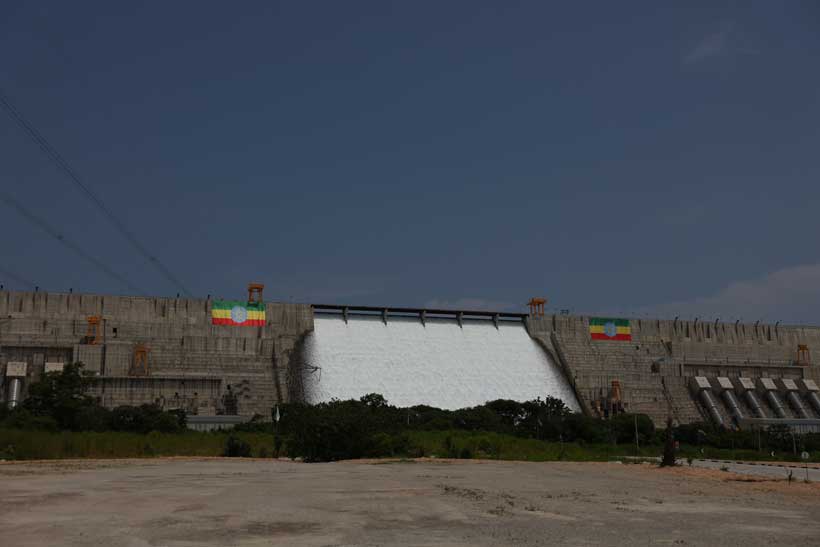
China’s recent diplomatic endorsement of Egypt’s right to protect its water and food security marks a significant inflection point in the protracted dispute over the Grand Ethiopian Renaissance Dam (GERD). While stopping short of a formal rejection of Ethiopia’s hydroelectric ambitions, the joint statement issued during President Xi Jinping’s state visit to Cairo elevates Cairo’s legal and political standing on the international stage.
For Addis Ababa, the signal is nuanced but unmistakable: Beijing values its partnership with Ethiopia, yet refuses to treat that relationship as unconditional backing for a unilateral interpretation of sovereignty over shared water resources.
The Cairo Declaration: Nuance Over Confrontation
The joint statement released in September 2024 recognized the Nile’s vital importance to Egypt, explicitly referring to Cairo’s “legitimate right to safeguard its water and food security and development interests.” Crucially, the document called on all Nile Basin states to comply with international law, specifically citing the obligation not to cause significant harm.
Though the text avoids naming Ethiopia or the GERD directly, the subtext is unavoidable. The “no significant harm” principle has been the cornerstone of Egypt’s legal argument against the dam’s unilateral filling and operation. By embedding this principle in a high-profile bilateral declaration with a permanent UN Security Council member, Egypt has secured a powerful diplomatic asset.
Key Takeaway: China did not endorse Cairo’s demand for a legally binding agreement on dam operations, nor did it accuse Addis Ababa of violating international law. Instead, Beijing accepted principles that Cairo can leverage in future negotiations—changing the political cost of Ethiopia’s current position without legally settling the dispute.
Calibrated Diplomacy: China’s “Triangular” Balancing Act
To understand Beijing’s stance, one must view it through the lens of its triangular engagement with Egypt, Ethiopia, and Sudan. China is uniquely positioned as a major partner to all three:
- Egypt: Controls the Suez Canal, a critical artery for Chinese trade and the Belt and Road Initiative (BRI).
- Ethiopia: A flagship BRI partner in the Horn of Africa; Chinese firms (like CGGC and Gezhouba) constructed key sections of the GERD and the associated power transmission lines.
- Sudan: Strategically located on the Red Sea, despite current internal conflict.
This explains Beijing’s consistent preference for dialogue over adjudication. During a 2021 UN Security Council session, China’s representative Zhang Jun urged the three nations to resume negotiations, framing the dam as a potential “tripartite development project.” The recent Cairo statement narrows Ethiopia’s diplomatic maneuvering room without slamming the door shut—classic Chinese risk management.
Why the Wording Matters: International Water Law in Focus
The reference to the “obligation not to cause significant harm” is the statement’s legal engine. Under the UN Watercourses Convention (1997), two core principles govern transboundary rivers:
- Equitable and Reasonable Utilization: Upstream states (Ethiopia) have a right to develop resources.
- No Significant Harm: States must prevent actions causing substantial damage to co-riparians (Egypt/Sudan).
These principles are not hierarchical; they must be applied in concert. Egypt cannot demand a veto on upstream development, but Ethiopia cannot ignore downstream vulnerability. The operational challenge—defining “significant harm” during prolonged droughts, establishing data-sharing protocols, and creating dispute resolution mechanisms—remains the heart of the deadlock.
By linking water security to food security and development, China also validated Egypt’s framing of the Nile as an existential “lifeline” rather than merely a commercial resource. This framing, reported by Daily News Egypt and Egypt Today, internationalizes the dispute, potentially inviting broader multilateral pressure on Addis Ababa.
The Message for Addis Ababa: Sovereignty vs. Unilateralism
Ethiopia views the GERD as a sovereign, nationally funded symbol of development—$5 billion invested to electrify a population where over 50% lack grid access. Addis Ababa has legitimate grounds to pursue hydropower; the Blue Nile originates in its highlands, contributing roughly 86% of the Nile’s flow.
However, the Chinese statement underscores a critical distinction: Sovereignty over territory does not negate duties over shared watercourses.
Ethiopia’s Strategic Options:
- Reject the “Coercion” Narrative: Firmly oppose politicizing the dam while acknowledging downstream anxiety.
- Institutionalize Flexibility: Propose a strengthened tripartite technical mechanism (Egypt, Ethiopia, Sudan) with:
- Real-time hydrological data exchange.
- Binding drought mitigation protocols (e.g., minimum annual release floors).
- Emergency consultation triggers for unexpected operational shifts.
- Decouple Technical from Political: Treat dam operations as an engineering management problem, not a zero-sum sovereignty test.
Accepting procedural obligations (notification, consultation, data sharing) does not surrender Ethiopia’s substantive right to equitable utilization. It demonstrates that Addis Ababa understands modern diplomatic power: the ability to make national interests compatible with regional legitimacy.
Beijing’s Strategic Calculus: Infrastructure Reputation Management
China’s calculus extends beyond the Nile. As the world’s leading financier of large dams in Africa, Beijing faces a reputational dilemma. It cannot appear indifferent to downstream risks when its technology and capital build projects with transboundary consequences. Conversely, it cannot endorse a precedent allowing external powers to veto sovereign infrastructure decisions—a principle Beijing guards jealously regarding its own rivers (e.g., the Mekong/Lancang).
Thus, the statement’s architecture is deliberate: Validate concerns → Invoke Law → Avoid Blame → Preserve Mediation Space. Beijing manages exposure; it does not pick winners.
From Endorsement to Negotiation: The Path Forward
A diplomatic statement alters the atmosphere, not the hydrology. The GERD is physically complete; the reservoir is filling. The dispute has shifted from “construction” to “operation.”
For a durable settlement, the focus must shift to predictable conduct:
- Drought Protocols: Pre-agreed formulas for release reductions during multi-year dry spells.
- Data Transparency: Automated, real-time sharing of inflow, storage, and release data.
- Sudan’s Inclusion: Khartoum’s interests (flood control, sediment management, its own dams like Merowe and Roseires) must be central, not peripheral.
- African Ownership: The African Union (AU) remains the only legitimate institutional home for this process. External actors (China, US, EU, World Bank) should provide technical expertise and political cover, not impose terms.
Conclusion: A Warning and an Opportunity
China’s endorsement is best read as a dual signal:
- A Warning to Ethiopia: Development agendas will be judged against downstream security and international legal norms.
- An Opportunity for Ethiopia: To prove that hydropower sovereignty and responsible transboundary governance are mutually reinforcing.
Between the two Niles, symbolic declarations cannot manage water flows. Egypt needs hydrological predictability; Ethiopia needs energy revenue; Sudan needs flood safety. China has shifted the diplomatic tectonics. The next phase requires converting carefully chosen principles into practical, binding operational rules—turning the GERD from a source of rivalry into the “foundation for shared development” Beijing once envisioned.
FAQ: China, Egypt, and the GERD Dispute
Did China officially oppose the GERD? No. China has consistently avoided opposing the dam’s existence. The recent statement endorses principles (water security, no significant harm) rather than taking a position on the infrastructure itself.
What is the “No Significant Harm” principle? A cornerstone of international water law (UN Watercourses Convention) requiring states sharing a river to take all appropriate measures to prevent causing significant harm to other riparian states.
Why does China care about the Nile dispute? China has massive strategic investments in all three key nations: the Suez Canal (Egypt), the GERD and industrial parks (Ethiopia), and Red Sea access (Sudan). Instability threatens the Belt and Road Initiative.
Does this statement legally bind Ethiopia? No. A bilateral joint statement between China and Egypt creates political pressure and interpretive precedent, but it does not create a legal obligation for Ethiopia under international law.
What is the role of the African Union? The AU has led the mediation process (previously under DRC, Kenya, Senegal chairs). Most analysts argue an African-led solution is essential for legitimacy and enforcement.
