




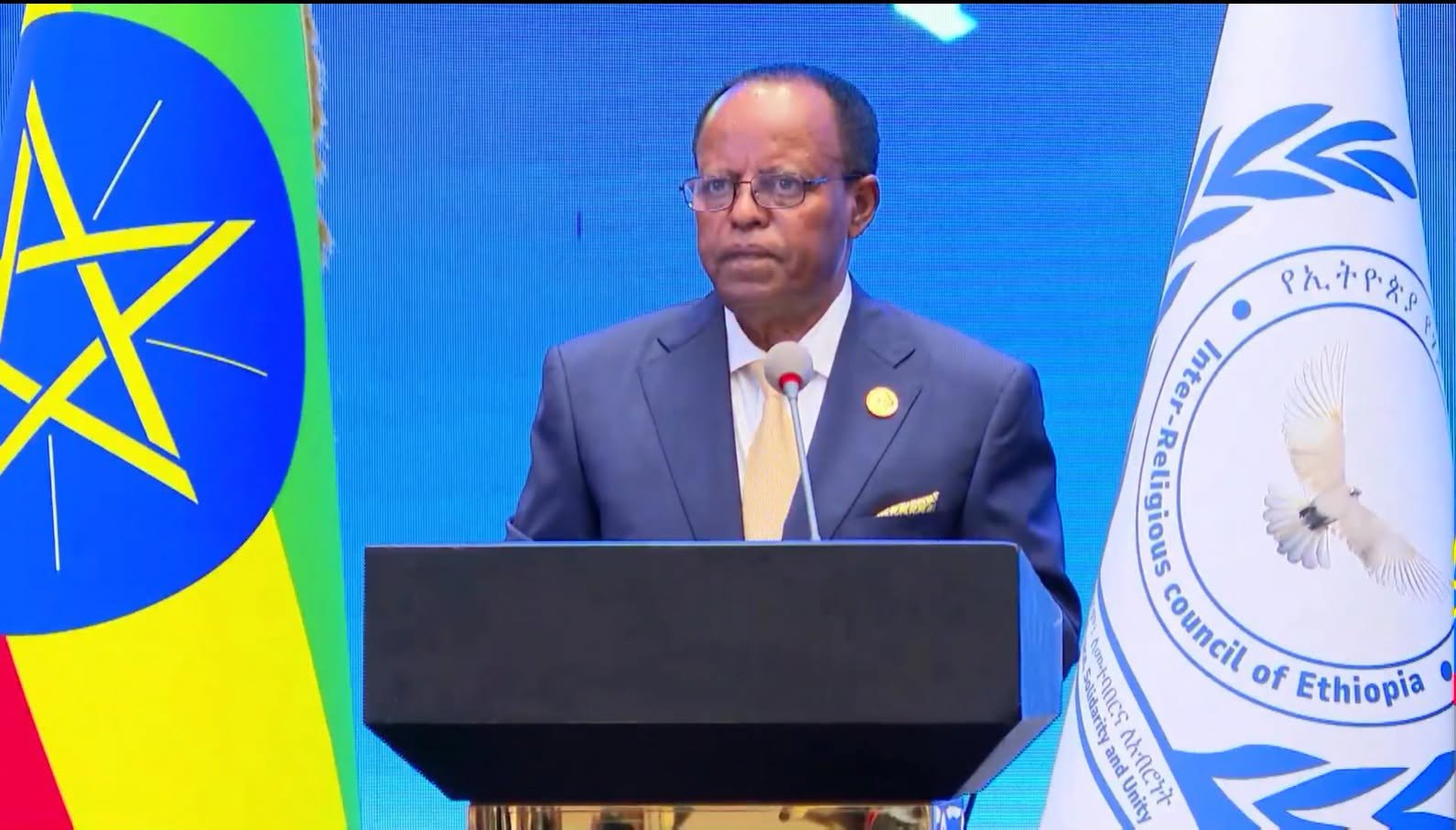
Meta Title: President Taye Urges Religious Leaders to Safeguard Ethiopia’s Moral Values & Unity | ENA
Meta Description: President Taye Atske-Selassie calls on the Inter-Religious Council of Ethiopia to strengthen national unity, protect youth from harmful ideologies, and lead ethical development at the 15th-anniversary assembly.
Focus Keyphrase: Ethiopia religious unity moral values
Slug: president-taye-religious-institutions-ethiopia-unity-moral-values
Tags: Ethiopia, President Taye Atske-Selassie, Inter-Religious Council, National Unity, Moral Values, National Dialogue, Youth Education
President Taye Atske-Selassie Urges Religious Institutions to Champion Ethiopia’s Moral Values and National Unity
President Taye Atske-Selassie has issued a clarion call to Ethiopia’s religious institutions to intensify their role as guardians of the nation’s moral fabric and primary architects of national unity. Speaking at the opening of the 15th Founding Anniversary and 18th Regular General Assembly of the Inter-Religious Council of Ethiopia (IRCE), the President framed the gathering as a critical platform for national reflection, celebration of diversity, and alignment on shared aspirations.
Inter-Religious Council: 15 Years of Building Bridges
Highlighting the Council’s trajectory since its inception, President Taye underscored that the IRCE has proven its institutional value over the past decade and a half. He noted that the body has helped lay a strong foundation for Ethiopia’s growth, rooted not merely in infrastructure or policy, but in the collective ideas, labor, and prayers of successive generations.
“Ethiopia’s foundation is rooted in faith, respect for human dignity, and a deep appreciation of diversity and unity,”
President Taye Atske-Selassie
Religious Leaders as Guardians of Public Ethics
The President emphasized that religious institutions have historically played a central role in shaping public morals and national character. He described religious leaders as key guardians of public ethics, entrusted with a responsibility that extends far beyond the pulpit into the civic sphere.
Combating Destructive Behaviors
President Taye explicitly urged religious institutions to actively teach against practices eroding Ethiopian culture and morality. He identified a specific spectrum of vices requiring immediate pastoral and communal intervention:
- Deceit and falsehood
- Theft and corruption
- Cruelty and indifference to human life
Furthermore, he stressed the importance of rehabilitative guidance—redirecting citizens on destructive paths toward constructive citizenship and productive engagement.
Protecting Youth from Imported Ideologies
A significant portion of the address focused on the protection of the younger generation. The President warned against the infiltration of “imported ideologies and fleeting trends” that threaten to disconnect youth from their cultural and ethical heritage. He called for stronger, coordinated educational efforts to anchor young Ethiopians in indigenous values while navigating a modernizing world.
Apostles of Dialogue: Religion in Conflict Resolution
President Taye lauded religious leaders as “guiding lights in difficult times,” referring to them as apostles and sahaba (companions) of dialogue, unity, forgiveness, and reconciliation during periods of division.
Pivotal Role in the National Dialogue
The President welcomed the active involvement of religious leaders in Ethiopia’s recent National Dialogue process, crediting their participation with promoting stability, truth, and lasting peace. He asserted that the engagement of faith-based actors in national development is not merely a political gesture but an essential prerequisite for sustainable progress in an increasingly complex global landscape.
Government Commitment to Partnership
Concluding his remarks, President Taye reaffirmed the government’s recognition of the major contribution of religious institutions to three strategic pillars:
- Sustainable Peace: Mediating conflicts and fostering coexistence.
- Social Cohesion: Bridging ethnic and cultural divides through shared spiritual values.
- National Development: Mobilizing communities for collective action and ethical labor.
The assembly, attended by leaders from the Ethiopian Orthodox Tewahedo Church, Ethiopian Islamic Affairs Supreme Council, Evangelical Churches Fellowship of Ethiopia, and other faith traditions, is expected to deliberate on operational strategies for the coming year.
Key Takeaways
- Event: 15th Anniversary & 18th General Assembly of the Inter-Religious Council of Ethiopia (IRCE).
- Core Message: Religious institutions must lead moral education, fight corruption, and protect youth.
- Strategic Role: Faith leaders validated as essential partners in the National Dialogue and national development.
- Government Stance: Formal recognition of religion as a pillar of peace, cohesion, and development.
Frequently Asked Questions (FAQ)
- What is the Inter-Religious Council of Ethiopia (IRCE)?
- The IRCE is a national platform bringing together major faith traditions in Ethiopia—including Orthodox Christianity, Islam, Protestantism, and Catholicism—to promote interfaith harmony, peacebuilding, and collaborative development.
- Why did President Taye focus on “imported ideologies”?
- The President expressed concern that global cultural shifts and foreign ideological influences may undermine Ethiopia’s indigenous moral framework, particularly among the youth, necessitating a proactive response from religious educators.
- How are religious leaders involved in the National Dialogue?
- Religious leaders serve as trusted mediators and facilitators within the African Union-supported National Dialogue framework, helping to build consensus, acknowledge historical grievances, and foster reconciliation across political and ethnic divides.
- What specific vices did the President highlight?
- Deceit, falsehood, theft, corruption, cruelty, and indifference to human life were explicitly cited as practices running counter to Ethiopian culture that religious institutions must actively teach against.
SEO Implementation Checklist (For CMS Entry)
| Element | Implementation Detail |
|---|---|
| Focus Keyphrase | Ethiopia religious unity moral values (Used in H1, H2, Intro, Conclusion, Alt Text) |
| Synonyms/LSI Keywords | Inter-Religious Council Ethiopia, President Taye Atske-Selassie, National Dialogue Ethiopia, social cohesion, youth ethics, faith-based peacebuilding. |
| Heading Structure | H1 (Main Title) → H2 (Major Sections) → H3 (Sub-sections). Logical hierarchy maintained. |
| External Links (Authority) |
rel="noopener noreferrer" and target="_blank". |
| Internal Links | Placeholders added for “Read Next” section (Link to relevant internal category/tag pages). |
| Image SEO | Placeholder src and descriptive alt text including focus keyphrase. Add width/height attributes to prevent CLS. |
| Schema Markup | NewsArticle / BlogPosting Schema required. Include headline, datePublished, dateModified, author (Organization: ENA), publisher, image, mainEntityOfPage. |
| Readability | Short paragraphs, bullet points, blockquotes, bold emphasis for scanning. Flesch-Kincaid target: Grade 10-12. |
| E-E-A-T Signals | Direct quotes from Head of State; Links to official institutional websites; Clear dateline/location; Attribution to official news wire (ENA). |
