




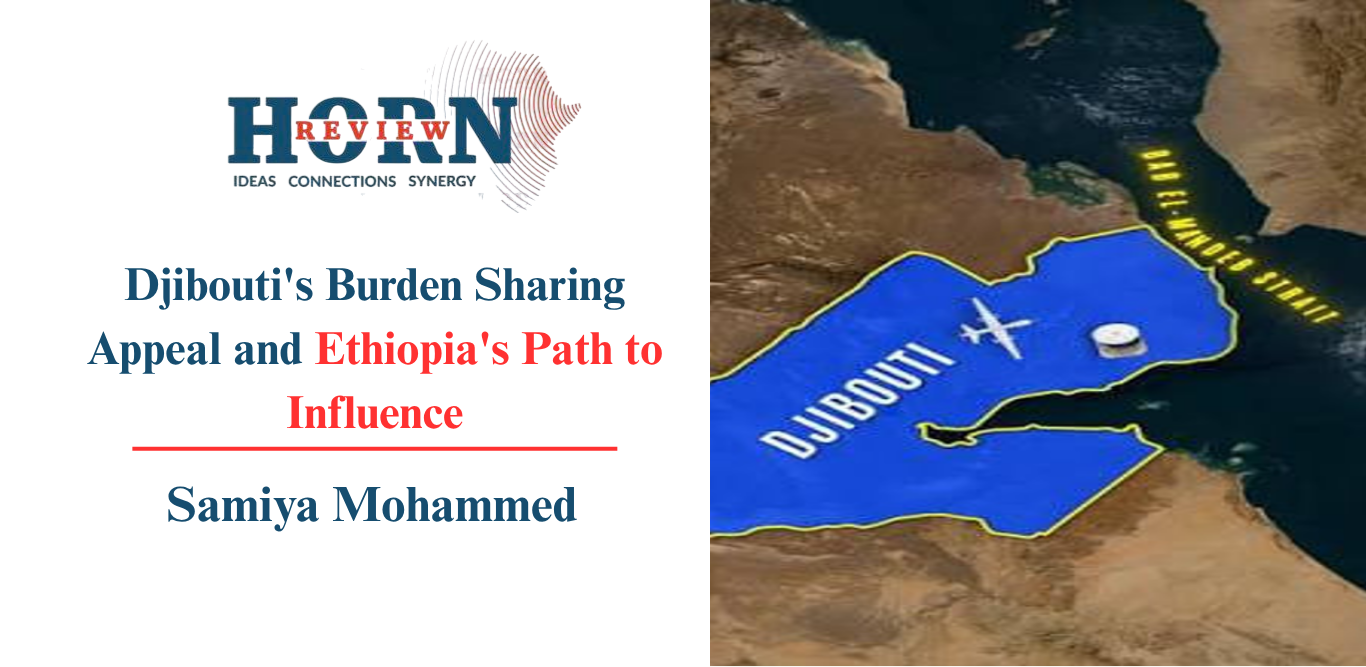
Meta Title: Djibouti’s Bab el-Mandeb Security Alert: Why Ethiopia Must Demand Burden Sharing Now
Meta Description: Djibouti’s unprecedented call for a global security framework at Bab el-Mandeb exposes the fragility of Ethiopia’s lifeline. Analysis on why Addis Ababa must leverage this inflection point for institutional influence and burden sharing.
Focus Keyphrase: Bab el-Mandeb security framework
Slug: djibouti-bab-el-mandeb-security-ethiopia-burden-sharing
Djibouti’s Bab el-Mandeb Alarm: An Inflection Point for Horn of Africa Security
Djibouti’s recent public communications regarding the security of the Bab el-Mandeb strait represent a strategic inflection point for the Horn of Africa. As the strait’s most exposed guardian, Djibouti has issued an explicit, deliberate call for a standing security framework encompassing global maritime powers and major commercial users of the route.
This appeal is not routine diplomacy. It constitutes a formal acknowledgment of structural limitations in Djibouti’s unilateral capacity to secure the waterway. The timing—amid escalating Red Sea tensions, attacks on commercial shipping, a resurgence of piracy, vulnerabilities in undersea cable networks, and parallels with Strait of Hormuz disruptions—signals that the existing security architecture is operationally insufficient. The warning that a catastrophe at Bab el-Mandeb could exceed the consequences of a Hormuz closure reflects a sober assessment of escalating risk, not diplomatic hyperbole.
The Asymmetric Lifeline: Ethiopia’s Existential Dependency
The Djibouti-Ethiopia relationship operates within a framework of structural asymmetry that defines the region’s political economy.
- Ethiopia’s Vulnerability: Addis Ababa’s external trade flows almost entirely through Djibouti’s ports. This dependency is existential, not merely economic. A sustained disruption at Bab el-Mandeb would trigger cascading failures across Ethiopia’s import-dependent sectors, precipitating foreign exchange collapse and profound political instability.
- Djibouti’s Vulnerability: Conversely, Djibouti’s economic model is fundamentally reliant on Ethiopian cargo volumes.
- Mutual Hostage-Taking: This creates a condition of “mutual hostage-taking” where neither party can afford the collapse of the arrangement. However, the distribution of vulnerability is not symmetrical: Ethiopia bears the existential risk (national survival), while Djibouti bears the operational risk (port management and maritime domain awareness).
Guarded Sovereignty: The Historical Context of Rejection
The asymmetry of vulnerability cuts both ways, yet Ethiopia’s consistent posture as the “polite partner” has yielded high costs without delivering genuine redundancy or institutional influence over maritime security.
Djibouti has successfully monetized its geostrategic position by hosting military bases from multiple great powers—including the United States, France, China, Japan, and Italy—playing them off one another while maintaining fierce sovereignty. This strategy has manifested in the consistent rejection of Ethiopian requests for a sovereign corridor or a full naval presence.
Djibouti’s position has been clear: maintain exclusive operational control while extracting maximum economic benefit from Ethiopian usage. Therefore, the current appeal for “burden sharing” must be understood within this historical context of guarded sovereignty—it is a tactical shift born of necessity, not a strategic concession.
Why the Current Security Architecture Is Failing
Djibouti’s explicit framing of itself as the “strait’s most exposed guardian” is a formal admission that the existing security arrangement has reached its operational limits. This admission validates three critical realities:
- Unilateral Guardianship Is Unsustainable: Djibouti lacks the naval assets, surveillance coverage, and financial depth to counter modern asymmetric threats (Houthi missiles, drone boats, underwater sabotage) alone.
- Legitimizing External Involvement: By framing Bab el-Mandeb security as a global public good rather than a regional issue, Djibouti legitimizes deeper involvement of external actors (EUNAVFOR, CTF 153, national navies) while creating expectations of reciprocal financial and material contribution.
- Shared Interest Language: The deployment of “shared responsibility” rhetoric reinforces a shift from a bilateral service-provider model to a multilateral stakeholder model.
The Hormuz Comparison: A Benchmark for Investment
The reference to the Strait of Hormuz as a comparative case is analytically vital. Hormuz has historically commanded massive international attention and military commitment (e.g., IMSC, Operation Sentinel) due to its centrality to global energy markets.
By drawing this parallel, Djibouti argues that Bab el-Mandeb’s importance warrants a comparable level of international security investment. The implicit argument: the current disparity in security investment reflects political misallocation, not objective risk assessment.
Key Risk Vectors at Bab el-Mandeb:
- Asymmetric Warfare: Anti-ship ballistic missiles and UAVs from non-state actors.
- Undersea Infrastructure: Vulnerability of critical subsea cables carrying global internet traffic.
- Piracy Resurgence: Opportunistic return of Somali piracy networks.
- Great Power Jockeying: Competition for base access and influence complicates unified command.
A disruption here would cascade across global supply chains, energy markets (redirecting tankers around the Cape of Good Hope), and telecommunications infrastructure—potentially rivaling or exceeding a Hormuz closure.
Two Signals: An Opening and a Warning
Djibouti’s appeal must be read as a dual signal:
1. The Opening: Legitimizing Ethiopia’s Stake
The explicit invitation to “major users” to participate in security arrangements constitutes the closest official acknowledgment that Ethiopia’s stake is legitimate and sufficiently large to justify a bigger role. It cracks the door for Addis Ababa to demand a seat at the table—not as a client, but as a stakeholder.
2. The Warning: The Cost of Passivity
The warning is implicit but severe: the existing quiet arrangement is ending. Continued Ethiopian passivity will result in increased vulnerability without corresponding influence. It reveals that Djibouti’s capacity to manage security risks unilaterally is diminishing, meaning the “default” security blanket Ethiopia has relied upon is fraying.
Strategic Imperative: Ethiopia’s Forced Burden Sharing Strategy
Ethiopia cannot afford to treat this moment as diplomatic theater. It must pursue a strategy of forced burden sharing that translates existential risk into institutional influence.
Immediate Demands: A Formal Joint Security Framework
Ethiopia must move immediately to demand a framework granting institutional voice and operational roles proportional to its stake. This framework must include:
| Mechanism | Strategic Value |
|---|---|
| Joint Threat Assessment | Equal access to intelligence fusion centers; moving from consumer to co-producer of intelligence. |
| Intelligence Sharing Protocols | Real-time data exchange on asymmetric threats (missile launches, drone swarms, mine laying). |
| Coordinated Patrols / Presence | Ethiopian Navy (nascent but growing) participation in maritime domain awareness (MDA) patrols under a unified command structure. |
| Capacity Building Initiatives | Leveraging partner nations (US, EU, Gulf states) for training, sensor deployment, and naval asset acquisition tied to the framework. |
| Cost-Sharing Formulas | Transparent burden-sharing metrics replacing opaque port fees; linking dues to security outcomes. |
The Legal Basis: The asymmetry of existential risk gives Ethiopia a legitimate basis under international law (Law of the Sea, Transit Rights) and practical necessity to demand influence over arrangements that directly affect its national survival. This is not a request for charity; it is a claim based on proportional responsibility and shared risk.
The Diversification Trap: Why Waiting Is Not an Option
Critics will argue Ethiopia should focus solely on port diversification (Berbera, Assab, Lamu, Port Sudan). This is a strategic trap.
Diversification remains years behind operational capacity. Alternative corridors face infrastructural deficits, political instability in host nations, and financing gaps. Ethiopia cannot afford to wait for alternative routes to reach maturity before addressing the security of its primary lifeline. The “polite language of shared responsibility” is merely the temporary wrapper for a harder reality: the next phase involves intense bargaining over who pays, who decides, and who commands the security apparatus at the choke point that keeps Ethiopia alive.
Conclusion: Geography Rules, But Governance Is Negotiable
This moment is both a confirmation of the obvious and an opportunity that must be exploited.
- The Confirmation: The status quo is already under stress from multiple threat vectors—asymmetric attacks, undersea cable vulnerabilities, piracy residuals, and great power jockeying.
- The Opportunity: The opening created by Djibouti’s explicit invitation to major users to participate in security arrangements.
Geography still rules the Horn of Africa, but the terms of its governance are not predetermined. The old arrangement—Djibouti operates, Ethiopia pays, great powers watch—is ending. The new arrangement will require Ethiopia to define its role in securing its own future. Addis Ababa must step off the sidelines and onto the bridge of command.
