




Title: Ethiopian Electric Utility Recovers 2.2 Billion Birr in Massive Electricity Theft Crackdown
Meta Description: Ethiopian Electric Utility (EEU) uncovered 2.89 billion birr in electricity theft during the 2025/26 fiscal year. Read the full report on meter irregularities, legal prosecutions, infrastructure vandalism, and new digital tools combating energy loss.
Ethiopian Electric Utility Uncovers 2.89 Billion Birr in Electricity Theft
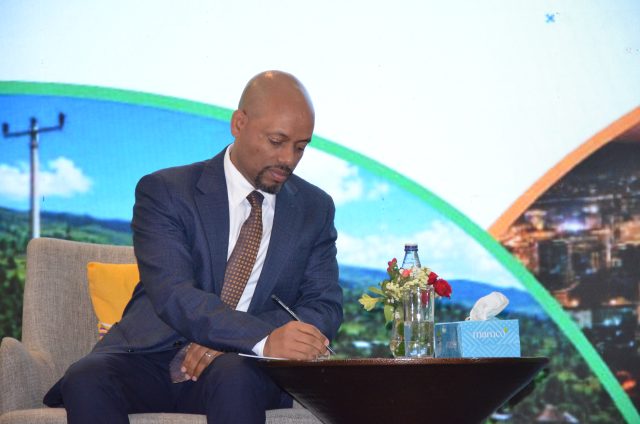
Addis Ababa, August 7, 2026 – The Ethiopian Electric Utility (EEU) has revealed the staggering scale of electricity theft across its network, reporting 2.89 billion birr in detected losses during the 2025/26 fiscal year. The announcement, made by CEO Getu Geremew during a media briefing today, highlights a comprehensive inspection campaign that scrutinized nearly 2.5 million energy meters and resulted in hundreds of criminal prosecutions.
The findings underscore a dual crisis facing the utility: rampant external theft by consumers and organized vandalism of critical infrastructure, compounded by internal governance gaps.
Scope of the Inspection: 2.47 Million Meters Audited
According to the performance report presented by CEO Getu Geremew, the utility’s inspection program exceeded its annual target, achieving 111.9% of the planned coverage. Teams examined 2.47 million energy meters across the EEU service territory.
The audit identified 87,716 distinct cases of meter irregularities, ranging from bypassing meters to tampering with reading mechanisms. These irregularities accounted for 1,493 gigawatt-hours (GWh) of lost energy—volume that translates directly into the 2.89 billion birr revenue hole.
Key Stat: The 1,493 GWh lost to detected theft represents a significant drain on the national grid, equivalent to the annual consumption of hundreds of thousands of Ethiopian households.
Enforcement & Recovery: 2.23 Billion Birr Reclaimed
Detection is only half the battle. The utility reported aggressive enforcement actions that yielded tangible financial recovery:
- Recovered Revenue: 2.237 billion birr collected through corrective billing and enforcement during the fiscal year.
- Remaining Gap: Approximately 653 million birr remains outstanding from detected cases alone.
- Legal Proceedings: 1,089 individuals are currently facing legal action for electricity theft and meter tampering.
However, the 2.89 billion birr figure represents only detected losses. Industry experts note that non-revenue electricity (NRE)—encompassing both commercial theft and technical losses—typically runs significantly higher in developing grids without universal Advanced Metering Infrastructure (AMI). The true financial hemorrhage is likely substantially larger.
Infrastructure Vandalism: Organized Crime & 15-Year Sentences
Beyond consumer-level theft, the EEU is battling a surge in organized infrastructure sabotage. The report detailed a harsh judicial response to physical attacks on the grid:
- 124 individuals prosecuted for vandalism during the fiscal year.
- Targets: High-value assets including power lines, transformers, and distribution equipment.
- Sentencing: Courts handed down custodial sentences of up to 15 years, signaling a zero-tolerance policy from the judiciary.
This level of vandalism not only causes immediate revenue loss but destabilizes grid reliability, leading to forced outages and costly emergency repairs. The utility has launched Short Code 908, a dedicated public hotline allowing citizens to report infrastructure damage and theft in real-time, aiming to leverage community surveillance to protect assets.
Digital Transformation: Closing Loopholes with Technology
To combat “off-system” billing manipulation—a common vector for corruption—the EEU introduced an e-receipt application during the fiscal year. This digital tool creates an immutable audit trail for transactions, reducing opportunities for revenue leakage at the point of collection.
Digitalization is widely recognized by the World Bank’s Energy Sector Management Assistance Program (ESMAP) as a critical pillar for reducing commercial losses in emerging market utilities.
Internal Governance: The Insider Threat
The report pulled back the curtain on internal complicity, revealing a robust whistle-blower mechanism:
- 621 Tips Received: 505 via digital channels, 116 through traditional means.
- 595 Investigations Launched.
- 169 Employees Found Guilty of misconduct.
- 166 Administrative Actions Taken: Ranging from warnings and salary penalties to demotions and dismissals.
While the report did not explicitly quantify the volume of theft facilitated by staff, the high number of guilty findings (169) confirms that insider facilitation is a material driver of commercial losses. Strengthening internal controls and segregating duties—particularly between meter reading, billing, and collection—remains a priority for governance reform.
Grid Health: Aging Assets & The Technical Loss Challenge
Separating theft (commercial losses) from physics (technical losses) remains a persistent headache. The EEU highlighted structural challenges exacerbating the problem:
- Aging Infrastructure: Large portions of the distribution network are decades old.
- Substation Capacity Constraints: Bottlenecks forcing informal, unmetered connections.
- Right-of-Way Clearance Difficulties: Hindering maintenance and inspection access.
- Fuel Shortages: Hampering field operations for audit teams.
Despite these hurdles, the utility rehabilitated 4,892 kilometers of distribution network and resolved 86% of identified network vulnerabilities through preventative maintenance. However, without widespread smart metering deployment, distinguishing technical loss (inherent resistance in wires) from commercial theft (tampering) remains an estimation game rather than a precise science.
The Road Ahead: Securing Revenue for Electrification Goals
Ethiopia’s ambitious National Electrification Program (NEP) and its goal of universal access by 2030 rely heavily on the financial viability of the EEU. Every birr lost to theft is a birr not invested in new connections, grid reinforcement, or renewable energy integration.
The 2025/26 results demonstrate that high-intensity inspection campaigns combined with digital tools and judicial backing can yield results. However, transitioning from periodic crackdowns to permanent, automated loss detection (AMI/AMR) and resolving the root causes of internal corruption are the necessary next steps to secure the utility’s balance sheet.
Frequently Asked Questions (FAQ)
What was the total value of electricity theft detected by EEU in 2025/26? The Ethiopian Electric Utility detected electricity theft and meter irregularities valued at 2.89 billion birr during the 2025/26 fiscal year.
How many meters were inspected? Inspection teams examined 2.47 million energy meters, surpassing the annual target by 11.9%.
What legal actions were taken against vandals? 124 individuals were prosecuted for infrastructure sabotage (transformers, lines), with courts issuing prison sentences of up to 15 years.
How can the public report electricity theft? The public can use the dedicated Short Code 908 to report infrastructure damage, theft, or suspicious activity directly to the utility.
Did EEU employees participate in the theft? Internal investigations triggered by 621 whistle-blower tips found 169 employees guilty of misconduct, with 166 facing administrative penalties including dismissal, confirming internal facilitation is a factor.
Key Terms
- Non-Revenue Electricity (NRE): Energy generated but not billed, comprising technical losses (physics) and commercial losses (theft/billing errors).
- Advanced Metering Infrastructure (AMI): Smart metering systems enabling two-way communication for real-time tamper detection.
- Commercial Losses: Revenue loss due to theft, meter tampering, billing errors, or corruption.
- Technical Losses: Inherent energy dissipation in conductors, transformers, and lines during transmission/distribution.
