




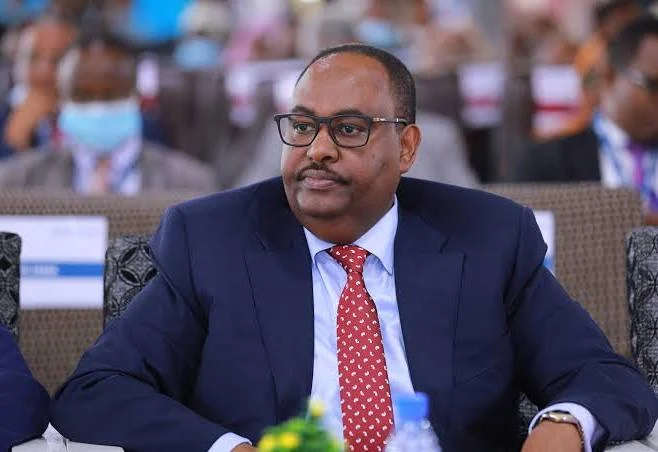
Puntland President Deni Departs on Unannounced Trip Amid Deepening Budget and Security Crisis
Secretive Departure Amid Mounting Crises
GAROWE – Puntland President Said Abdullahi Deni departed Garowe on Friday evening for an unannounced foreign trip, flying first to Addis Ababa before proceeding to Dubai. The departure from General Mohamed Abshir Airport occurred without any official statement from the presidency regarding the purpose, duration, or agenda of the visit.
This lack of transparency is not unprecedented for the Deni administration, but it arrives at a moment of acute instability. The region is grappling with a severe financial collapse, paralyzed infrastructure, and a dangerous standoff with the Federal Government in Mogadishu, raising urgent questions about democratic accountability and governance priorities.
The Anatomy of Puntland’s Current Crisis
President Deni’s absence coincides with a convergence of emergencies threatening the region’s stability:
1. Catastrophic Budget Shortfall
Puntland is staring down a 32.4% budget deficit for the 2026 fiscal year. This fiscal hole has left the administration unable to meet basic obligations, most critically the payment of security forces.
2. Armed Protests Paralyzing Trade Routes
In a dramatic escalation, soldiers from the Afmeer Brigade have shut down the Bosaso–Garowe highway—the region’s primary commercial artery—to protest four months of unpaid salaries. Simultaneously, Bosaso Port, the economic lifeline of Puntland, has been closed for weeks. The closure stems from a dispute between DP World and local traders over increased fees and new taxes, raising immediate fears of supply shortages and inflation.
3. Civil Unrest and Federal Confrontation
The financial strain has sparked repeated protests by civil servants also reporting months of unpaid wages. This domestic turmoil is inseparable from the widening political rift with Mogadishu. Puntland has formally accused the Federal Government of deploying substantial resources to destabilize the region. Vice President Ilyas Osman Lugatoor recently declared that the state’s security posture is shifting toward “defense” against perceived federal political interference.
A Chronic Pattern of Executive Secrecy
The opacity surrounding Deni’s current itinerary fits a well-established pattern. The President has a history of unannounced visits to Ethiopia and the UAE, frequently bypassing standard diplomatic protocol and public disclosure.
As recently as April 2024, Deni traveled to the UAE with a stopover in Addis Ababa, yet the public received scant details regarding the agenda or outcomes. Critics argue this governing style—prioritizing executive discretion over legislative or public oversight—erodes the social contract, particularly when the electorate is bearing the brunt of unpaid wages and closed markets.
“Citizens have a right to know where their leaders are going and what they are doing on their behalf, particularly when the region is facing a severe financial and security crisis. The president’s absence from Garowe during a time of crisis, without any public explanation, suggests a disregard for the very principles of transparency and accountability that democratic governance requires.”
The UAE Factor: Geopolitics at the Heart of the Rift
The Dubai leg of Deni’s trip carries significant geopolitical weight. The visit occurs against the backdrop of a fierce diplomatic battle between Garowe and Mogadishu regarding relations with Abu Dhabi.
Puntland Defends UAE Pacts
Puntland has categorically rejected the Federal Government’s decision to cancel bilateral agreements with the UAE, declaring the move “null and void” within its jurisdiction. The stakes are high: the UAE provides approximately $50 million annually to fund the Puntland Maritime Police Force (PMPF), a critical security asset.
Furthermore, Garowe has vowed to maintain the Bosaso Port Development Project with UAE-owned DP World, viewing it as essential for economic sovereignty.
Federal Counter-Measures
Mogadishu’s termination of defense and commercial treaties with Abu Dhabi has deepened the fracture. In retaliation, Puntland has barred federal-linked troops from its territory and rejected federal payments to 1,376 soldiers stationed within the state. Garowe alleges these payments are designed to bypass Puntland’s command structure and create parallel loyalty structures.
Crisis of Legitimacy: The Accountability Deficit
The current moment exposes a profound crisis of legitimacy. President Deni has positioned himself as a defender of federalism, accusing President Hassan Sheikh Mohamud of “breaking the country apart” and warning that the federal government risks losing recognition without a broad political agreement.
Deni has sharply critiqued alleged federal centralization efforts, accusing Mogadishu of attempting to seize direct control over Puntland’s natural resources and dismantle the federal architecture. He has also questioned the legitimacy of “predetermined” electoral processes at the national level.
However, analysts note a stark contradiction: Deni’s administration mirrors the very transparency deficits he condemns in Mogadishu. Operating with minimal public oversight, secretive foreign engagements, and an inability to pay its own forces, the Puntland executive risks losing the moral high ground in its federalism debate.
The Way Forward: Governance Over Discretion
President Deni’s unannounced trip to Ethiopia and the UAE is a symptom of a broader governance culture in Puntland that privileges executive autonomy over institutional accountability. His physical absence from the command center during a simultaneous security, economic, and political emergency represents a tangible failure of leadership presence.
Until Puntland’s leadership institutionalizes transparency—proactively communicating presidential movements, subjecting foreign agreements to legislative scrutiny, and ensuring the timely payment of public servants—the region’s structural crises will likely deepen. The path to stability requires not just defending federalism abroad, but practicing democratic accountability at home.
