




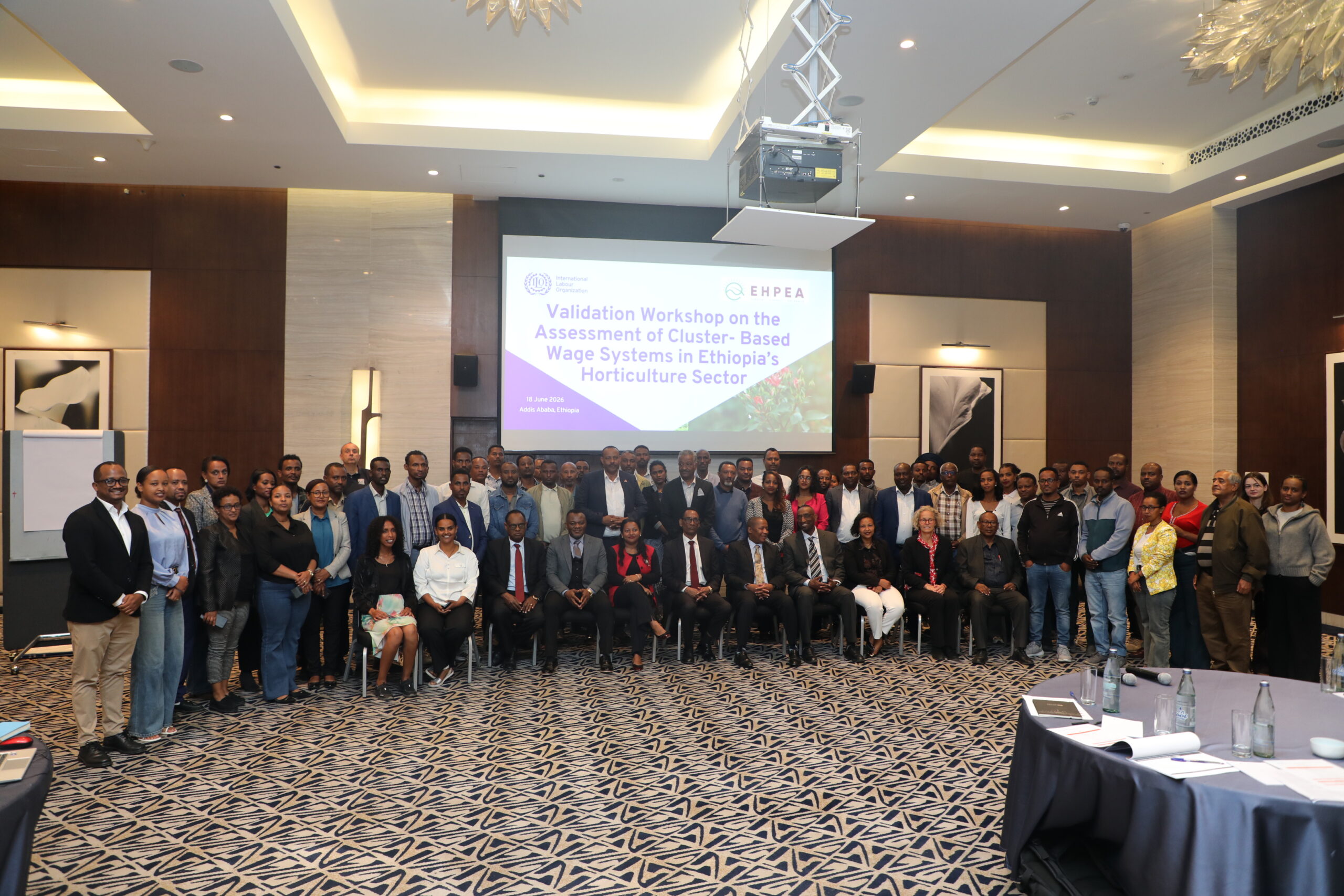
Standardised Wage Framework Takes Shape for Ethiopia’s Horticulture Sector
How transparent, predictable and well‑governed wage systems can boost decent work, drive responsible business and sharpen the sector’s global competitiveness.
Why Wage Reform Matters in Ethiopian Horticulture
Ethiopia’s horticulture industry is a cornerstone of the nation’s export earnings and one of the few sectors that offers formal wage employment to a large number of women. As production expands, the challenge is to raise workers’ incomes while keeping farms financially sustainable. A robust wage framework—clear on pay levels, allowances, in‑kind benefits and payment methods—offers a solution that benefits workers, employers and the wider economy.
“Well‑designed wage systems are a powerful engine for economic transformation, productivity growth and social progress,” said Khumbula Ndaba, Director of the ILO Country Office for Ethiopia, Djibouti, Somalia, Sudan and South Sudan.
The Validation Workshop: From Analysis to Action
From 12–14 May 2026, a validation workshop convened by the International Labour Organization (ILO) gathered farm managers, worker representatives, regional authorities, national institutions and tripartite partners. Hosted under the Setting Adequate Wages in Agriculture (SAW‑A) project and the ILO Global Centre on Digital Wages for Decent Work, the event was co‑organized with the Ethiopian Horticulture Producers Exporters Association (EHPEA).
Key Outcomes
| Outcome | Description |
|---|---|
| Validation of findings | Participants confirmed the assessment results on wage adequacy, transparency and governance across horticultural clusters. |
| Gap identification | Remaining weaknesses—regional disparities, gender pay gaps, and limited digital payment coverage—were pinpointed. |
| Practical measures | Concrete steps were agreed to strengthen wage adequacy, improve transparency and foster sector‑wide social dialogue. |
| Road‑map for a standard framework | The workshop laid the groundwork for a standardised wage framework that reflects real‑world farm operations and worker perspectives. |
What the Assessment Revealed
The sector‑wide assessment examined:
- Base pay and allowances – Comparing current rates with living‑cost benchmarks.
- In‑kind benefits – Housing, transport and food provisions.
- Payment systems – Cash versus digital channels, frequency and reliability.
- Disparities – Differences by region, contract type and gender.
A major recommendation is the expansion of digital wage payments, which can enhance speed, traceability and financial inclusion for workers. For more on digital payroll solutions, see the ILO Global Centre on Digital Wages for Decent Work.
Voices from the Workshop
Government Perspective
Tiumegzi Berhe Fikadu, CEO for Industrial Relations and Labour Inspection at Ethiopia’s Ministry of Labour and Skill, stressed that credible evidence, sector realities and strong social dialogue are essential for sustainable wage systems.
“Strengthening transparent and credible wage systems is becoming increasingly important for both workers and enterprises,” he said.
Employer/Union View
Yodit Girma, speaking for EHPEA’s Executive Director, highlighted the positive impact of the cluster‑based wage scheme already in place:
“It has contributed to improved wage levels and better industrial harmony between employers and workers.”
EHPEA has been a catalyst in negotiating these cluster wages, aiming for a fair, transparent and structured wage‑setting mechanism that mirrors on‑the‑ground realities.
Towards a Standardised Wage Framework
The workshop’s consensus will feed directly into the final assessment report and shape the upcoming framework. Expected hallmarks include:
- Evidence‑based wage levels anchored to productivity and cost‑of‑living data.
- Digital payment integration, reducing delays and cash‑handling risks.
- Sector‑wide social dialogue mechanisms, ensuring ongoing worker‑employer engagement.
“A credible wage framework is not only about technical evidence; it also requires shared ownership by the people and institutions that will implement it,” stressed Ndaba.
How This Benefits Ethiopia’s Economy
- Higher purchasing power for workers fuels domestic demand and stimulates local markets.
- Predictable labor costs help farms plan investments, improving competitiveness in global markets.
- Gender‑responsive wages empower women, reinforcing Ethiopia’s broader development goals.
For additional insight into Ethiopia’s horticulture export performance, refer to the Ethiopian Ministry of Trade’s horticulture statistics.
Next Steps
- Finalize the assessment report – Incorporating stakeholder feedback collected during the workshop.
- Draft the standardised wage framework – Aligning legal, technical and digital components.
- Pilot implementation – Testing the framework in selected clusters before national roll‑out.
- Continuous monitoring – Using digital tools to track wage compliance and impact on productivity.
About the Initiatives
- Setting Adequate Wages in Agriculture (SAW‑A) – A multi‑country project that promotes living‑wage standards and collective bargaining in agriculture. Learn more at the ILO SAW‑A page.
- ILO Global Centre on Digital Wages for Decent Work – Supports the transition from cash to secure digital payments, fostering transparent and responsible wage delivery. Details are available on the Digital Wages Centre website.
Keywords for SEO
- Ethiopia horticulture wage framework
- Standardised wage system Ethiopia
- Digital wage payments Africa
- SAW‑A project Ethiopia
- ILO wage transparency
- Decent work in agriculture
By integrating these terms and linking to reputable external sources, this article is optimized for search visibility while delivering a clear, engaging account of the landmark wage‑setting workshop.
