




In the shifting politics of the Horn of Africa, Ethiopia’s armed crises are increasingly understood not as isolated eruptions of grievance but as sustained and interconnected conflicts shaped by forces extending beyond their origins. Grievances exist in every society, including Ethiopia, and they are neither unique nor inherently destabilizing. Left to themselves, such tensions tend to evolve through negotiation, political adjustment, or localized confrontation that eventually exhausts itself. What transformed these particular grievances into prolonged and expanding conflict, however, was the entry of external benefactors who recognized an opportunity. In this view, Eritrea stands at the center of that intervention, intersecting with networks linked to remnants of the Tigray People’s Liberation Front that never fully passed through disarmament and demobilization, reinforced through organized diaspora structures, and aligned with broader geopolitical interests that include Egypt. The result was not the creation of grievances, but their conversion into instruments capable of destabilizing the Ethiopian state.
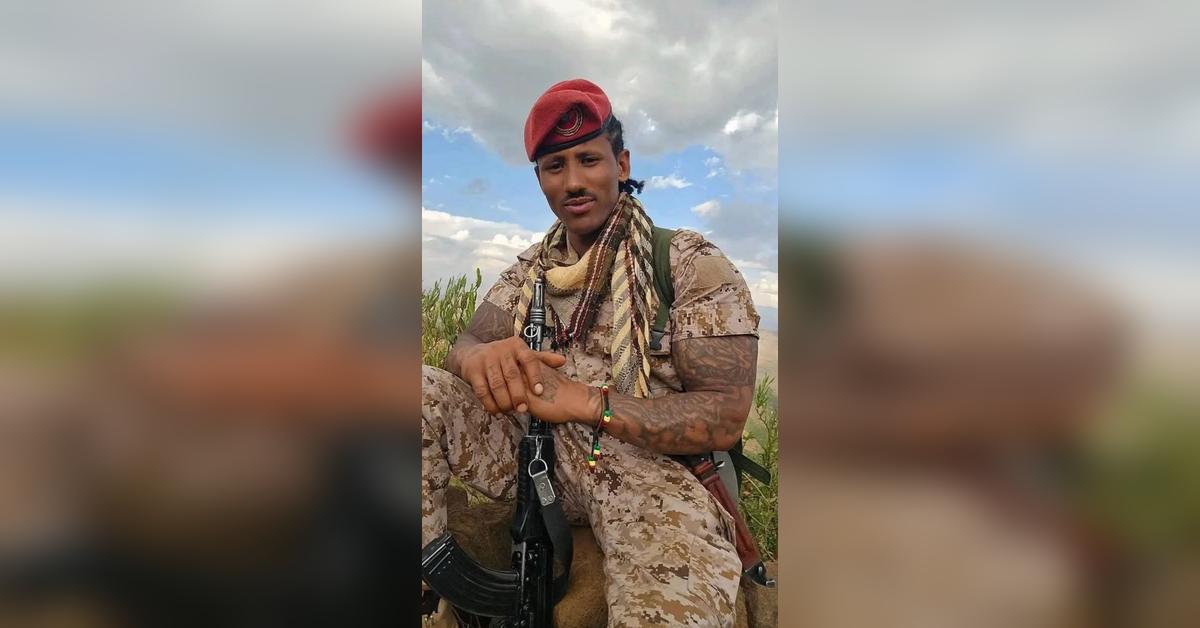
The evolution of the Fano movement illustrates this transformation with unusual clarity. Once tied to local defense, immediate security concerns, and a legacy of Ethiopian resistance, it has fractured into two distinct realities. On one side were fighters driven by tangible grievances rooted in local conditions. On the other, what many now describe as captured factions, sometimes referred to as Jawisa, whose direction is increasingly viewed as having diverged from the original cause and fallen under external influence. This distinction reflects not a change in grievances, but a change in control. A phrase now circulating widely captures that shift. “ትግሉ ተጠልፏል” meaning the struggle has been hijacked. This is expressed directly in public commentary such as this post stating the struggle has been hijacked, this discussion reinforcing the same conclusion, and Dawit Woldegiorgis stating the struggle has been hijacked. The convergence of these voices reflects a shared realization rather than coordinated messaging.
That realization is reinforced by behavior on the ground. Fighters are returning home, not because grievances have disappeared, but because the struggle itself no longer reflects them. Those disengaging increasingly describe a structure that operates beyond local control, influenced by Shabia and sustained through networks linked to TPLF elements that retained access to weapons after incomplete demobilization. The continued availability of arms, coordination, and operational capacity suggests supply chains that exceed local capability. Reports and claims of cross border activity, including training pathways through Sudan, reinforce the perception that what appears as internal conflict is sustained through regional networks.
This interpretation is reinforced by official claims. Ethiopia has formally accused Eritrea of backing armed groups within its territory, framing such involvement as a direct threat to national stability. Reuters reports these accusations. Eritrea has denied these allegations. Reuters reports Eritrea’s denial. The dispute highlights the strategic significance of the accusation itself.
Beyond Amhara, a similar structural pattern appears in Oromia. The Oromo Liberation Army continues armed activity without presenting a clearly defined and updated political objective. Longevity without clarity points not to sustained grievance but to sustained function. In this framing, the group increasingly resembles a long running destabilizing instrument rather than a conventional insurgency. Its historical cross border positioning reinforces this interpretation see background on OLA. The absence of a clear political end state raises the question of whether continuation itself has become the objective.
Across these conflicts a consistent logic emerges. Grievances are sparks, not engines. They exist everywhere, but they do not automatically produce prolonged war. What sustains them is intervention. In Amhara, Oromia, and the northern political landscape shaped by TPLF legacies, the same sequence is increasingly recognized. A local issue appears. It is identified. It is supplied. It is prolonged. Identity based narratives of ethnicity and religion are not the true drivers of violence but the tools used to mobilize participation and justify escalation. The result is not the resolution of grievances but the multiplication of instability.
The battlefield is only one dimension. The informational space mirrors and amplifies it. Social media ecosystems circulate narratives that intensify division while presenting themselves as authentic voices of Ethiopian communities. These narratives deepen mistrust and extend conflict into perception and identity. Diaspora structures reinforce this system in a coordinated manner through cultural gatherings, messaging networks, and sustained engagement. Eritrea’s diaspora tax system illustrates the continuity of state linkage beyond borders see Eritrea diaspora tax system. Financial ties create structural alignment, and structural alignment enables coordinated influence across borders.
What is changing now is awareness. Fighters are returning home. Communities are questioning. The government is increasingly vocal. The idea that these conflicts have been extended beyond their natural limits is no longer marginal. It is becoming widely recognized. The implication is direct. Had external actors not intervened, these tensions would likely have been contained or resolved through Ethiopia’s internal mechanisms. What made them different was not their existence, but their exploitation.
That awareness is beginning to shift the strategic landscape. As recognition grows, so does resistance to manipulation. External actors who once benefited from opacity now face exposure. Their room to operate narrows as both public and state awareness increases. In this context, the risks for those actors also grow. Strategic overreach carries consequences, including the potential loss of critical leverage such as access, influence, or regional positioning tied to key assets like ports.
Most Ethiopians now recognize the pattern. What once appeared as multiple struggles is increasingly understood as a single dynamic. Ethiopia is not only confronting conflict. It is confronting the external amplification of its own internal tensions. And as awareness spreads, the conditions that allowed that amplification begin to weaken.
What burns today is not grievance alone, but a fire that was deliberately kept alive and is now being recognized for what it is.
