




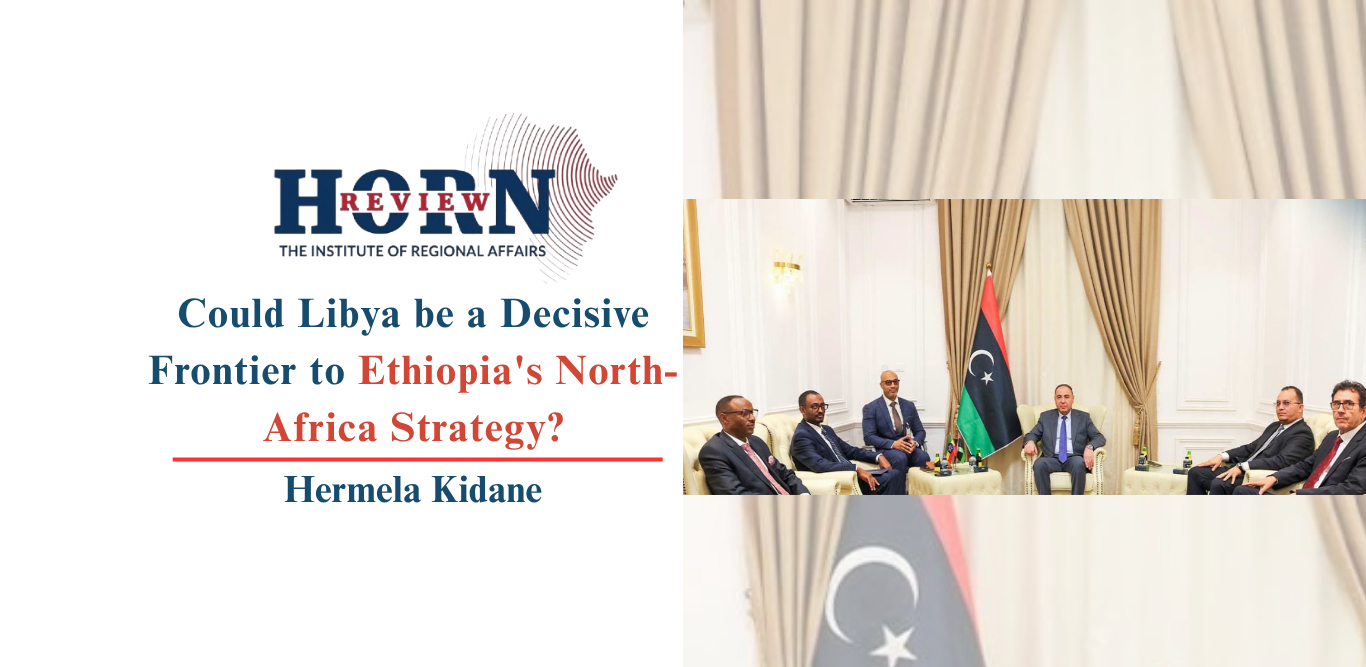
Meta Title: Ethiopia-Libya Relations: Strategic Reset for Migration, Security & Red Sea Access
Meta Description: Ethiopia is re-engaging Libya to protect migrants, curb Sahel arms flows, and diversify diplomacy. Explore the strategic shift from revolutionary rivalry to pragmatic partnership.
Focus Keyword: Ethiopia Libya relations
Slug: ethiopia-libya-relations-strategic-partnership
Ethiopia-Libya Relations: A Pragmatic Reset Amid Horn of Africa Instability
Ethiopia Libya relations are undergoing a deliberate transformation, shifting from decades of ideological volatility and dormancy toward a structured partnership anchored in concrete national interests. As Addis Ababa navigates a congested geopolitical environment—defined by Nile water disputes, Red Sea access ambitions, and the spillover from Sudan’s civil war—Tripoli has emerged as a critical node for citizen protection, migration management, and regional security architecture.
This recalibration is not born of sentimentality but of necessity. For a nation often reacting to crises, the Libyan opening represents a measured exercise in shaping its extended periphery rather than merely enduring it.
Historical Context: From Revolutionary Allies to Diplomatic Rupture
Understanding the current thaw requires acknowledging a history defined by sharp pivots. In the 1980s, the Derg regime in Addis Ababa and Muammar Gaddafi’s government in Tripoli forged close ties rooted in shared revolutionary orientation. This axis facilitated mutual support for liberation movements, including coordination of assistance to the Sudan People’s Liberation Army (SPLA) and aligned voting blocs within the Organization of African Unity.
However, the partnership proved fragile. Relations collapsed abruptly in 1991 when the transitional Ethiopian government expelled the Libyan ambassador, citing activities incompatible with diplomatic status. The rupture deepened when Gaddafi pivoted to support Eritrea during the devastating 1998–2000 border war. For nearly three decades, the relationship remained vestigial, overshadowed by Ethiopia’s focus on immediate Horn affairs and Libya’s post-2011 fragmentation.
The Current Landscape: Navigating a Divided Libya
Today, Libya remains a divided polity. The internationally recognized Government of National Unity (GNU) sits in Tripoli, while a parallel administration in the east operates under Khalifa Haftar’s Libyan Arab Armed Forces (LAAF). External actors cement this bifurcation: Turkey maintains a military presence in the west, while Egypt and the United Arab Emirates wield influence in the east.
Yet, this complexity has not precluded Ethiopia’s constructive engagement. Addis Ababa recognizes that waiting for a unified Libyan state is a luxury it cannot afford given the immediate threats emanating from the region’s instability.
Diplomatic Momentum: High-Level Engagement and Institutional Frameworks
Recent diplomatic activity signals a definitive end to dormancy. Libyan Prime Minister Abdul Hamid Dbeibah’s visit to Addis Ababa catalyzed a new phase of dialogue, followed by preparatory expert meetings held in Tripoli in late September 2026.
These discussions established a comprehensive agenda covering:
- Security cooperation and intelligence sharing
- Migration management and consular affairs
- Investment protocols and air transport links
Both sides agreed to convene the second session of the Joint Ministerial Committee in Tripoli during the first half of 2027. Additionally, Ethiopia has extended diplomatic support for Libya’s candidacy for a non-permanent UN Security Council seat for the 2028–2029 term—a low-cost, high-value gesture generating significant goodwill in North African capitals.
Priority One: Protecting the Ethiopian Diaspora
The most immediate driver of this rapprochement is citizen welfare. Ethiopians constitute a significant portion of the migrant population in Libya, driven by domestic economic pressures and displacement. They utilize Libya as a primary departure point for perilous Mediterranean crossings.
The vulnerability of this community was starkly highlighted by the eastern Libyan authorities’ decision to restrict entry for Ethiopian nationals (alongside Sudanese, Eritreans, and Somalis) in mid-2026. Engaging the GNU in Tripoli on consular frameworks and migration protocols converts a humanitarian crisis into a structured bilateral priority. This creates channels for advocacy, potential orderly labor migration agreements, and consular protection mechanisms that previously did not exist.
Priority Two: Security, the Sahel, and the Sudan Nexus
Beyond migration, security considerations supply deeper strategic weight. Libya’s southern reaches function as a northern terminus for trafficking routes moving weapons, fighters, and illicit finance across the Sahel—Saharan belt. The conflict in Sudan has intensified these flows.
Investigative reporting has documented the use of facilities in eastern Libya—particularly around Kufra and areas linked to Benghazi—as logistical nodes supporting arms transfers connected to Sudan’s Rapid Support Forces (RSF). The Libya-Chad-Sudan border triangle operates as a zone of limited state authority where historical patterns of weapons movement from Libyan stockpiles into the Horn intersect with contemporary networks.
For Ethiopia, these are not distant developments; they are proximate threats. Functional security channels with Tripoli offer potential mechanisms for:
- Intelligence sharing on arms trafficking routes.
- Coordination on border monitoring.
- Interdiction of destabilizing flows before they reach the Horn.
While Libya’s internal divisions limit the scope of any external partner’s influence, they also make nuanced, non-exclusive engagement the only realistic approach.
Strategic Diversification: A Rare North African Opening
Libya offers Ethiopia something increasingly rare: a North African arena relatively free of the rivalries that constrain Ethiopian diplomacy elsewhere. Addis Ababa maintains a limited diplomatic footprint in Algeria and Morocco, often complicated by the Western Sahara dispute and rival alliances.
Conversely, the substantial existing Ethiopian community in Libya provides a natural foundation for sustained people-to-people and commercial ties. By positioning itself as a constructive partner focused on migration management, counter-trafficking, and consular protection—interests that align with the functional needs of Libyan authorities—Ethiopia advances diversification without seeking to displace existing external powers like Turkey, Egypt, or the UAE.
The Roadmap to 2027: Disciplined Incrementalism
The upcoming 2027 Joint Ministerial Committee must deliver concrete deliverables to institutionalize this momentum. A realistic roadmap requires:
- A Bilateral Consular Framework: Legally binding protocols to safeguard Ethiopian nationals, including access to detention centers and streamlined repatriation procedures.
- Security Cooperation Memorandum: Focused specifically on border monitoring, arms trafficking interdiction, and counter-terrorism intelligence sharing in the Fezzan region.
- Investment Protocols: Positioning Ethiopian enterprises (construction, agriculture, pharmaceuticals) within Libya’s eventual reconstruction economy.
- Parallel Channels to Eastern Actors: Maintaining quiet diplomatic lines to Benghazi-based authorities—not as a hedge against Tripoli, but as a recognition that durable arrangements on migration and security require the acquiescence of actors controlling southern desert approaches.
Conclusion: Shaping the Periphery
Libya will not supplant the Horn of Africa as the core of Ethiopian foreign policy. However, it offers a space where interests can advance through cooperation rather than confrontation. The relationship—born in revolutionary solidarity, collapsed in recrimination, and dormant for decades—now presents an opportunity for reconstruction on the foundation of mutual benefit and pragmatic statecraft.
For a state navigating the rapids of Nile diplomacy, Red Sea competition, and Sudanese spillover, the Libyan reset is a necessary expansion of strategic depth. It signals a maturity in Addis Ababa’s foreign policy: the capacity to manage complexity, engage fragmented counterparts, and secure its citizens and borders through diplomacy rather than default.
Frequently Asked Questions (FAQ)
Why is Ethiopia renewing ties with Libya now? Ethiopia is pursuing a pragmatic strategy driven by three core needs: protecting its large migrant population in Libya, securing its southern flank from arms flows transiting the Libya-Chad-Sudan triangle (exacerbated by the Sudan war), and diversifying diplomatic partnerships beyond the immediate Horn of Africa.
What is the current political status of Libya? Libya is divided between the UN-recognized Government of National Unity (GNU) in Tripoli (west) and a rival administration backed by Khalifa Haftar’s LAAF in the east. External actors like Turkey, Egypt, and the UAE maintain significant influence in their respective spheres.
How does the Sudan conflict affect Ethiopia-Libya relations? The Sudan war has turned Libya’s southern desert into a major logistical hub for arms and fighters moving toward the RSF. This directly threatens Ethiopian security, making intelligence sharing and border monitoring with Libyan authorities a strategic imperative for Addis Ababa.
What was the historical relationship between Ethiopia and Libya? In the 1980s, the Derg regime and Gaddafi were close revolutionary allies. Relations ruptured in 1991 after Ethiopia expelled the Libyan ambassador and worsened when Gaddafi supported Eritrea during the 1998–2000 war. Ties remained frozen for nearly 30 years.
What are the expected outcomes of the 2027 Joint Ministerial Committee? Key deliverables include a binding consular agreement for migrant protection, a security MoU targeting arms trafficking in the Fezzan region, and investment frameworks for Ethiopian businesses in Libya’s reconstruction sector.
