




Meta Title: Ethiopia Targets Continental Pharma Hub Status at AHMTEC 2026 | AfCFTA & WHO Maturity Level 3 Drive
Meta Description: Ethiopia aims to become Africa’s pharmaceutical manufacturing hub by 2030. Health State Minister Dr. Muluken Argaw outlines strategy leveraging AfCFTA, pooled procurement, and WHO Maturity Level 3 regulation at AHMTEC 2026.
Focus Keyword: Ethiopia pharmaceutical manufacturing hub
Slug: ethiopia-pharmaceutical-manufacturing-hub-ahmtec-2026
Tags: African Healthcare Manufacturing, AfCFTA, African Medicines Agency, Pooled Procurement, Vaccine Production, API Manufacturing, Medical Tourism Ethiopia
Ethiopia Positions Itself as Africa’s Pharmaceutical Manufacturing Hub at AHMTEC 2026
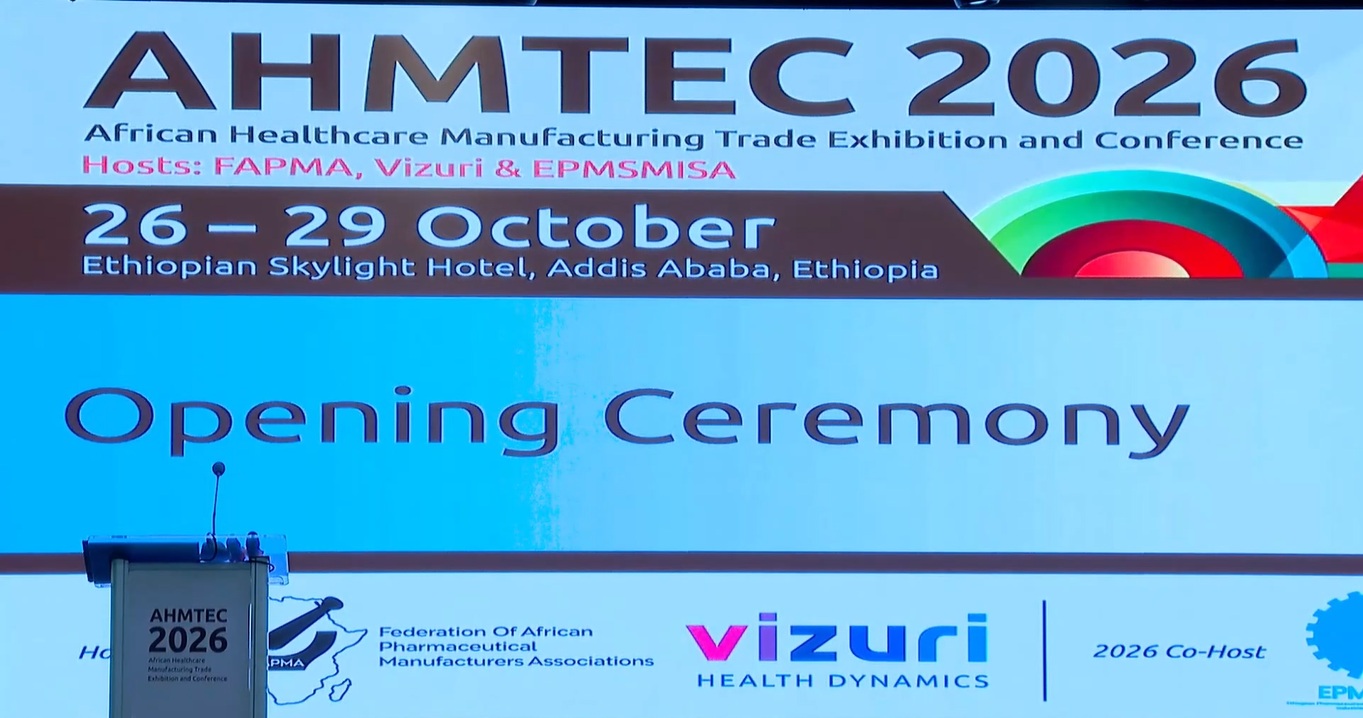
Addis Ababa — Ethiopia is accelerating its ambition to become the continent’s primary pharmaceutical manufacturing hub, leveraging the African Continental Free Trade Area (AfCFTA), regional value chains, and a regulatory framework recently benchmarked at WHO Maturity Level 3. The commitment was underscored by Health State Minister Dr. Muluken Argaw during the opening of the African Healthcare Manufacturing Trade Exhibition and Conference (AHMTEC) 2026 in Addis Ababa.
Speaking under the theme “Industrialise to Commercialise,” Dr. Muluken told delegates that local production of essential medicines, vaccines, and medical devices is no longer optional—it is central to Africa’s health security, economic transformation, and the urgent reduction of import dependence.
Key Takeaway: With a domestic pharmaceutical market projected to exceed $4 billion by 2030, Ethiopia is targeting the production of African-made vaccines, insulin, oncology drugs, and Active Pharmaceutical Ingredients (APIs) within the next decade.
AfCFTA and Regulatory Harmony: The Engines of Growth
Dr. Muluken emphasized that Ethiopia’s ambition “looks beyond our borders.” The strategy rests on three operational pillars designed to unlock cross-border trade and investment:
- AfCFTA Implementation: Utilizing the African Continental Free Trade Area to dismantle tariff and non-tariff barriers, enabling the free movement of pharmaceutical goods across the continent.
- Regulatory Cooperation: Aligning national standards with the African Medicines Agency (AMA) to harmonize registration processes and reduce market fragmentation.
- Pooled Procurement: Connecting quality-assured African supply with consolidated continental demand through mechanisms like the African Pooled Procurement Mechanism (APPM).
“This requires practical progress in trade facilitation, regulatory cooperation, and market access requirements,” Dr. Muluken stated, noting that the AMA and pooled procurement could significantly reduce duplication and lower costs for member states.
Read: How the African Medicines Agency strengthens regulatory systems
Ethiopia’s Competitive Edge: Infrastructure & WHO Maturity Level 3
Providing the investor perspective, Dr. Tadesse Teferi, President of the Ethiopian Pharmaceuticals and Medical Supplies Manufacturing Industries Sectoral Association, detailed the concrete assets already in place:
- Dedicated Industrial Park: A specialized pharmaceutical industrial park offering plug-and-play infrastructure.
- Regulatory Maturity: The Ethiopian Food and Drug Authority (EFDA) operates at WHO Maturity Level 3 (ML3), placing it among the strongest regulatory systems in Africa. This certification signals to global partners that Ethiopian-made products meet international quality, safety, and efficacy standards.
- Policy & Political Will: Explicit government backing for the sector as a strategic priority.
Dr. Tadesse outlined a bold vision: “Ethiopia intends to become the home of African vaccines, of African insulin, of African oncology medicines, and of African APIs in the decade ahead.”
Industry Voices: Supply Security and Predictable Markets
Dr. Emmanuel Mujuru, Chairman of the Federation of African Pharmaceutical Manufacturers Associations (FAPMA), urged manufacturers to move from rhetoric to action. “We are at a stage where, as African manufacturers… we need to be seen to plug into the form and be seen to be playing our part,” he asserted, highlighting the daily operational challenges of raw material sourcing and foreign exchange access.
Complementing this, Ann-Marie Hosang-Archer, Acting Council Chair of Vizuri Health Dynamics, noted that the convergence of the African Pooled Procurement Mechanism, the African Medicines Agency, and new financing initiatives are finally creating the predictable market conditions necessary to de-risk private capital investment in the sector.
Why This Matters for Africa’s Health Security
| Challenge | AHMTEC 2026 Solution Pathway |
|---|---|
| High Import Dependence ( >70% of medicines imported) | Regional Value Chains & AfCFTA Preferences |
| Regulatory Fragmentation (54 different systems) | African Medicines Agency (AMA) Harmonization |
| Market Uncertainty for Manufacturers | African Pooled Procurement Mechanism (APPM) |
| Technology Gaps (APIs, Vaccines) | Tech Transfer Partnerships & Industrial Parks |
The Road Ahead: From Policy to Production
The conference signaled a shift from high-level declarations to transactional deal-making. For Ethiopia, the $4 billion market projection by 2030 represents not just domestic demand, but a gateway to the wider African market via AfCFTA.
Next Steps to Watch:
- Investment Closures: Tracking FDI announcements originating from AHMTEC 2026 matchmaking sessions.
- AMA Operationalization: The speed at which the African Medicines Agency begins joint assessments.
- API Strategy: Progress on Ethiopia’s specific roadmap for Active Pharmaceutical Ingredient synthesis to reduce reliance on Chinese and Indian imports.
Frequently Asked Questions (FAQ)
What is AHMTEC? The African Healthcare Manufacturing Trade Exhibition and Conference (AHMTEC) is a premier continental platform connecting African manufacturers, regulators, buyers, and investors to advance local pharmaceutical production.
Why is WHO Maturity Level 3 important for Ethiopia? WHO Maturity Level 3 indicates a stable, well-functioning regulatory system. It builds international trust, allowing Ethiopian manufacturers to export more easily to other African nations and global procurement agencies like Gavi and The Global Fund.
How does Pooled Procurement help manufacturers? By aggregating demand from multiple countries (via the African Pooled Procurement Mechanism), manufacturers gain guaranteed volumes, reducing the risk of overproduction and enabling economies of scale that lower unit costs.
What specific products is Ethiopia targeting? Priority areas announced include vaccines, insulin, oncology (cancer) medicines, and Active Pharmaceutical Ingredients (APIs).
Related Reading
- AfCFTA Rules of Origin for Pharmaceuticals: What Manufacturers Need to Know
- The Role of the African Medicines Agency in Harmonizing Regulation
- Ethiopia’s Industrial Parks: Incentives for Pharma Investors
Source: Ethiopian News Agency (ENA), AHMTEC 2026 Proceedings, Addis Ababa, October 27, 2026.
