




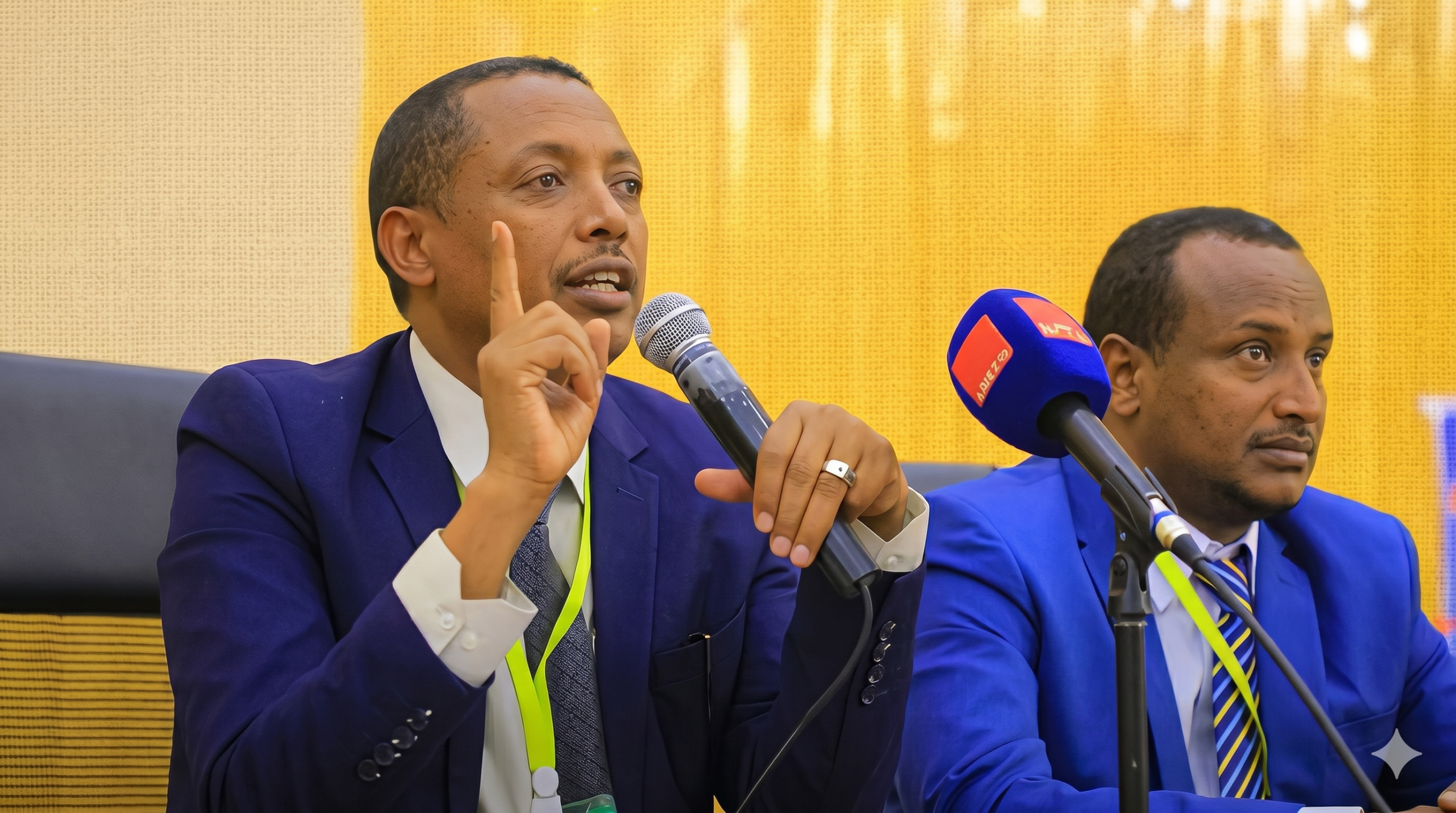
Statement From Office Of The Welkait Tegede Setit Humera Zone Administration in response to Human Rights Watch Report titled, “Ethiopia: Persecution of Tigrayans Unrelenting”
The Administration has carefully reviewed the recent report published by Human Rights Watch (HRW) concerning the situation in the Welkait Tegede Setit Humera (WTSH) Zone. While we acknowledge the important role that human rights organizations can play in promoting accountability and transparency; we wish to express our concern regarding the report’s methodological limitations, false allegations and framing, and its possible wrong implications.
The report states that interviews were conducted with 40 individuals, 17 of whom were reportedly displaced from the area. In our view, such a limited sample size warrants careful scrutiny before any definitive conclusions can be drawn. It remains questionable whether these interviews provide a reliable or representative basis for the serious allegations made. This raises legitimate concerns about potential bias or external influence in the information-gathering process.
Remote interviews, particularly in conflict-affected areas, present well-recognized challenges in verifying the identity, location, and motivations of sources. The Horn of Africa continues to face significant information warfare dynamics. Accordingly, there is a reasonable basis to consider that some sources may be affiliated with organized advocacy networks rather than reflecting the views of the general local population, including potential links to the Tigray People’s Liberation Front (TPLF).
The report refers to the area as “contested Western Tigray.” The Administration wishes to note that this designation does not reflect the longstanding historical and constitutional claim of the WTSH Zone communities. Under the Pretoria Peace Agreement, the area is referred to as contested territory. Our side respects this designation, not because we concede that the territory is genuinely contested, but because we remain committed to prioritizing peace and constructive dialogue over continued conflict. It is also worth recalling that the area was forcibly and illegally incorporated into the Tigray Region in 1991 by the then TPLF-led government, before the adoption of the FDRE Constitution.
The report employs the term “ethnic cleansing,” a designation carrying specific legal weight under international law. Furthermore, the figure of 740,000 displaced persons appears to derive from sources associated with TPLF-aligned administrative structures, which may have an interest in inflating IDP numbers and maximizing aid allocations.
Despite this, it is important to clarify that thousands of ethnic Tigrayans continue to live peacefully alongside the native Amhara people in the WTSH Zone. Several months ago, the Zonal Administration explicitly welcomed the return of internally displaced persons, with the sole exception of individuals implicated in criminal acts. We must also emphasize that justice should be upheld for all, without exception.
To cite specific examples from the current report: it is alleged that ethnic Tigrayans are denied identification cards, face restricted freedom of movement, and are subject to arbitrary arrest. Based on firsthand knowledge of the situation, we can state with confidence that these claims are unfounded. They appear to be driven by political motives aimed at facilitating the return of the Tigray People’s Liberation Front (TPLF) to the area, rather than addressing the genuine welfare of internally displaced persons.
For the matter of fact, during the recent urban land allocation in Humera city, individuals lacking adequate housing in the city were treated equally, without any form of ethnic discrimination. This fact can be verified through on-the-ground observation and assessment.”
It is the view of this Administration that the HRW report prioritizes a predetermined narrative over a balanced, evidence-based assessment. Its recommendations, including targeted sanctions and international intervention, risk exacerbating rather than resolving existing tensions. Such measures would not serve the cause of human rights but could instead open the door to a return of the very actors who contributed to the initial outbreak of conflict in the area.
We would also like to recall in April 2022 that the same organization released a report alleging “ethnic cleansing” and forced expulsion in the WTSH Zone. If such claims were accurate, the recent assertion of ongoing institutional discrimination would be inconsistent with the facts on the ground. This apparent contradiction suggests that the earlier reports have been based on unverified or incomplete information.
Thus, we remain committed to:
1. Independent investigation and verification process to ensure the safety of civilians;
2. The safe, voluntary, and dignified return of internally displaced persons, excluding crime perpetrators with in WTSH Zone;
3. Resolving issues through constitutional and legal mechanisms;
4. Upholding the rule of law, holding individuals accountable for specific crimes irrespective of ethnicity; rejecting baseless and politically motivated accusations.
We respectfully urge the international community to set aside this report’s unverified and unbalanced claims and instead lend its support to Ethiopian-led peace processes, which offer the most sustainable path to peace, stability, justice, and reconciliation.
Respectfully,
24th April, 2026 G.C
Disclaimer: Content under the Press Release category is supplied by third parties and published as submitted, without any editorial changes.
