




Navigating Instability in the Horn of Africa: Implications for Regional and Global Security
The Horn of Africa—a region long characterized by conflict and weakened institutions—has reached a critical juncture. Domestic crises, previously viewed as local issues, are now being absorbed into a broader global security framework, particularly in the strategic areas surrounding the Red Sea and the Middle East. As maritime chokepoints and energy corridors increasingly fuel great power competition, the fragility of this region transforms into potential battlegrounds in a wider global struggle for control.
South Sudan: A Reflection of Fragility
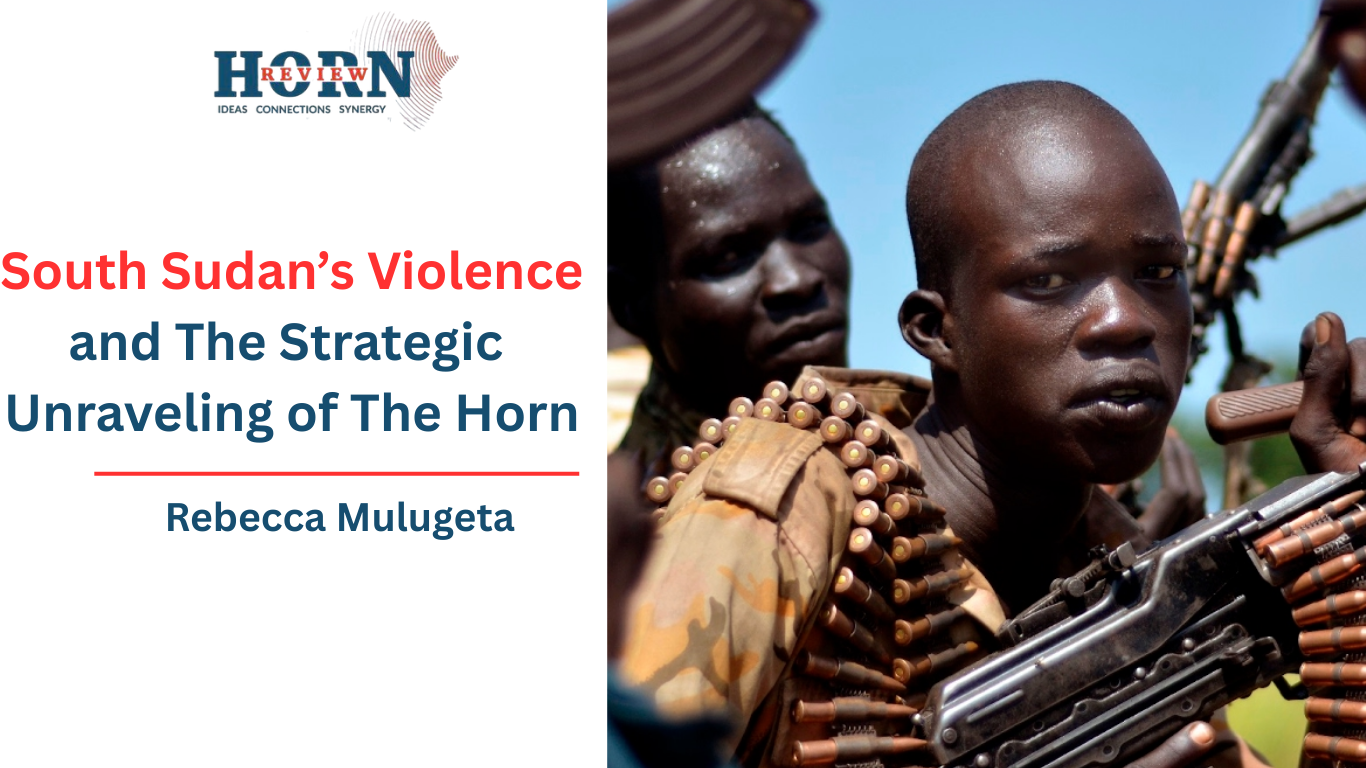
Since gaining independence, South Sudan has struggled with deep political and ethnic divisions, culminating in a devastating civil war in 2013 that led to one of the most severe humanitarian crises in Africa. Although a peace agreement in 2018 marked the cessation of large-scale conflict, armed groups remain active, and state institutions are still fragile. This ongoing tension is evident, as recent violent clashes in northern South Sudan highlight the region’s instability.
For further insights on recent incidents, visit the latest developments in South Sudan.
The Impact of Sudan’s Turmoil
Sudan’s strategic position—sharing borders with South Sudan and Ethiopia while having a long coastline along the Red Sea—makes it a critical player in regional stability. The ongoing conflict in Sudan disrupts the political, economic, and security dynamics not only within its borders but also across neighboring states. South Sudan, reliant on oil exports that travel through Sudanese pipelines, faces increasing economic pressure as institutional authority weakens in Sudan. The porous border between these two nations further complicates the situation, facilitating movement of armed groups and escalating violence.
The connection between South Sudan and Sudan sheds light on larger patterns of instability. For more information, see the implications of Sudanese instability on South Sudan’s economy here.
Ethiopia’s Security Challenges
Ethiopia is also grappling with its own security issues in light of threats from Eritrea. The Eritrean involvement, particularly in the Tigray region, has created a precarious scenario, where external shocks, such as rising instability in Sudan, can have significant repercussions for Ethiopia’s borders. Ethiopia must simultaneously manage border conflicts with Sudan while responding to Eritrean strategic posturing, deepening its own insecurities.
For further context, learn about the evolving tensions along the Eritrean-Ethiopian border here.
Cascading Effects of Regional Instability
The interaction among various conflicts within the Horn of Africa underscores a complex security architecture, where escalation in one area can yield ripple effects across neighboring states. This interconnected vulnerability becomes critical when viewed against external geopolitical pressures. The Horn’s position along the Red Sea enhances its significance in global trade, especially when tensions disrupt other vital maritime routes like the Strait of Hormuz.
Increasing conflicts across the Middle East have escalated concerns regarding these maritime pathways, prompting military and political engagement from both global and regional powers in the Red Sea basin. Such initiatives may be framed as security cooperation, but they largely reflect competition for influence in this strategically vital part of the world.
The Interplay of Internal and External Conflicts
Understanding the recent violence in South Sudan requires a lens that connects it to the dynamics of conflict in Sudan. As Sudanese power structures crumble, the resulting environment favors militias and irregular forces, increasing the likelihood of violent cross-border interactions. These conditions could worsen South Sudan’s internal tensions, potentially transforming local disputes into broader regional crises.
The unfolding conflicts are not isolated; they are becoming integral components of a global security matrix. Regional dynamics, coupled with international interests, highlight how local turbulence can trigger significant geopolitical ramifications.
Conclusion: Implications for Future Stability
The instability seen in South Sudan and Sudan forms part of a larger picture of deteriorating security across the Horn of Africa. With unresolved internal tensions and increasing external pressures, the region is moving towards a point where local conflicts cannot be decoupled from wider geopolitical dynamics. As the interplay of violence, economic dependencies, and political alliances shape future trajectories, monitoring these interconnected crises is vital for understanding the emerging landscape of North-Eastern Africa.
Recognizing these complexities is crucial as the region prepares to face ongoing and future challenges in security, economic stability, and political alliances. The Horn of Africa stands at a crossroads, and the ability to navigate this intricate web of conflict will be essential for maintaining regional stability and global peace.
