




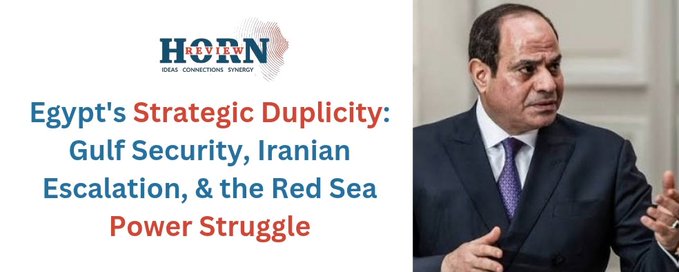
The Complex Geopolitical Landscape of Egypt and Its Regional Implications
Egypt’s political maneuvers illustrate a pattern of duplicity, especially in its dealings with the Muslim Brotherhood. Following the military coup in 2013 that ousted the democratically elected president Mohamed Morsi, President Abdel Fattah el-Sisi led a widespread crackdown on the Brotherhood, resulting in thousands of arrests and deaths. This intense campaign of political repression underscored Cairo’s commitment to eradicate the Brotherhood as a political entity within Egypt.
Contrasting Policies: Support for the Muslim Brotherhood in Sudan
Interestingly, the same regime that has sought to eliminate the Muslim Brotherhood domestically is actively fostering it in Sudan. This paradox arises from Egypt’s complex relationship with Sudanese military leader Abdel Fattah al-Burhan, who relies on Brotherhood factions for his regime’s stability amidst the ongoing conflict. The chaos in Sudan can be traced back to the fragile political balance established after the ousting of Omar al-Bashir in 2019, revealing a fragmented security apparatus as rival factions vie for power.
The Vacuum of Power: Competition Among Sudanese Forces
The conflict between the Sudanese Armed Forces and the Rapid Support Forces led by Mohamed Hamdan Dagalo has caused a security vacuum in which regional players, including Egypt, attempt to impose their strategic interests. This situation exemplifies Egypt’s opportunistic foreign policy, which prioritizes regime survival and political maneuvering over ideological consistency.
Regional Dynamics: Financial Ties and Diplomatic Balancing
Since the Arab Spring, Egypt’s economy has relied heavily on financial aid from Gulf monarchies like Saudi Arabia and the UAE. These nations have collectively provided billions aimed at stabilizing Egypt’s economy while expecting Cairo to align itself with their geopolitical interests. President el-Sisi often navigates complex relations with leaders like Mohammed bin Zayed Al Nahyan and Mohammed bin Salman to secure financial backing and maintain a delicate balance of power.
Responses to Regional Threats: The Iranian Conundrum
Recent tensions surrounding Iranian attacks on Gulf nations have highlighted the frail unity among regional actors. Gulf elites have expressed frustration over the Arab League’s reaction, critiquing it as inadequate in light of the escalating security threats. Established in 1945 and headquartered in Cairo, the Arab League has often been viewed as an extension of Egyptian foreign policy. This has led to a crisis of trust, with Gulf states feeling underrepresented and unsupported during times of crisis.
The Arab League’s Diminished Role
Critics argue that the Arab League has become ineffective, failing to deliver decisive support during Iranian provocations. The hesitance to explicitly condemn Iran during crisis moments erodes confidence in traditional Arab institutions, forcing Gulf nations to reassess their reliance on Egypt and the Arab League.
Eritrea’s Silent Diplomacy
Interestingly, Eritrea’s stance on these Iranian attacks has been notably muted. Historically aligned with Cairo, Eritrea’s silence reflects its desire to maintain consistency with Egyptian positions, despite its geographical proximity to the Gulf. This also reveals a broader alignment in regional politics, as both nations advocate for limiting non-coastal actors in Red Sea security discussions.
Shifting Alliances: The Emergence of Ethiopia
Amidst fluid regional dynamics, Ethiopia is positioning itself as a stabilizing force, advocating cooperative security frameworks across the Horn of Africa and the Gulf. Recent diplomatic overtures made by Ethiopian Prime Minister Abiy Ahmed seek to strengthen ties with Gulf states, potentially exacerbating rifts between Gulf nations and Egypt.
Future Implications: Rethinking Regional Relationships
The evolving landscape underscores a central issue: Gulf states may need to reconsider their relations with Egypt and the Arab League. By diversifying partnerships and seeking closer ties with emerging economies in Asia and Africa, they can enhance their security and geopolitical standing.
The Blurring Lines: Red Sea Security and Regional Integration
As competition intensifies, the boundaries of Middle Eastern and African security frameworks are increasingly interwoven. This transformation will have lasting implications as regional powers reassess alliances once considered stable. Control over critical maritime routes like the Bab el-Mandeb Strait has become a focal point for security planners, heightening non-traditional alliances while redefining the geopolitical map of the region.
Conclusion: A New Era in Regional Politics
This ongoing geopolitical shift signals a potential recalibration of alliances and power dynamics in the Red Sea basin. As Gulf countries pivot towards broader international partnerships, the fragile balance established in the past may undergo significant changes, reshaping the future of regional security and cooperation in the Middle East and beyond. The current geopolitical landscape demands careful navigation, as nations strive to redefine their roles and build resilient partnerships amid uncertainty.
For further reading on the geopolitical landscape of Egypt and its implications, consider checking sources such as Al Jazeera and Council on Foreign Relations.
This structured presentation ensures clarity and engages readers while optimizing for search engines through strategically placed keywords and external links.
