




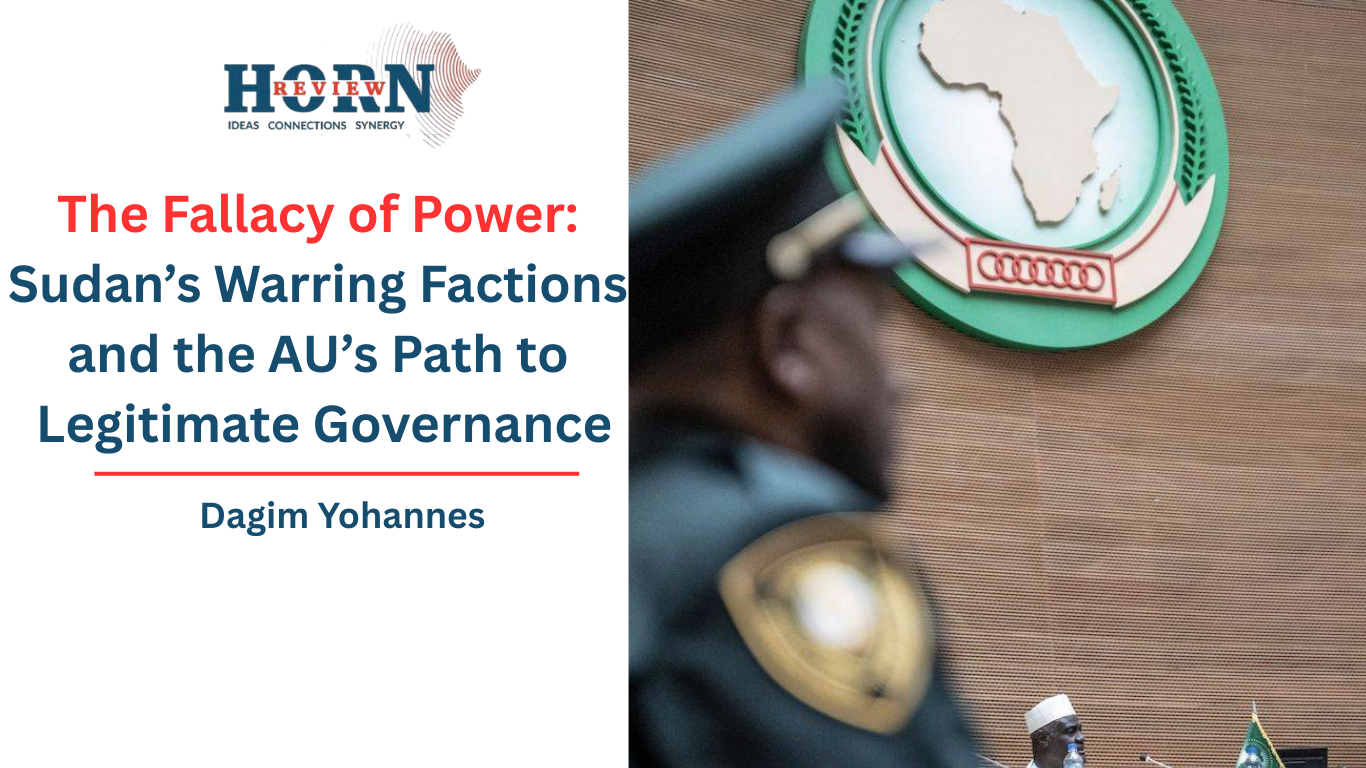
Understanding the Conflict in Sudan: A Battle for Legitimacy
Sudan is currently embroiled in a devastating war that is less about a legitimate state versus a rogue militia and more about a power struggle between two militarized entities: the Sudanese Armed Forces (SAF), headed by Abdul Fattah al-Burhan, and the Rapid Support Forces (RSF), led by Mohamed Hamdan Dagalo. Both factions are vying for control, yet neither possesses constitutional or democratic legitimacy.
The Roots of the Conflict
The roots of Sudan’s turmoil can be traced back to December 2018, when a popular uprising ignited as a response to deepening economic difficulties. This protest evolved into a nationwide demand for democracy and an end to Omar al-Bashir’s oppressive three-decade rule. Following al-Bashir’s ousting in April 2019—a maneuver supported by both the SAF and RSF—concerns over the military’s authority grew among Sudanese civil society and the international community.
Efforts to establish a civilian-led transition were put forth by The African Union, which suspended Sudan amid escalating tensions and called for a power-sharing agreement. The response was the 2019 constitutional declaration and the formation of a sovereign transitional council. However, power struggles continued.
The October 2021 Coup
In October 2021, tensions culminated in a military coup, during which the SAF and RSF detained Prime Minister Abdalla Hamdok, dissolved the transitional council, and declared a state of emergency. This coup marked a significant setback for Sudan’s democratic aspirations, undermining the 2019 constitutional framework that had granted legitimacy to the transitional government.
The African Union condemned this move as unconstitutional and promptly suspended Sudan from all activities, underscoring its commitment to civilian governance.
The War and Its Political Implications
The latest conflict, which erupted in April 2023, has transformed into a violent struggle for political legitimacy as both sides seek international recognition. The SAF has adopted strategies to project legal continuity, securing Sudan’s seat at the UN and being recognized by the Arab League. It even established the so-called “Hope Government” with Kamil Idris at the helm.
Conversely, the RSF has focused on territorial control, especially in regions like Darfur and Kordofan, aiming to convert military dominance into political power. In February 2025, RSF and allied groups signed the Tasis alliance charter in Nairobi, Kenya, which set the stage for a “Government of Peace and Unity” in Nyala, South Darfur.
The Role of the African Union
The African Union (AU) has rejected the RSF’s initiative, voicing concerns that such parallel structures could provoke deeper divisions and threaten Sudan’s sovereignty. The AU’s position is reinforced by the Lomé Declaration and the African Charter on Democracy, Elections, and Governance, which emphasize the necessity of constitutional legitimacy over mere territorial control.
The AU’s refusal to lift Sudan’s suspension under military authority reflects its understanding that reinstating Sudan amid ongoing conflict would legitimize coercive governance. Upholding the suspension reinforces the principle that legitimacy is earned through constitutional means rather than military force.
The Future of Sudan’s Governance
The trajectory of Sudan’s conflict demonstrates that both the SAF and RSF operate in a legitimacy vacuum, relying on coercion rather than lawful governance. To restore stability, regional and global actors must engage in ways that uphold these principles, refraining from legitimizing either faction through political recognition.
While national interests influence foreign policy, external involvement should prioritize the restoration of civilian-led governance. The ongoing situation indicates that any engagement with factions like the SAF or RSF, both of which are fraught with significant allegations, could be detrimental to Sudan’s future.
The path forward for Sudan must focus on the African Union’s roadmap, which underscores an inclusive civilian-led transitional process aimed at reinstating constitutional order and governance legitimacy in this war-torn nation.
Conclusion
In summary, the ongoing conflict in Sudan highlights a crucial battle for legitimacy. Those engaged in discussions and actions affecting Sudan’s future must focus on supporting a transition back to civilian authority, ensuring that sovereignty ultimately resides with the Sudanese people.
For additional detailed insights into Sudan’s political landscape and historical context, explore the resources provided by the African Union and United Nations.
