




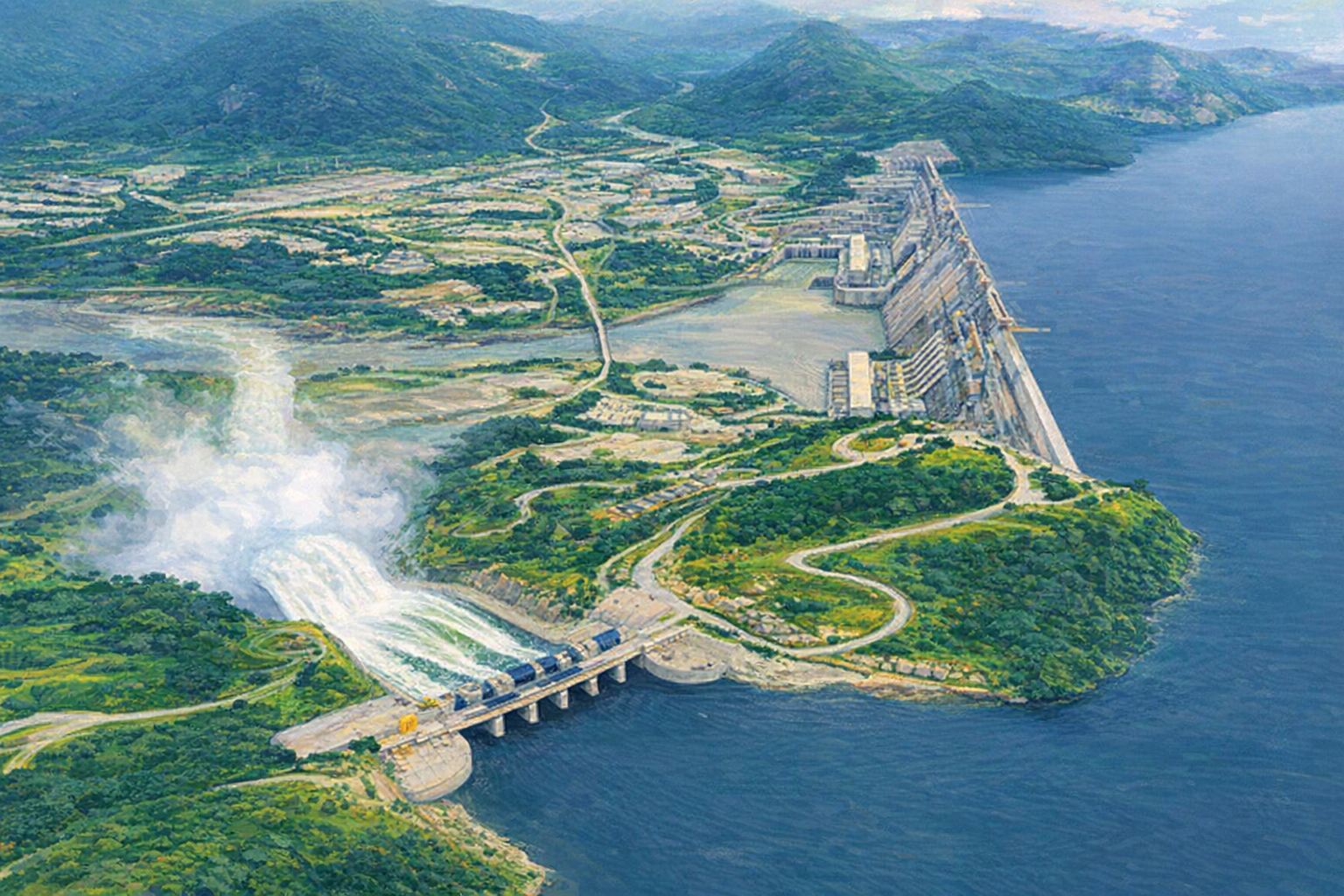
Ethiopia’s announcement of three new dams on the Blue Nile has once again triggered alarm in Cairo. But the reaction reflects a persistent misreading of Ethiopia’s strategic intent. Addis Ababa is not pursuing a policy of water denial—it is pursuing a policy of energy transformation. With a population exceeding 130 million and one of the fastest-growing economies in Africa, Ethiopia is positioning itself to become a leader in renewable energy, particularly hydropower. The completion of the Grand Ethiopian Renaissance Dam has already demonstrated what is possible: large-scale electricity generation without fundamentally disrupting downstream water flows when properly managed. The planned dams, projected to boost Ethiopia’s electricity output by up to 25%, are a continuation of that national vision—not a weapon against Egypt.
The core misunderstanding lies in conflating water consumption with water regulation. Hydropower dams, unlike irrigation mega-projects, do not “use up” water—they pass it downstream after generating electricity. Ethiopia’s objective is to harness flow, not stop it. In fact, better-regulated water systems can reduce extreme flooding and improve predictability along the Nile. While Egyptian concerns about water security are understandable—given its heavy dependence on the river—framing Ethiopia’s development as an existential threat has led to a confrontational posture that has yielded little progress over the past decade. Negotiations over the GERD stalled not because cooperation was impossible, but because Cairo replaced trust with pressure tactics and zero-sum assumptions.
Cairo’s current strategy—regional military signaling, diplomatic pressure, and attempts at encirclement—has not altered realities on the ground. The GERD is operational. Ethiopia’s dam-building capacity is growing. And new projects are already moving forward. Continuing down this path risks deepening mistrust while offering no practical solution to Egypt’s long-term water challenges. A country of Ethiopia’s scale, trajectory, and geographic position cannot be coerced into abandoning its development ambitions. The more sustainable path is not confrontation, but recalibration.
There is, in fact, a compelling case for cooperation. Ethiopia’s expanding hydropower capacity presents an opportunity for regional energy integration, where surplus electricity could be exported across Africa and beyond. Egypt, facing rising energy demand and already investing heavily in water adaptation measures such as desalination and recycling, stands to benefit from access to cheap, renewable electricity generated upstream. Rather than viewing Ethiopia as a rival controlling the Nile, Cairo could engage it as a partner in building a more resilient and interconnected regional system—one that addresses both energy and water security.
Ethiopia does not seek to harm Egypt, nor does it benefit from instability along the Nile. What it seeks is rapid and sustainable economic development, industrialization, and energy independence. The challenge now is whether Egypt is willing to move beyond a securitized mindset and recognize a changing reality: the Nile is no longer governed by unilateral arrangements or outdated assumptions of control. A cooperative framework—grounded in mutual benefit rather than mutual suspicion—is not just preferable; it is necessary.
In this new landscape, Ethiopia’s rise as a hydropower powerhouse should not be feared. It should be understood—and, where possible, embraced.
