




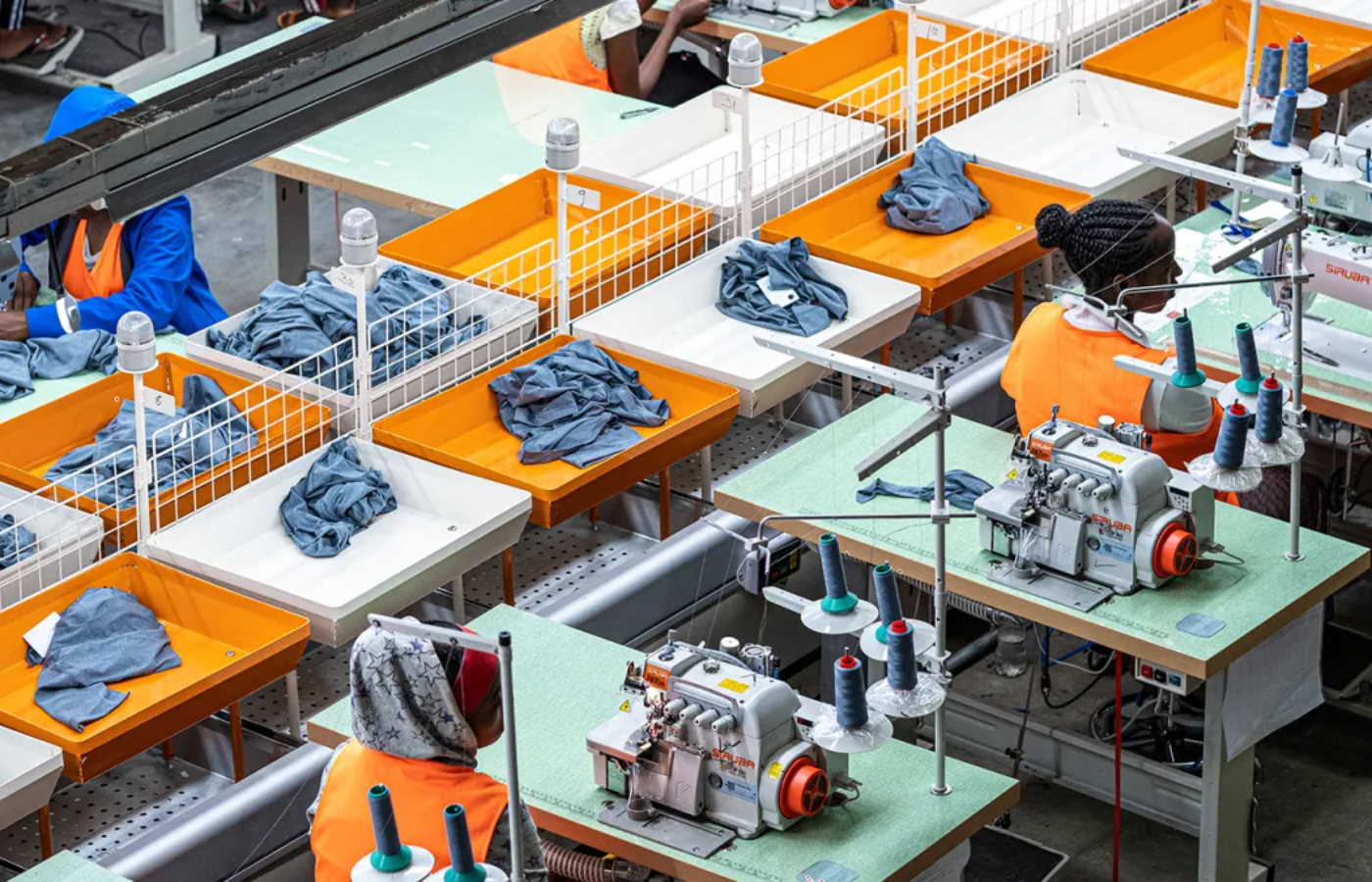
Ethiopia’s Manufacturing Sector Faces Workforce Exodus
Despite maintaining an average real GDP growth rate of approximately 7.2% from 2022 to 2024, Ethiopia is witnessing a worrying trend in its manufacturing sector: a significant decline in employment. The recent Mid-Term Review of the Country Strategy Paper by the African Development Bank (AfDB) highlights the challenges facing Ethiopia’s industrial transformation and raises critical questions about the sustainability of such growth.
Decline in Manufacturing Employment
From 2022 to 2024, employment in Ethiopia’s manufacturing sector has dropped from 17.6% to 15.6% of the total workforce. More concerning is the broader industrial sector’s stagnation, with its employment share declining marginally from 6.6% in 2020 to 6.5% in 2023/24.
Moreover, while agriculture’s share of employment fell from 64.2% in 2020 to 62.4% during the same period, the shift of labor is primarily moving toward lower productivity service activities rather than higher productivity industrial roles. This transition raises questions about the effectiveness of Ethiopia’s structured economic transformation.
Structural Challenges Impacting Industry
The AfDB report points out that although labor is moving away from agriculture, much of it is not being absorbed by the industrial sector. Instead, workers are transitioning to services, which complicates efforts to expand industrial production. Interestingly, this trend is not tied to poor industrial productivity, as value added per worker remains relatively strong in industry compared to many parts of the services sector.
The challenges faced by manufacturers include:
- Infrastructure Deficits: Significant gaps in crucial infrastructure, particularly in transport and energy, are inflating production costs.
- Foreign Currency Shortages: Persistent shortages hinder manufacturers from importing essential machinery and raw materials.
- Skill Mismatches: A notable disparity exists between the skills required by industrial firms and those available in the labor market. Many job seekers lack preparation for specialized factory roles.
Security and Economic Pressures
Security concerns in various regions are further complicating the situation, disrupting supply chains and impairing investor confidence. These challenges have cast a shadow over Ethiopia’s Ten-Year Development Plan, which aims to boost the manufacturing sector’s GDP contribution from 7% to 15% by 2027.
Youth unemployment is especially alarming, pegged at 23.1%, compared to an overall unemployment rate of 8%. Factors contributing to this include:
- Skills mismatches
- Limited job opportunities, especially for youth and women
- Inadequate physical and digital infrastructure
- The prevalence of informal labor markets
Moreover, an estimated 8 million children are out of school due to crises such as drought, flooding, and conflict, compounding the skills gap problem.
Fiscal Landscape and Broader Constraints
On a more positive note, the AfDB review indicates a slight easing of fiscal pressures, with the fiscal deficit narrowing from 4.0% of GDP in 2022 to 3.0% in 2024, aided by fiscal consolidation efforts and reduced defense spending post-conflict.
However, broader development challenges persist. Internal conflicts and geopolitical tensions continue to pose risks to stability. Climate change-induced droughts and irregular rainfall threaten not only agricultural productivity but also rural livelihoods. Additionally, limited access to clean water in arid regions exacerbates the situation.
Infrastructure deficits are apparent across sectors, with limited electricity access in rural areas stifling economic activity. Inefficient transport connectivity further restricts trade and service access, while an underdeveloped financial sector hinders private sector growth.
Path Forward for Ethiopia’s Industrial Growth
Despite the myriad challenges, the AfDB emphasizes the importance of expanding private sector participation as a cornerstone for sustained industrial growth. From 2023 to 2025, approximately $538.8 million is committed to projects across energy, transport, agriculture, and governance, aimed at bolstering Ethiopia’s economic landscape.
The funding, however, falls short of the initial target of $827.46 million, reflecting lower-than-anticipated allocations under the African Development Fund cycle, with weak performance in non-sovereign operations leading to no realization of five planned private sector projects.
Conclusion
Ethiopia’s journey toward industrial transformation faces significant hurdles, particularly in the realm of workforce retention and productivity. Addressing the structural challenges, enhancing education, and pivoting toward private sector development will be vital for transitioning the economy from agriculture to a more diversified industrial base. Despite the issues at hand, targeted investments and comprehensive strategies can pave the way for a robust manufacturing sector in the future.
For further reading and statistics, you might explore more on Ethiopian Economic Growth and Manufacturing Trends in the region.
