




Imagery from space can be a powerful tool for journalism, but it can also mislead. On February 10th Reuters published an investigation claiming to have found evidence of a training camp in western Ethiopia for the Rapid Support Forces (RSF), a paramilitary group locked in a brutal civil war with Sudan’s regular army. The report, which cited satellite photos and anonymous officials, was explosive. If true, it would confirm the worst fears of a regional conflict spilling across borders.
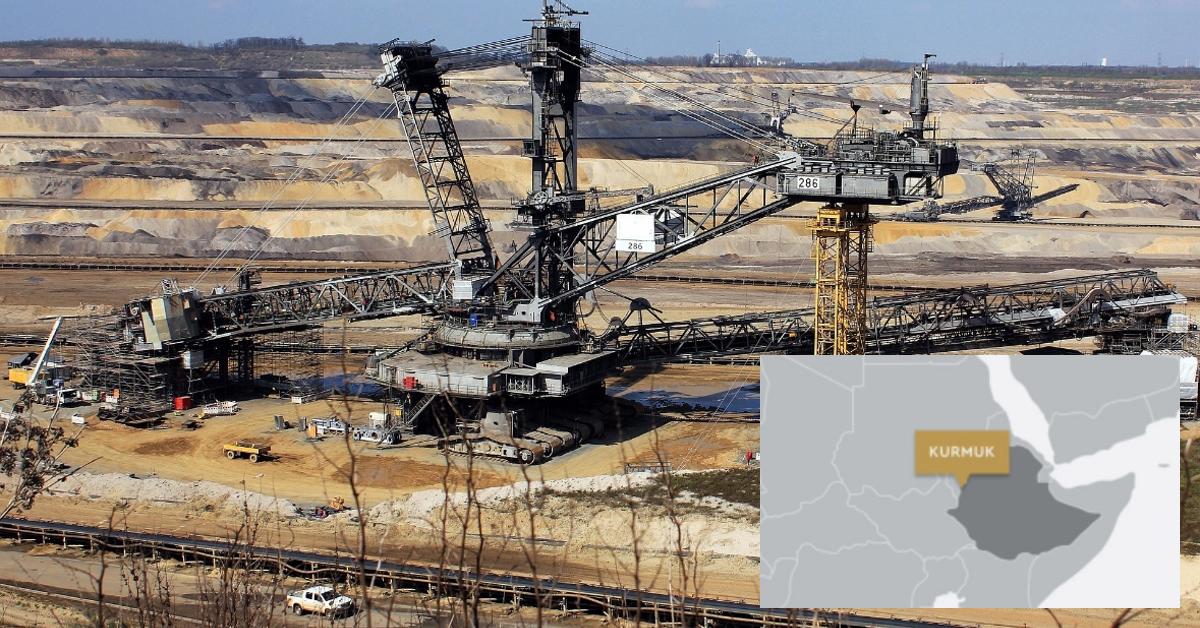
But the evidence does not stand up. A detailed analysis by Abren, published the next day picked apart the claims. The site in Ethiopia’s Benishangul-Gumuz region bears none of the hallmarks of a military installation—no firing ranges, no drill grounds, no secured perimeters. Instead, its grid-like rows of container housing and evidence of excavation are consistent with a large gold-mining camp, part of a project publicly launched by the Ethiopian government last year and involving Allied Gold Corporation, a Canadian firm. Reuters’ own arithmetic was contradictory: it described a camp with capacity for 2,500 people while also reporting the arrival of more than 6,900 fighters in 48 hours. The news agency consulted no geologists or mining experts, relying instead on intelligence sources with obvious interests.
Yet the debunking has been willfully ignored. On March 2nd Sudan’s official news agency, SUNA, accused Ethiopia of launching drones from its territory against targets inside Sudan. The foreign ministry in Khartoum called it “a flagrant violation of sovereignty”, reserving the right to respond. Egypt, which backs the Sudanese army, has amplified the allegations. Eritrea, Ethiopia’s historic foe, watches with satisfaction. And inside Ethiopia, factions of the Tigrayan and Amhara militias, locked in their own conflicts with the federal government, see an opportunity.
This is not a case of mistaken identity. It is a coordinated information operation, a classic Psyop, designed to drag Ethiopia into a war it does not want. The protagonists have different motives but a common goal: to weaken and if possible, fragment a country of 120m people that sits at the strategic heart of the Horn of Africa.
The anatomy of a plot
For General Abdel Fattah al-Burhan, commander of Sudan’s regular army (SAF), painting Ethiopia as a belligerent serves multiple purposes. It diverts attention from his army’s battlefield reverses against the RSF. It rallies a fractured Sudanese public around the flag. It curries favor with his Egyptian patrons. And it furnishes a pretext for retaliation, should his forces eventually choose to strike across the contested Al Fashaga border in northwestern Ethiopia. The repeated accusations against Addis Ababa also offer a convenient distraction from Sudan’s continued harboring of Tigray People’s Liberation Front’s (TPLF) Army 70, which plans to launch an insurgency against Ethiopia from within Sudan’s Ghedaref state. Egypt, his principal foreign backer, sees advantage in the narrative too. President el-Sisi’s government has been locked for more than a decade in a bitter dispute with Ethiopia over the Grand Ethiopian Renaissance Dam (GERD), which Cairo regards as an existential threat to its water supply. A distracted Ethiopia, entangled in a war on its western flank, would be a weakened negotiator.
Then there is Eritrea. Relations between Asmara and Addis Ababa, never exactly normal, have deteriorated sharply since the signing of the Pretoria agreement in late 2022, which formally ended the war between Ethiopia’s federal government and rebellious regional authorities in Tigray. In the conflict’s aftermath, Ethiopia has accused Eritrea of meddling once more—specifically of forging ties with rump factions of the TPLF that remain hostile to Addis Ababa. A further irritant is Ethiopia’s maritime agitation. Prime Minister Abiy Ahmed has made no secret of his desire for access to a Red Sea port, casting his gaze toward Eritrea’s facility at Assab—a longstanding bone of contention between the two neighbors.
President Isaias Afwerki, a veteran regional schemer, is said by intelligence sources to have held meetings with a breakaway TPLF faction inside Sudan. Some elements of Fano, an amorphous Amhara nationalist group currently fighting Ethiopian security forces, are also rumored to be part of these alignments. It is a classic “enemy of my enemy” realignment, drawing disparate forces into a loose constellation united chiefly by their shared antagonism toward the government of Ethiopia.
The convergence of these interests explains why a flimsy report by Reuters has gained traction. The accusation of drone strikes, which Sudan has not substantiated with evidence, is treated as fact in Cairo and Asmara. The debunked claim of an RSF training camp is cited without caveat. Even worse it echoes by the latest reporting by Reuters. The goal is not truth but narrative: to create a casus belli where little by way of evidence exists.
Ethiopia’s silence
The Ethiopian government’s response has been passive. Officials have yet to issue refutation of the Reuters report or the drone allegations. An anonymous official told Alhurra, a US government funded broadcaster, that Ethiopia “denies all allegations”, but this has not been amplified. Instead, the government has taken punitive action against Reuters, declining to renew the accreditation of three of its journalists and barring the outlet from covering the African Union summit. The Committee to Protect Journalists condemned the move as part of “a troubling pattern of repressive regulatory action”. However understandable the frustration, this approach cedes the information battlefield to Ethiopia’s enemies.
Privately, Ethiopian officials insist they are neutral. They point out that the alleged RSF camp is, in fact, a gold mine. They argue that any weapons reaching the RSF via Ethiopia are the work of the United Arab Emirates, which has used the country airspace—a distinction that stops short of active state sponsorship. The UAE, for its part, denies arming the RSF.
Yet in the court of regional opinion, nuance is losing. The narrative of Ethiopian aggression is hardening. Moustafa Ahmad, an analyst of the Horn, warns that “any retaliation by SAF could be damaging to Ethiopia’s already insecure regions of Tigray and Amhara.” A single cross-border strike, whether real or staged, could trigger a chain reaction.
A pretext for war
The Horn of Africa is a region where memories are long and grudges are held close. Ethiopia fought a bloody war with Eritrea from 1998 to 2000. It intervened in Somalia repeatedly. Recently it has seen its own internal conflicts in Tigray and Amhara. The last thing it needs is another war.
But wars are not always chosen. Many times they are manufactured. The campaign to drag Ethiopia into the Sudanese conflict bears all the hallmarks of a deliberate strategy: false narratives amplified by state media, dubious intelligence laundered through reputable outlets, and a chorus of regional actors singing from the same hymn sheet. The debunking of the Reuters report should have been the end of the story. Instead, it has been ignored.
Ethiopia’s government would do well to learn from its adversaries. Silence is not a strategy. To prevent a war it does not want, it must fight for the truth with the same vigor that its enemies deploy to suppress it. That means publicly, and repeatedly, dismantling the lies—starting with the gold mine that was never a camp. Otherwise, the pretext for war will become the cause of it.
