




Bishoftu International Airport: Africa’s New Aviation Hub
Introduction to Bishoftu International Airport
Ethiopia is poised to enhance its aviation landscape with the Bishoftu International Airport (BIA), a monumental project currently under development approximately 40 kilometers south of Addis Ababa. As the largest airport ever constructed in Africa, BIA is designed to meet the increasing passenger demand and cargo needs of the continent’s leading airline, Ethiopian Airlines.
Capacity and Infrastructure
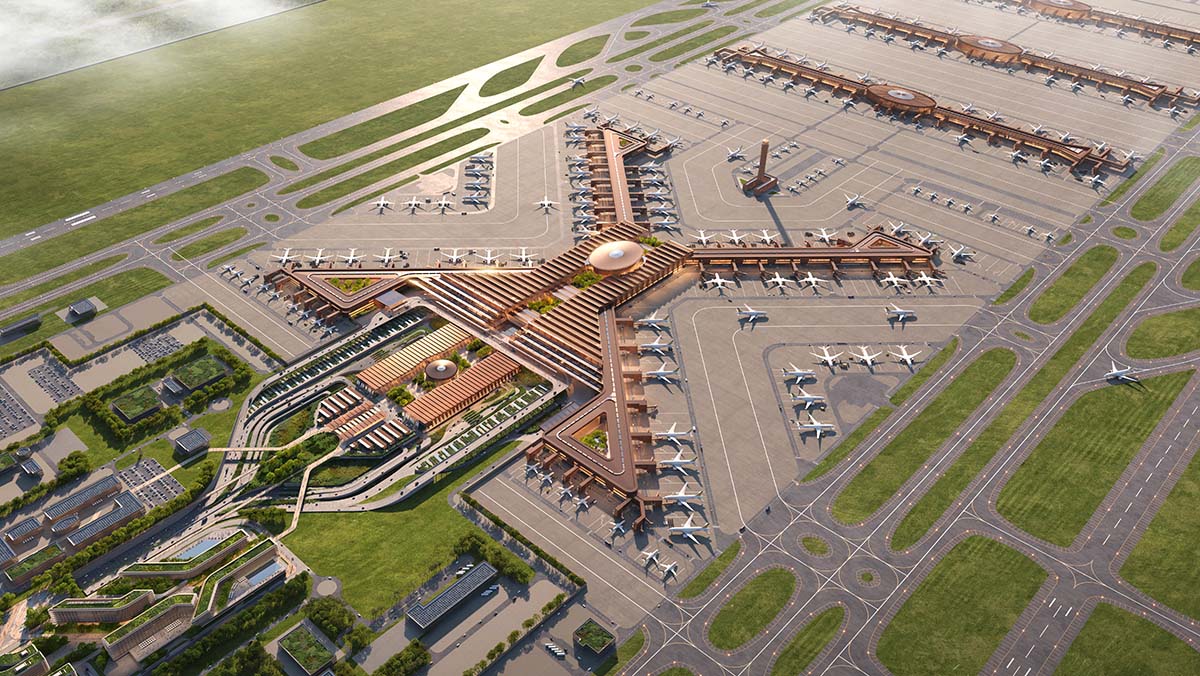
Phase One of the Bishoftu International Airport aims to accommodate 60 million travelers annually, featuring four runways and parking for 270 aircraft. Future plans include further expansions that will elevate passenger capacity up to 110 million per year, complemented by a total investment of $12.5 billion in this expansive project.
Strategic Importance
The airport’s strategic location at the crossroads of Africa, Asia, and the Middle East positions it as a crucial global transportation hub. BIA is set to align with the International Air Transport Association’s (IATA) regional growth forecasts, thereby facilitating cross-continental travel and trade.
Groundbreaking Ceremony
A ceremonial groundbreaking event took place on January 10, 2026, led by Prime Minister Abiy Ahmed Ali, who emphasized the necessity of this infrastructure. “Bishoftu International Airport will surpass the capacity of Ethiopia’s existing main airport by four times,” the Prime Minister stated.
Architectural Vision by Zaha Hadid Architects
Renowned Zaha Hadid Architects are behind the design of BIA, which focuses on premium passenger experiences and swift operational efficiencies. The design adheres to modern passenger demands, and with a high emphasis on passenger transfers, the airport will include:
- An airside hotel with 350 guestrooms
- Diverse dining and entertainment venues
- Landscaped outdoor courtyards and gardens for leisure
Interior Design and Cultural Representation
The terminal will embody Ethiopia’s cultural diversity, with each pier reflecting distinct regional materials and color schemes. This aesthetic choice aims to not only enhance airport navigation but also create a welcoming atmosphere for travelers.
Advanced Infrastructure and Eco-Friendly Features
BIA’s design incorporates longer runways and a lower elevation, optimizing the maximum take-off weight (MTOW). This allows Ethiopian Airlines to operate more efficiently with less fuel consumption for longer flights.
LEED Gold certification for sustainability has also been achieved for the passenger terminal. Its structure allows for natural ventilation and efficient solar shading, along with utilizing locally sourced materials in its construction.
Biodiversity and Green Spaces
BIA aims to enhance local biodiversity by redirecting stormwater into new wetlands, contributing to environmental sustainability. Moreover, integration of parks for the local community and gardens for passengers promotes a balance between aviation needs and green space.
Future Connectivity and Economic Impact
As part of a larger transportation network, BIA will connect via high-speed rail to Addis Ababa and the existing Bole International Airport, fostering regional development. The airport will support the Airport City, which is set to create thousands of jobs for the 80,000 residents of the area while aiding Ethiopian Airlines in meeting its ambitious Vision 2035 goals.
Conclusion: A New Era for African Aviation
The construction of Bishoftu International Airport marks a critical step towards establishing Africa as a significant player in global aviation. As a hub that combines advanced infrastructure with sustainability and regional representation, BIA is anticipated to connect travelers from across the continent and beyond.
For additional insights into the future of aviation, consider exploring more about Zaha Hadid Architects. This innovative architectural firm continues to redefine the boundaries of design and construction globally while addressing the unique requirements of each project.
