




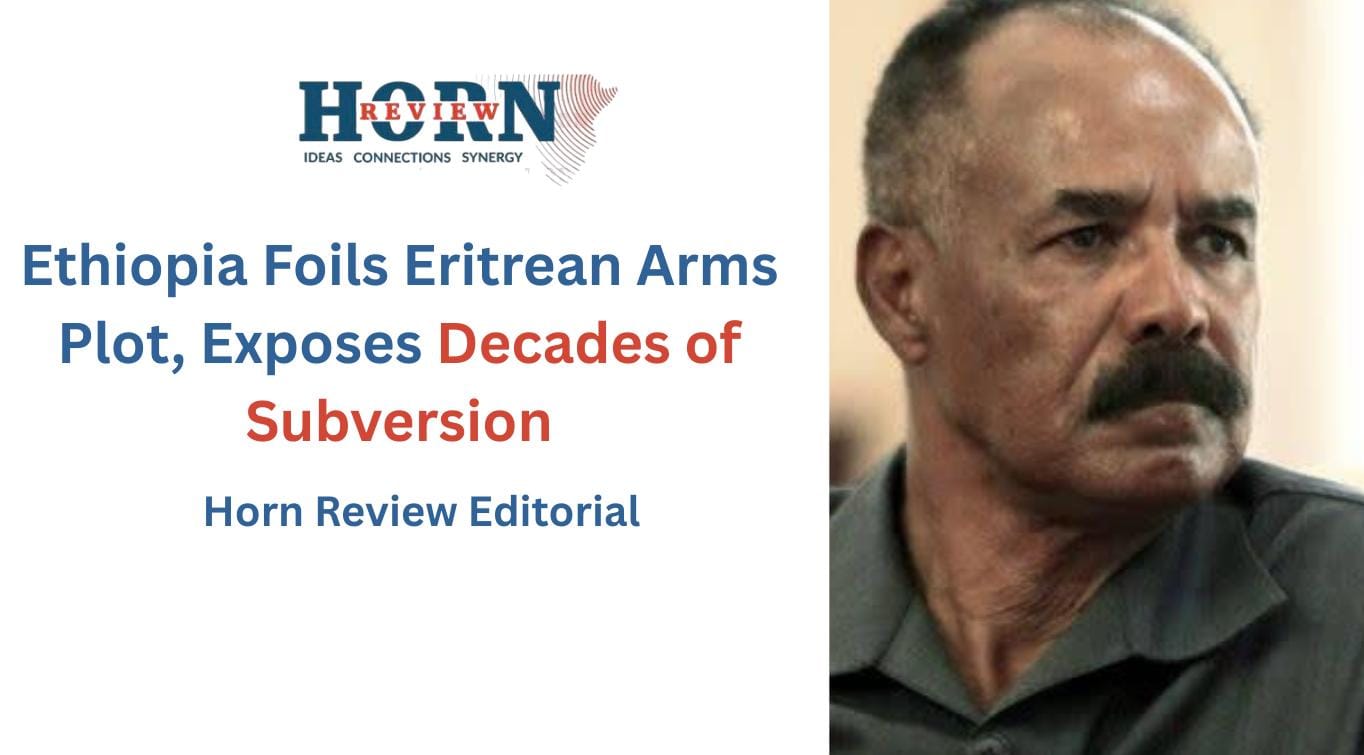
Ethiopia’s Ongoing Battle Against External Destabilization
The recent interception of a significant arms shipment by Ethiopian security forces illustrates the ongoing external pressures facing the Ethiopian state. This incident underscores Ethiopia’s long-standing position that hostile external actors—particularly the Eritrean regime—continue to employ destabilization tactics aimed at undermining the country’s sovereignty and stability.
A Coordinated Supply Network
Ethiopian authorities have traced the seized ammunition’s route from Asmara to Mekelle and eventually to the Amhara region. This trajectory highlights a well-coordinated supply network that aligns with Ethiopia’s assessment of Eritrea’s strategy. For decades, Eritrea has allegedly leveraged proxy warfare to weaken Ethiopia from within, utilizing local armed groups as intermediaries to obscure external sponsorship while exacerbating internal conflicts.
Historical Context of Hostility
Ethiopia’s evaluation of this situation is deeply rooted in historical experience. Since Eritrea’s independence in 1993, warnings have been voiced about the Eritrean leadership’s choice of confrontation over cooperation. The 1998–2000 border war—an unnecessary conflict according to Ethiopian perspectives—was driven by Eritrea’s expansionist policies and refusal to engage in diplomatic resolution.
Systematic Subversion
Ethiopia’s Foreign Minister recently articulated the country’s position at a forum hosted by Horn Review and Addis Ababa University. He emphasized that Eritrean interference has been neither isolated nor reactive, but rather systematic and sustained. This interference, he noted, aligns with the external agendas of nations like Egypt, seeking to constrain Ethiopia’s influence and regional aspirations.
The Impact of the 2018 Rapprochement
Ethiopia’s commitment to peace and regional integration was notably demonstrated during the 2018 rapprochement, wherein Ethiopia took significant steps to normalize relations with its neighbors. Unfortunately, this goodwill was met with insincerity, and as the Tigray conflict developed, Eritrea revealed its true intentions by intervening militarily and committing serious human rights violations.
The Significance of the Intercepted Shipment
The intercepted arms shipment marks more than just a security incident; it is concrete evidence of Eritrea’s ongoing interference in Ethiopia’s internal matters. This act of subversion not only jeopardizes regional peace but also highlights Eritrea’s readiness to sacrifice stability for its own regime’s survival.
Ethiopia’s Resolve to Defend National Security
Ethiopia’s decisive actions in intercepting the arms shipment and arresting those involved showcase its institutional capability and political commitment to uphold national security against foreign-sponsored destabilization. Ethiopia’s response reflects a broader strategy to ensure the country’s sovereignty in the face of systematic external aggression.
Conclusion: A Call for Regional Awareness
This episode serves as a reminder to regional and international stakeholders: lasting peace in the Horn of Africa hinges on the Eritrean regime’s willingness to abandon its destabilization tactics. Ethiopia’s conflict is not solely with armed groups; it is a broader struggle against a coordinated external effort aimed at fracturing the nation. Ethiopia remains steadfast in its commitment to counter these challenges, underscoring the necessity of a stable and sovereign state for the broader stability of the region.
For those interested in understanding the complexities of regional dynamics in the Horn of Africa, additional resources on proxy warfare, Ethiopian history, and Eritrean relations may provide further insights.
