




The Geopolitical Implications of the Sudanese Conflict: Egypt, Ethiopia, and Regional Instability
Understanding the Sudanese Conflict
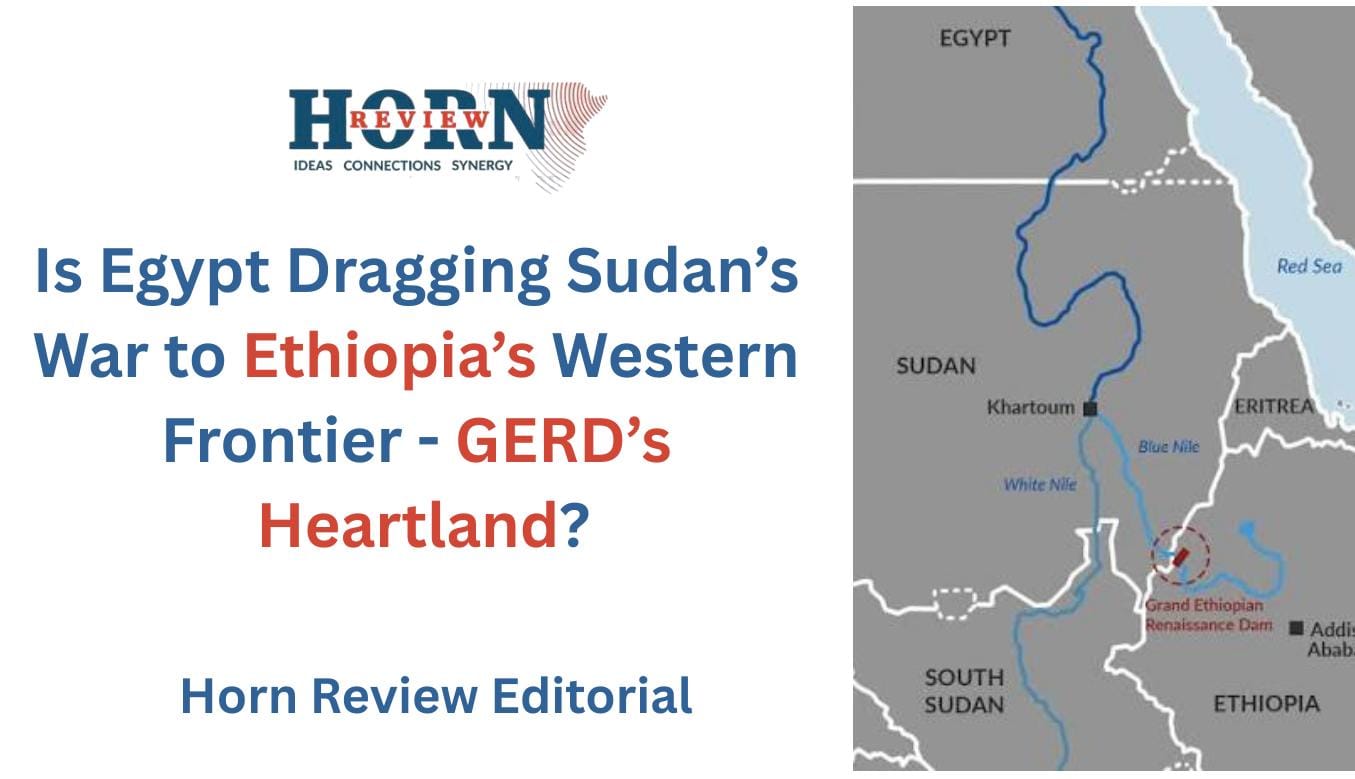
The ongoing conflict in Sudan has created one of the most precarious geopolitical landscapes in Africa. Amid the chaos, narratives have emerged suggesting that Egypt may be taking advantage of this instability to strengthen its influence near Ethiopia’s western frontier, particularly in the Benishangul-Gumuz region. This area is crucial due to the Grand Ethiopian Renaissance Dam (GERD), a significant infrastructure development in the Horn of Africa.
Egypt’s Strategic Aims
Many analysts interpret Cairo’s rhetoric, including statements from its leadership, as preparatory moves for a confrontational geopolitical strategy aimed at pressuring Ethiopia from multiple fronts after years of stagnated negotiations over Nile waters. To understand the dynamics at play, it is essential to examine Egypt’s motivations, as well as the feasibility of these strategies in the current context of regional tensions.
Allegations of RSF Bases in Ethiopia
Recently, unfounded allegations have surfaced claiming that the Rapid Support Forces (RSF) operate bases in Ethiopia’s western regions. These claims have gained traction through Egyptian narratives and elements within Sudan’s Armed Forces (SAF) and the Eritrean People’s Democratic Front (PFDJ). However, there remains no independent verification of these reports. Instead, credible sources have confirmed that SAF maintains military camps in Eritrea, involving Eritrean soldiers in various operations.
Manipulating Perceptions
Claims against Ethiopia may be constructed to justify regional interventions and to create the perception of a cross-border threat, one that might not yet exist. This narrative could potentially drag the conflict further into Ethiopia’s territories, complicating the situation.
The Control Dynamics of the RSF
Historically, the RSF has exerted influence over Sudan’s Blue Nile State and the Darfur borderlands since late 2023. While the RSF maintains entrenched positions along the western frontier, the SAF has successfully launched counter-offensives, reclaiming significant territories. Control over these areas is fluid and changes with each military engagement, creating a vacuum that external actors, including Egypt, might aim to fill.
The Sensitivity of Benishangul-Gumuz
The Benishangul-Gumuz region is especially vulnerable for Ethiopia. Positioned far from the country’s central highlands and linked by an inadequate transport network, it faces the dual pressures of ethnic diversity and instability from neighboring Sudan. Egypt’s potential attempts to gain influence over Sudanese military or paramilitary groups align with a historical pattern in regional power politics where direct action is rare; instead, states typically maneuver through proxies and alliances.
Constraints on Egypt’s Strategy
However, an Egyptian strategy to shift conflict pressure toward Ethiopian territory encounters significant practical constraints:
-
Sudanese Alignment: It is complicated for Sudanese factions to align with Egyptian goals during their own existential battles.
-
Ethiopian Resilience: Ethiopia, despite its internal divisions, remains a formidable military entity with a strong sense of territorial sovereignty. Any perceived destabilization at its western border is likely to invoke a robust response.
Regional War Risks
These dynamics yield a heightened risk of transforming a civil war into a broader regional conflict, drawing attention from international powers eager to prevent such escalation.
The Roles of Eritrea and the TPLF
Compounding the situation is Eritrea’s alignment with Egypt on the Nile issue. Eritrea has frequently acted as an extension of Egyptian strategic interests, complicating any narratives of neutrality.
Furthermore, the Tigray People’s Liberation Front (TPLF) holds a precarious position. Although the TPLF is reportedly engaged in combat in Sudan with Eritrean and SAF forces, its weakened political status and reduced military capacity challenge the feasibility of any coordinated assault against Ethiopia.
The Existential Narrative of Sudanese Leadership
Sudan’s leadership has adopted a rhetoric of existential confrontation, framing their struggle as a fight for survival. This discourse militarizes regional perceptions, where suspicion becomes policy and rhetoric transforms into strategy.
The Impact on Ethiopian Security
As insecurity grows along Ethiopia’s western frontier, whether by intent or chaos, the fragility of the Horn of Africa is laid bare. Historical grievances, overlapping conflicts, and economic crises contribute to an environment where mistrust creates and perpetuates instability.
Conclusion: Toward Resolution or Escalation?
Despite analytical interpretations surrounding Egypt’s strategic maneuvers, multiple destabilizing realities converge: unresolved Nile anxieties, Ethiopia’s vulnerabilities, and the chaotic dynamics in Sudan. The intersection of RSF activities, SAF counter-offensives, and Egyptian-aligned narratives suggests that the perception of a coordinated strategy is gaining traction.
The future of this conflict hinges on decisions yet to be made. Escalatory rhetoric and zero-sum calculations increase the likelihood of miscalculations. Therefore, only through diplomatic avenues can the war in Sudan be prevented from crossing borders and threatening the stability of the entire Horn of Africa.
For further insights into regional dynamics, visit International Crisis Group or African Union.
