




Meta Title: Sudan Civilian Opposition Rejects Al-Burhan Dialogue: Addis Ababa Position Paper Analysis
Meta Description: Sudanese civil society, political parties, and resistance networks sign a joint position paper in Addis Ababa rejecting General Al-Burhan’s unilateral dialogue. Explore the three-track alternative for ceasefire, humanitarian aid, and a political transition on equal footing.
Focus Keyword: Sudan civilian opposition dialogue rejection
Slug: sudan-civilian-opposition-rejects-al-burhan-dialogue-addis-ababa
Sudan’s Civilian Opposition Unites to Reject Al-Burhan’s Unilateral Dialogue
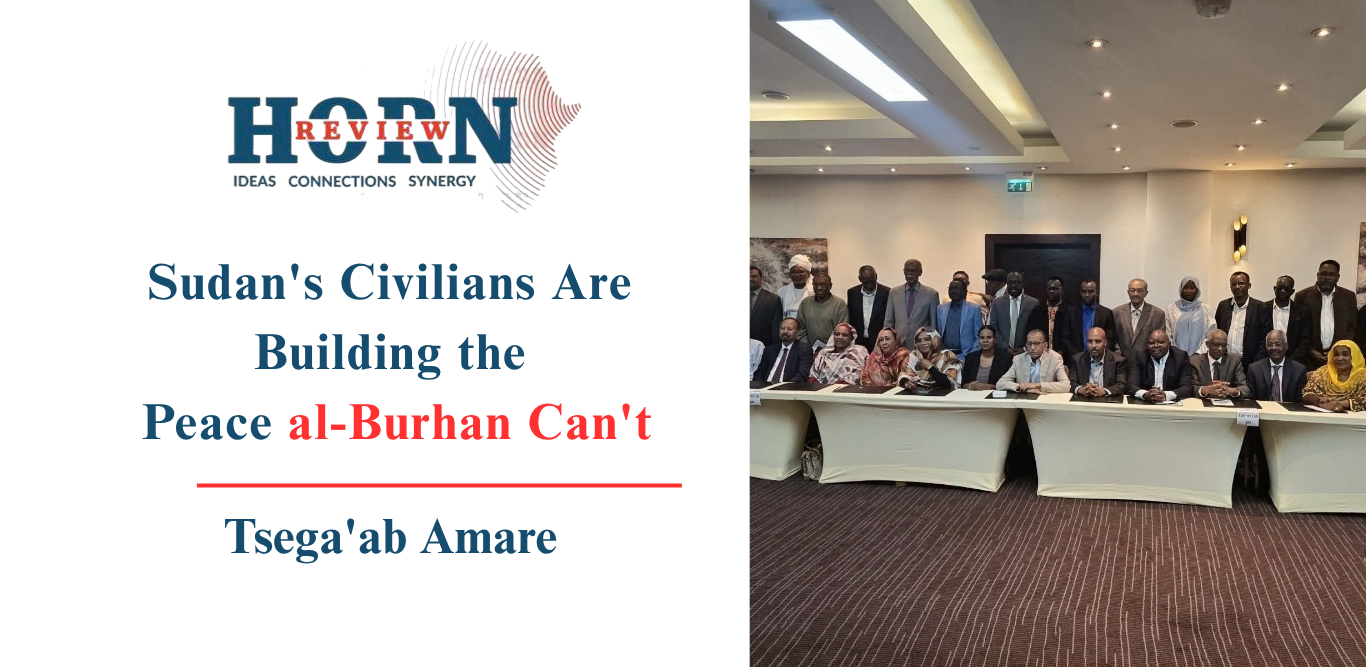
On August 22 and 23, a broad coalition of Sudanese civilian actors convened in Addis Ababa to deliver a definitive rejection of General Abdel Fattah al-Burhan’s call for a “Sudanese-Sudanese dialogue.” The signatories—including the Forces of the Sudanese Declaration of Principles, the Popular Congress Party, the Umma Party, women’s networks, youth resistance committees, and prominent academics—signed a Joint Position Paper proposing a three-track alternative centered on an immediate ceasefire, humanitarian relief, and a political process among equals.
This convergence marks a rare moment of unity for Sudan’s fractured opposition since the 2019 revolution. The timing is diplomatically significant: it landed roughly one week after reports surfaced regarding al-Burhan’s own unannounced consultations with select political blocs, Sufi leaders, and native administrations—an agenda controlled entirely by the military leadership—and just two days after an African Union Peace and Security Council (PSC) delegation visited Khartoum. While the AU delegation rejected “parallel entities” and foreign interference, it labeled the Port Sudan-led process “pivotal,” urging only greater inclusivity. The Addis Ababa paper functions as a direct diplomatic counter-move, denying the de facto government in Port Sudan the civilian legitimacy its dialogue strategy requires.
Historical Context: Consolidation Dressed as Dialogue
Analysts describe al-Burhan’s strategy as “consolidation dressed as dialogue.” This script has a direct historical precedent. Between 2014 and 2016, former President Omar al-Bashir launched a “National Dialogue” announced unilaterally, boycotted by most credible opposition forces. The International Crisis Group later assessed that exercise as one that produced legitimation on paper long after it had lost credibility on the ground.
Al-Burhan’s current iteration follows a familiar pattern: reversible inducements—such as the suspension rather than dismissal of prosecutions against figures aligned with the Taqaddum (Somoud) bloc, including former Prime Minister Abdalla Hamdok—and a preparatory committee of unverified independence.
Two Strategic Successes in the Joint Position Paper
Despite the historical precedent of failed dialogues, the Addis Ababa document achieves two critical strategic corrections that distinguish it from previous efforts.
1. The Unifying Formula: Exclusion of the NCP and Islamist Apparatus
The paper reaches for the one formula that has historically held Sudan’s divergent civilian space together: the unconditional exclusion of the dissolved National Congress Party (NCP) and its Islamist apparatus. This premise united professional syndicates, resistance committees, and established parties in April 2019, forcing Bashir’s ouster.
The current signatories span significant ideological distance—from the Ansar-rooted Umma Party to the Popular Congress Party (PCP), which originated from Hassan al-Turabi’s 1999 rupture with the NCP, to the revolutionary Declaration of Principles forces. What unites them is precisely the “red line” that united the streets six years ago.
However, the paper acknowledges a critical gap: Unity against exclusion proved a winning mobilizing formula in 2019, but it failed as a governing formula. The subsequent power-sharing arrangement with the military and the internal fragmentation of the Forces of Freedom and Change (FFC) ended in al-Burhan’s October 2021 coup. The document does not yet explain how its authors intend to prevent the elite bargaining that hollowed out the last transition from repeating in the next one.
2. Structural Innovation: Simultaneous Tracks vs. “Calendar Peace”
The architecture proposed is more serious than the label “dialogue” suggests. The Quad’s (US, Saudi Arabia, UAE, Egypt) September 2025 roadmap sequenced a three-month humanitarian truce ahead of a nine-month political transition—a model critics dubbed “calendar peace” for substituting dates for tangible changes in the cost of fighting.
The Joint Position Paper breaks this model by insisting its three tracks move simultaneously:
- Ceasefire Track: Immediate cessation of hostilities.
- Humanitarian Track: Unfettered aid access.
- Political Track: Negotiations on the root causes of the war.
This structural choice corrects the flaw that has stalled nearly every prior Sudanese peace effort: a first phase that stalls indefinitely and quietly cancels the second.
Equal Footing: Stripping Belligerents of Political Fictions
The paper’s most consequential structural choice is the insistence on equal footing. By confining the Sudanese Armed Forces (SAF) and the Rapid Support Forces (RSF) to the ceasefire and humanitarian tracks—and keeping both out of the political track except on matters directly concerning their military status—the paper strips each side of its preferred narrative.
- SAF loses the posture of an incumbent government negotiating down an insurgency.
- RSF loses the posture of a competing state-building project (having established its own courts and rival administration in held territories).
What remains are two belligerents in a civil war with no claim to write the constitutional rules. This reframes the conflict not as a rivalry between two generals, but as the latest expression of a bargain Sudan has never closed: who the state is for, how power moves between center and periphery, and what a security sector answerable to no civilian authority is allowed to become.
The RSF is not an aberration in this story; it is a direct product of it—a paramilitary force the state built for protection that grew large enough to contest the state itself. The paper’s agenda—government, religion and state, citizenship, dismantling the old regime, security sector reform (one professional army), transitional justice, land, displacement, and a transitional constitution—amounts to an attempt to finally negotiate the settlement left open by the 1972 Addis Ababa Accord, the 2005 Comprehensive Peace Agreement (CPA), and the fractured 2020 Juba Agreement.
Critical Gaps: Enforcement, Verification, and the Mediator Maze
Despite its analytical strength, the paper leaves three significant gaps unresolved.
The Enforcement Vacuum
The document says nothing about verification, monitoring architecture, or named consequences for violations. This is the same gap that has undone every ceasefire since the Jeddah Declaration (2023) and the same flaw identified in al-Burhan’s own reversible confidence-building measures. Suspended prosecutions and eased media pressure are gestures the granting authority can withdraw at will.
The Mediator Fragmentation Problem
The paper calls to fuse the Quad, the Quintet (adding the AU/IGAD), and the Troika (US, UK, Norway) into a single framework. This is its boldest idea but its least worked out. Sudan’s mediation landscape is fragmented due to deep Gulf rivalry:
- Saudi Arabia leans toward the SAF.
- UAE faces accusations regarding arms flows to the RSF.
- Egypt aligns closely with the SAF.
Ethiopia’s Role: Geography and Legacy as Comparative Advantage
Hosting this meeting extends Ethiopia’s established mediating role. Addis Ababa brokered the original 1972 Addis Ababa Agreement, helped draft the 1994 Declaration of Principles leading to the 2005 CPA, and was the sole trusted guarantor to police the Abyei buffer zone via UNISFA. During Sudan’s 2019 transition, the African Union turned to Addis Ababa, not Cairo or Riyadh.
This legacy—built on geography, AU headquarters status, IGAD membership, and an absence of sectarian stakes in Sudan’s internal fights—remains Ethiopia’s actual comparative advantage as a mediator.
From Refusal to Roadmap: What Comes Next?
The document changes the diplomatic terrain concretely: it gives the Quintet, the AU, and Western governments a dated civilian baseline to measure any Port Sudan-endorsed process against, at the exact moment some were leaning toward premature endorsement.
Yet, as the paper itself implies, agreeing on what to refuse is not a peace process. Sudan’s civilians have now proven twice (2019 and 2024) they can agree on rejection. Turning this convergence into a workable architecture requires unglamorous machinery the 2019 coalition never built:
- A monitoring body with a mandate to name violators publicly.
- A timeline for extending accountability to both belligerents and the Port Sudan de facto authority, as well as RSF-aligned political forces.
- A single authorized interlocutor empowered to negotiate binding terms once talks with SAF and RSF commence.
Until the current civilian convergence closes the gap between declaration and enforcement, the Addis Ababa Position Paper will remain a powerful statement of refusal—necessary, historic, but insufficient to stop the guns.
Schema Markup Suggestion (JSON-LD): json { “@context”: “https://schema.org“, “@type”: “NewsArticle”, “headline”: “Sudan’s Civilian Opposition Unites to Reject Al-Burhan’s Unilateral Dialogue”, “datePublished”: “2024-08-24”, “dateModified”: “2024-08-24”, “author”: color, “publisher”: black”, “description”: “Analysis of the Addis Ababa Joint Position Paper rejecting General Al-Burhan’s dialogue, proposing a simultaneous three-track peace process, and the structural challenges facing Sudan’s civilian opposition.”, “mainEntityOfPage”: “text”:”var:preset, “keywords”: [“Sudan conflict”, “Al-Burhan dialogue”, “Sudan civilian opposition”, “Addis Ababa peace talks”, “RSF SAF ceasefire”, “Sudan political transition”] }
