




Sure! Here’s a rewritten article that organizes the information while optimizing for SEO:
Egypt and Sudan: A Complex Historical Relationship Shaped by Water Politics
Introduction to the Egypt-Sudan Dynamic
On June 28, 1924, in the Egyptian Chamber of Deputies, Prime Minister Sa‘d Zaghlul Pasha articulated a steadfast view on Sudan: the region, integral to Egypt’s national interests, must not be surrendered to others. This declaration underscores the long-standing complexities between Egypt and Sudan, intertwined with issues of water rights, political influence, and development.
Historical Context: Egyptian Influence Over Sudan (1899-1956)
The inception of the Anglo-Egyptian Condominium Agreement in 1899 marked the beginning of formal yet imbalanced governance in Sudan. Though it indicated co-sovereignty between the Khedive and the British Crown, in practice, it was characterized by British control. Financially, Egypt bore the brunt of the operational costs in Sudan, leading to enmeshment rather than collaboration.
A notable project from this era is the Gezira Scheme, the largest irrigation project in the world initiated in 1925. While catering to British cotton mills and financed through Egyptian treasury bonds, it ensured that the Nile waters remained predominantly available to Egyptian farmers. This arrangement laid the groundwork for Egypt’s long-term strategy: Sudan’s development had to align with Egyptian interests.
Post-Independence: Water Politics and Systemic Obstruction (1956-2011)
Sudanese independence in 1956 did not alleviate Egyptian control. The 1959 Nile Waters Agreement exemplified this dynamic, allocating the bulk of Nile resources to Egypt while disregarding Sudanese needs. Many Sudanese experts criticized this agreement, but political dependency and alignment with Egypt by Sudan’s leadership allowed it to proceed.
Egypt’s tendency to obstruct any independent Sudanese development continued throughout the following decades. In the 1970s, under Gamal Abdel Nasser, Sudan was viewed as an agricultural client state, a perception that significantly influenced Egypt’s Egyptian government policies.
A New Era: Evolving Political Strategies (2011-2026)
The partition of Sudan in 2011 brought about a shift in regional dynamics. With South Sudan gaining independence, Egypt feared an increase in Sudan’s dependence on upstream Nile waters. The construction of the Grand Ethiopian Renaissance Dam (GERD) heightened tensions as Egypt perceived the dam as a direct threat to its water security.
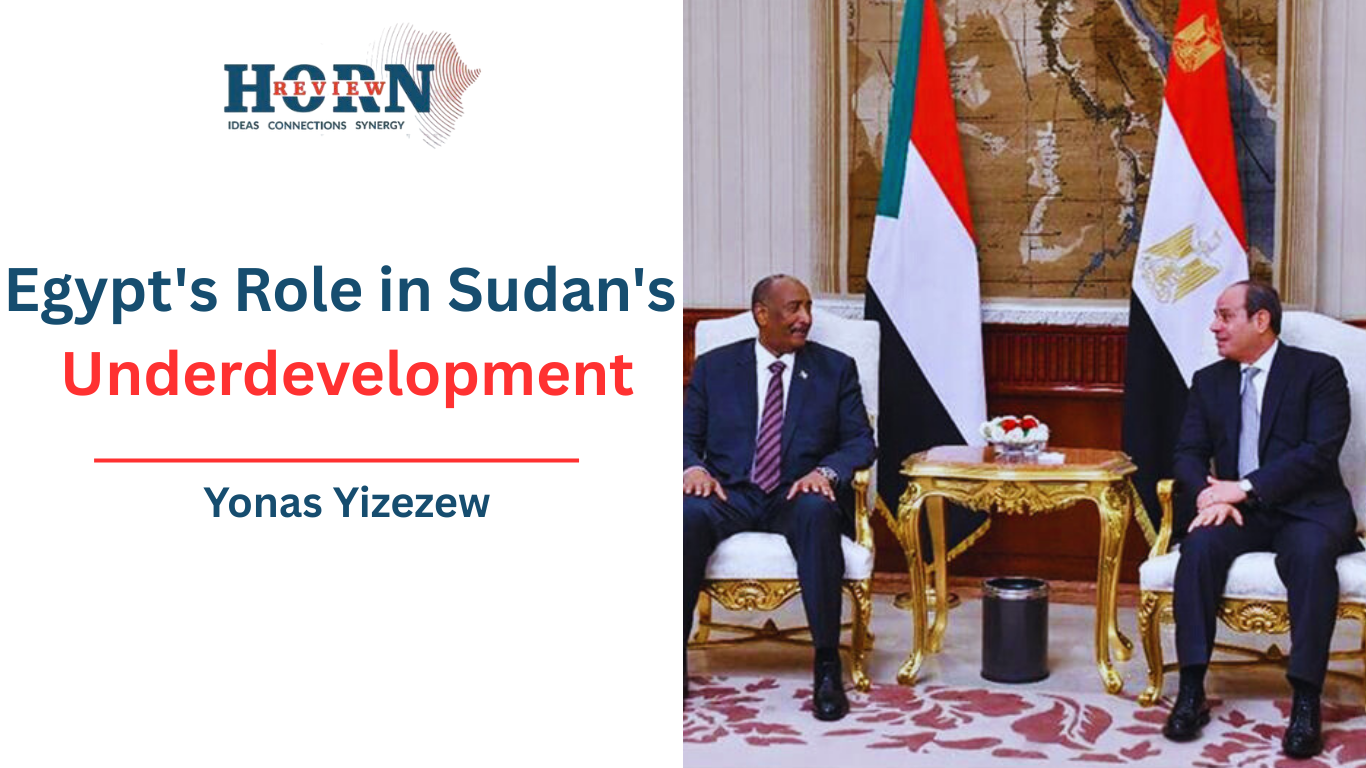
In the aftermath of Sudan’s 2019 revolution, Egypt sought to establish influence within the transitional government, prioritizing the alignment of Sudanese military factions with its strategic interests. During the ongoing SAF-RSF conflict, Egypt has shifted from mediation to direct military involvement, showcasing its unwavering commitment to maintaining influence over Sudanese affairs.
Ethiopia’s Development Aspirations: A Potential Conflict
As Ethiopia aims to leverage the GERD for energy and agricultural growth, a Sudanese government compliant with Egyptian interests could pose a significant barrier. This dynamic sets the stage for potential conflicts between Ethiopian and Egyptian strategies in the Nile Basin. An Egyptian-controlled Sudan would hinder Ethiopia’s plans for further economic partnerships with its neighboring nation, emphasizing the need for robust foreign policy strategies from Addis Ababa.
Conclusion: Navigating the Future of Nile Basin Relations
Egypt has consistently prioritized its water security over Sudanese sovereignty, employing a historical pattern of interference and control. As both nations navigate a fraught relationship, recognizing these dynamics is critical for Sudan’s development. For Ethiopia, the pressing question remains: how to adapt its strategies in light of these shifting loyalties and power struggles.
Understanding the complex sustainment of Egyptian dominance in Sudan is vital for regional stability in the Nile Basin. Only through credible partnerships, redefined political frameworks, and independent decision-making can Sudan escape the long shadow of Egyptian influence.
By following these guidelines, the article presents an informed, engaging narrative while ensuring an SEO-optimized structure.
