




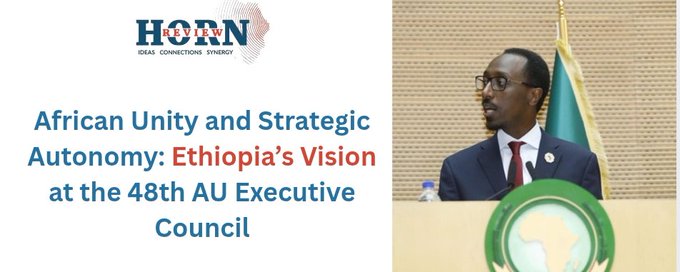
Strengthening African Unity: A Critical Call from Ethiopia’s Foreign Minister
Introduction
At the recent 48th Ordinary Session of the African Union Executive Council held in Addis Ababa, Ethiopia, a pivotal speech was delivered by Foreign Minister Dr. Gedion Timothewos. His address provided a reflective overview of Africa’s achievements while simultaneously serving as a rallying cry for urgent action. The emphasis on African unity, strategic autonomy, and robust continental leadership was particularly relevant against the background of global power dynamics and regional security, especially in the Horn of Africa.
Celebrating Africa’s Achievements
Advances in Governance and Cooperation
Dr. Timothewos underscored notable accomplishments within Africa over the past year. These include:
- Unified Stances on UNSC Reform: Africa has coordinated its positions regarding reforms in the United Nations Security Council.
- Focus on Climate Justice: The continent is increasingly prioritizing climate issues.
- Financial Architecture Improvements: Enhancements have been made in financial frameworks supporting African economies.
- Progress on Regional Integration: Agenda 2063 and the African Continental Free Trade Area prove significant strides in fostering regional cooperation.
The re-admission of Guinea and Gabon following the restoration of constitutional order stands as a testament to the African Union’s commitment to upholding governance norms.
Challenges Ahead
Despite these achievements, Dr. Timothewos did not shy away from addressing Africa’s ongoing challenges. Issues such as unconstitutional changes in governance, fragile democracies, and inconsistent implementation of continental frameworks pose significant tests to the credibility of the African Union.
Navigating Global Competition
Africa’s Role Amid Structural Global Dynamics
A focal point in the Foreign Minister’s speech was the growing recognition of Africa’s strategic position within a competitive global landscape. He cautioned that external powers increasingly perceive Africa as a space for domination and extraction, particularly concerning key resources like minerals and technology.
The Horn of Africa’s Strategic Importance
For nations within the Horn of Africa, situated at critical maritime trade routes, this external focus is more than an abstract concern. The region serves as a strategic gateway, emphasizing the need for Africa to assert its sovereignty and leverage collective unity against external pressures.
Towards Meaningful Partnerships
Dr. Timothewos asserted that African Unity should serve as the bedrock for forging substantial partnerships. Development assistance, trade, and cooperation should stem from Africa’s collective strength rather than relying solely on goodwill. This perspective is crucial for the Horn of Africa, where historical conflicts have been exploited by foreign powers to further their own interests.
Negotiating on Equal Terms
The Foreign Minister emphasized that the African Union must be equipped to defend its interests robustly and negotiate with international actors on equitable ground. This is essential to empower African nations in the face of ongoing external influences.
Leading Global Governance Reforms
Africa’s role in shaping global governance frameworks—including reforms in the UN Security Council, climate discussions, and international economic platforms—was another key theme of the address. The upcoming COP32 summit, hosted by Ethiopia, offers a strategic opportunity for Africa to spearhead discussions on climate justice and sustainable resource management.
The Principle of Ubuntu in Resource Management
Invoking the African principle of UBUNTU, Dr. Timothewos promoted a vision for equitable sharing and cooperation regarding shared resources. This principle is especially pertinent to the Horn of Africa’s transboundary rivers and fragile ecosystems, highlighting the necessity for regional responsibility.
Conclusion: A Vision for the Future
Dr. Gedion Timothewos’ address positioned Africa as an active participant capable of defending its interests and driving its developmental agenda based on its own priorities. For the Horn of Africa, the linkage between regional stability, economic integration, and continental solidarity cannot be overstated.
The Path Forward
Ethiopia’s message was unequivocal: Africa must unify its voice, act with purpose, and lead with strength. For regional stakeholders, the stakes are immediate, and the outlined roadmap stands as both a continental blueprint and a guide for tackling the fragile and strategic landscapes of the Horn.
By emphasizing African unity and strategic autonomy, this speech serves as a crucial reminder that the continent’s future hinges not only on local cooperation but also on a collective stand against global competition. Discover more on the critical need for African unity and explore further on the issues of African governance and regional security.
