




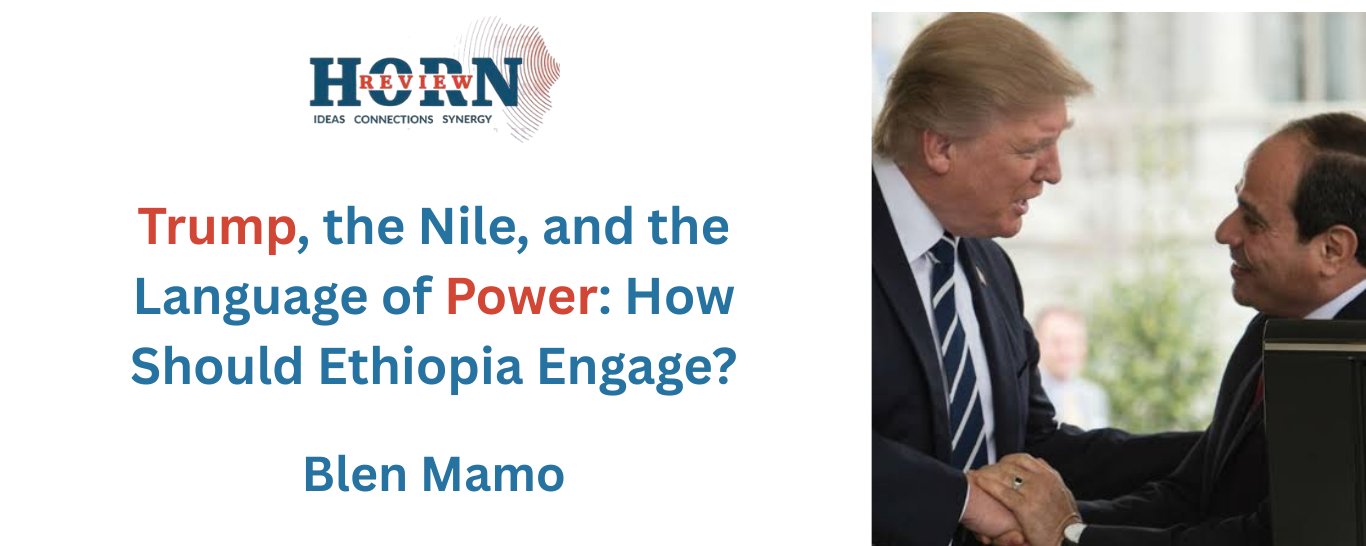
Understanding Trump’s Approach to Ethiopia’s Grand Ethiopian Renaissance Dam
By employing his characteristic rhetoric, former President Donald Trump has sparked debate and controversy with his recent comments regarding Ethiopia’s Grand Ethiopian Renaissance Dam (GERD) and Prime Minister Abiy Ahmed. Far from being a simple policy briefing, Trump’s statements illustrate a complex interplay of power dynamics and rhetorical strategies that reflect his unique approach to international relations.
The Complex Landscape of Power Dynamics
Trump’s description of Abiy Ahmed as a “strong leader” stands as a testament to how conventional diplomatic terms can morph under his administration. While such praises typically signify alignment or favor, in Trump’s context, they lean more towards recognizing the transactional aspects of leadership. This recognition highlights the evolving nature of Ethiopia’s role in the Nile River dispute, suggesting that any resolution hinges on Abiy’s authority—a significant shift from portraying Ethiopia as a mere participant to showcasing it as an influential actor.
Misconceptions of U.S. Funding
In Trump’s address, he erroneously claimed that the United States financially supported the GERD, misleading the audience on the funding’s origin. The dam, recognized as Africa’s largest hydroelectric project, has been primarily financed through Ethiopian government resources and contributions from its diaspora, casting doubt on the accuracy of Trump’s statements.
A Rhetorical Examination of the Nile
Trump’s contrasting portrayal of the Nile River as a “small river” against the backdrop of the GERD’s significance creates an intriguing narrative dichotomy. Hydrologically, this characterization is inaccurate, given the Nile’s status as one of the world’s longest rivers. However, his intent appears more rhetorical than factual, as it amplifies the urgency surrounding the GERD and capitalizes on tensions between Sudan and Egypt. By framing the Nile as vulnerable and the dam as powerful, Trump subtly addresses Egyptian concerns without overtly siding with Cairo.
Historical Context and Egypt’s Influence
This rhetoric cannot be divorced from the longstanding U.S.-Egypt relationship, shaped through decades of strategic engagement. Egypt has long been a focal point of American foreign policy in the Middle East, particularly under President Abdel Fattah el-Sisi. Their collaborative efforts have included various regional initiatives, making it critical for any diplomatic resolutions involving GERD to consider Egypt’s strategic goals.
The Strategy Behind Trump’s Communication
Trump’s speech patterns often emphasize personalization over institutional frameworks, opting for dramatic contrasts that heighten perceived stakes. Diverse audiences interpret his rhetoric differently—Ethiopians might feel their achievements are minimized, while Egyptians may view his statements as validation of their security concerns. Meanwhile, Trump’s domestic supporters might see his involvement as assertive leadership in managing international disputes.
The Need for Ethiopia’s Strategic Engagement
To navigate these turbulent waters effectively, Ethiopia must engage with Trump from a position of power rather than defensiveness. A nuanced strategy that emphasizes Ethiopia’s pivotal role in regional security could be advantageous. The country has historically served as a crucial stabilizing force, particularly in counterterrorism efforts in the Horn of Africa. Acknowledging this strategic reality not only highlights Ethiopia’s importance but could also reframe the conversation around GERD as a matter of cooperative engagement rather than confrontational negotiation.
Formulating a Forward-Looking Engagement Strategy
Ethiopia needs to present a phased negotiation framework regarding GERD, normalizing its operational status while anticipating Egypt’s potential reactions. This proactive approach should emphasize confidence-building measures aimed at fostering stability rather than making concessions.
Collaborating with Strategic Allies
Ethiopia may benefit from collaborating with nations and actors that hold sway with Trump. Given their rapport with him, countries like Israel and the United Arab Emirates could serve as intermediaries that enhance Ethiopia’s standing in this complex geopolitical landscape.
Addressing Egyptian Concerns
Moreover, it’s essential for Ethiopia to reframing Cairo’s longstanding encirclement strategy—not as a moral failing but as a strategic oversight for the U.S. The current dynamics extend beyond the GERD; they increasingly involve limiting Ethiopia’s future hydraulic infrastructure. Recognizing these shifts is vital to remaining in a position of strength during negotiations.
Laying the Groundwork for Constructive Diplomacy
Addressing these matters with strategic messaging—coupled with robust private diplomacy—can sharpen Ethiopia’s influence and focus. By projecting stability and pragmatism, particularly in security and commercial domains that resonate with Trump, Ethiopia can position itself as a key player in regional dynamics, shifting the discourse toward collaboration and away from confrontation.
In conclusion, Prime Minister Abiy Ahmed’s government must leverage these complex dynamics thoughtfully, ensuring that Ethiopia emerges not just as a participant in discussions about the GERD but as a strategic partner intrinsic to regional stability—an approach necessitating careful navigation of Trump’s unique style of diplomacy.
