




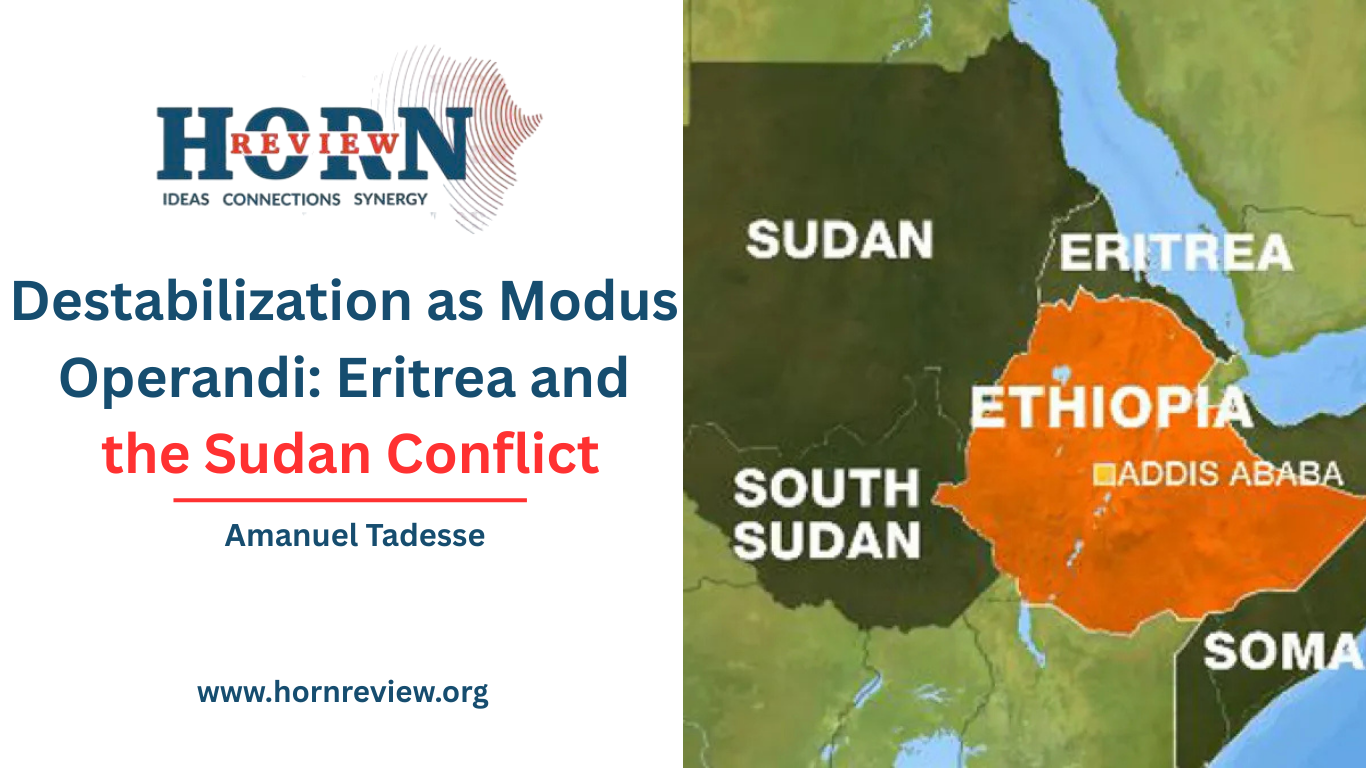
Eritrea’s Role in Regional Conflict: Implications for Sudan and the Horn of Africa
Since gaining independence in 1991, Eritrea has consistently emerged as a disruptive force in the Horn of Africa. Rather than fostering constructive relationships, Asmara employs a foreign policy characterized by destabilizing tactics that exacerbate regional tensions.
Eritrea’s Foreign Policy Framework
Eritrea’s strategic approach is defined by proxy warfare, clandestine military assistance, and involvement in organized crime. Under President Isaias Afwerki, the regime has prioritized interference in neighboring countries’ conflicts instead of engaging in diplomatic solutions. This method of operation is evident from Yemen to Ethiopia, Djibouti to Sudan, and South Sudan to Somalia.
The Case of Sudan: A Strategic Exploitation
Eritrea’s role in the ongoing civil conflict in Sudan highlights this modus operandi. The conflict pits the Sudan Armed Forces (SAF), led by General Abdel Fattah al-Burhan, against the Rapid Support Forces (RSF), led by General Mohammed Hamdan Dagalo. Eritrea has positioned itself as a supposed mediator, but this façade masks a vested interest in exploiting Sudan’s crises for its geopolitical gains.
Tensions between Eritrea and Sudan
Despite extensive geographic, historical, and social ties, Eritrea and Sudan’s relationship has been fraught with mistrust and conflict. This tension is exacerbated by Eritrea’s confrontational foreign policy, evidenced by past conflicts like the Ethio-Eritrea War and tensions with Djibouti and Yemen. Scholars argue that Eritrea’s involvement in Sudan aligns with its ongoing strategy of leveraging regional instability to maximize its influence.
Eritrea’s Actions in the Sudan Conflict
Since the outbreak of violence on April 15, 2023, due to power struggles following the dismantling of Sudan’s transitional governance, Eritrea’s involvement has taken several forms:
-
Military Support and Alignment: Eritrea has politically and militarily aligned itself with the SAF, offering logistical support, military training, and even drone operations facilitated from its territory.
-
Deployment of Troops: Reports indicate that Eritrea has secretly sent around 5,000 soldiers into Sudan, particularly near strategic locations that bolster SAF operations.
-
Exploiting Ethnic Dynamics: Eritrea has trained local militia groups in Eastern Sudan, fueling inter-tribal conflicts that complicate peace efforts.
-
Arms Trafficking: Eritrea has become a key conduit for weapons smuggling, undermining international embargoes and increasing the conflict’s lethality.
-
Divisive Diplomacy: Eritrean officials engage in discreet negotiations with SAF leaders to consolidate bilateral ties rather than promote inclusive political solutions.
-
Suppression of Opposition: The chaos in Sudan is leveraged to monitor and neutralize Eritrean opposition groups, ensuring domestic regime stability.
Implications for Regional Stability
Eritrea’s actions in Sudan deepen instability in the Horn of Africa and threaten broader peace initiatives. Instead of acting as a neutral party, Eritrea’s involvement serves to fragment Sudan’s political landscape and undermine ongoing peace efforts.
The Impact on Ethiopia
Ethiopia views Eritrea’s actions as a direct threat to its national interests. The conflict in Sudan is increasingly seen as an avenue for regrouping anti-Ethiopian factions, which can be detrimental to regional stability.
International Mediation Efforts
Various mediation attempts by international and regional entities have stumbled, often exacerbated by Eritrea’s disruptive involvement. Recent initiatives like the Jeddah Agreement and the Humanitarian Truce Initiative have struggled to obtain lasting commitments from warring parties due to Eritrea’s continued intervention.
Ethiopia’s Role in Peace Efforts
Ethiopia has positioned itself as a stabilizing force in the Horn, advocating for a Sudanese-led mediation process. The country’s foreign policy reflects a “African Solutions to African Problems” ethos, emphasizing the importance of regional engagement in resolving conflicts.
Ethiopia has also shown its commitment to peace through humanitarian initiatives, hosting thousands of Sudanese refugees and pledging financial support for relief efforts.
Conclusion
Eritrea’s involvement in Sudan serves as a case study illustrating its broader foreign policy strategy rooted in destabilization. For sustainable peace in Sudan and the wider Horn of Africa, it is vital to counter Eritrea’s disruptive role and promote credible, inclusive negotiations led by regional mechanisms, specifically the African Union (AU) and IGAD.
By reinforcing collaborative efforts, regional actors can work to mitigate Eritrea’s influence and foster a lasting resolution to the conflicts in the Horn of Africa, ultimately contributing to a more stable and peaceful region.
For additional insights on Horn of Africa geopolitics, visit International Crisis Group.
