




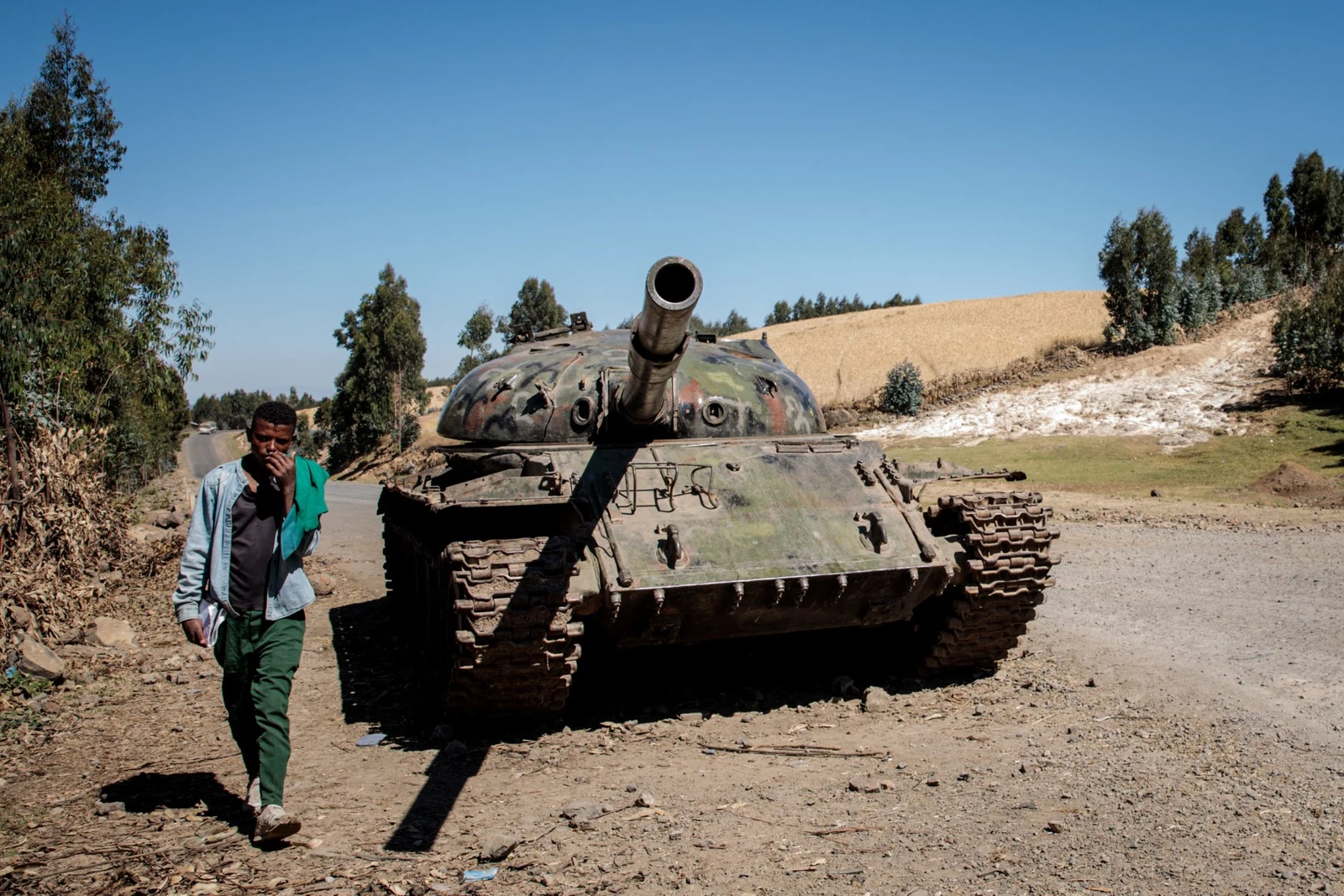
Ethiopia Rebel Alliance Formed by Seven Armed Groups to Challenge Federal Government
ADDIS ABABA — Seven Ethiopian armed groups have announced the formation of a new military and political coalition aimed at toppling Prime Minister Abiy Ahmed’s federal government, raising acute fears of a widening civil conflict in Africa’s second-most populous nation.
The alliance, confirmed Sunday by Tigray People’s Liberation Front (TPLF) Vice President Amanuel Assefa in an interview with AFP, unites forces from the country’s three most volatile regions. The coalition’s stated objective is to “remove the regime and facilitate a transitional government,” according to Assefa.
Coalition Brings Together Historic Rivals
The unprecedented pact bridges deep ethnic and ideological divides, uniting the TPLF—which dominated national politics for nearly three decades before the 2020–2022 Tigray War—with two other major insurgencies:
- Fano: Amhara nationalist militias fighting federal forces since 2023 over regional autonomy and the integration of regional forces into the national army.
- Oromo Liberation Army (OLA): An insurgent group battling the government in Oromia, Ethiopia’s largest and most populous region, since 2018.
Four additional smaller groups round out the seven-member bloc, though their identities were not immediately disclosed. Analysts note that the convergence of Tigrayan, Amhara, and Oromo armed wings represents a potentially existential threat to the central authority in Addis Ababa, as it opens the possibility of a coordinated multi-front war.
Related Reading: Understanding the Tigray War and its Aftermath (Human Rights Watch)
Troop Buildup Fuels Fears of Full-Scale War
The announcement comes amid a dangerous military escalation. The African Union (AU) has recently warned that both the federal government and the TPLF have massed troops along the border of the northern Tigray region. This mobilization evokes the prelude to the devastating Tigray War (2020–2022), a conflict estimated to have killed 600,000 people through violence and famine, according to research by Ghent University and the African Union.
The federal authorities in Addis Ababa have not yet issued a formal response to the alliance announcement.
Expert Analysis: High Risk, Uncertain Viability
Kjetil Tronvoll, a prominent Horn of Africa specialist at Oslo New University College (OsloMet), expressed skepticism regarding the coalition’s capacity to overthrow the government militarily.
In comments to AFP, Tronvoll described the endeavor as a potential “sacrificial war for the rebels,” citing the federal government’s significant advantage in air power, particularly its fleet of armed drones (procured from Turkey, Iran, and the UAE), which proved decisive in the Tigray War.
External Context: The Role of Drones in the Tigray War (Reuters)
However, Tronvoll acknowledged a critical strategic variable: unified command.
“If they coordinate as a military command, it may make a difference. It is a potential four to five fronts that the government will have to deal with. It might be a challenge,” Tronvoll stated.
He further questioned the alliance’s political coherence, warning that the groups’ divergent ideologies—ranging from Tigrayan nationalism and Amhara expansionism to Oromo self-determination—could fracture the coalition in the event of a military breakthrough, complicating any transition arrangement.
Background: A Nation Fractured by Conflict
Ethiopia has been mired in simultaneous internal conflicts for years:
- Oromia Conflict: The federal military has fought the OLA since 2018. The government labels the group a terrorist organization (designated “Shene”), while the OLA demands political autonomy and the release of political prisoners. Peace talks in Tanzania collapsed in 2023.
- Amhara Conflict: Fighting erupted in April 2023 between the federal army and Fano militias following a government order to dissolve regional special forces. The conflict has devastated the Amhara region, leading to widespread allegations of human rights abuses by all sides.
- Tigray Fragile Peace: The Cessation of Hostilities Agreement (CoHA) signed in Pretoria, November 2022, halted the Tigray War but remains partially unimplemented, particularly regarding the withdrawal of non-ENDF forces (Eritrean and Amhara) from disputed territories.
What Comes Next?
The formation of this alliance fundamentally alters the security calculus in the Horn of Africa. While the federal government retains superior firepower and air supremacy, a synchronized offensive across Oromia, Amhara, and Tigray would stretch the Ethiopian National Defense Force (ENDF) thin.
The international community, including the AU, the United Nations, and IGAD (Intergovernmental Authority on Development), faces renewed pressure to mediate a holistic national dialogue—a process previously attempted but stalled by mutual distrust and preconditions.
For now, the population braces for the likelihood of intensified combat, displacement, and humanitarian crisis in regions already scarred by years of warfare.
Key Terms & Entities:
- TPLF (Tigray People’s Liberation Front): Former ruling party of Tigray, now lead opposition force.
- Fano: Amhara irregular militia/nationalist movement.
- OLA (Oromo Liberation Army): Armed wing of the Oromo Liberation Front (OLF), designated terrorist group by Ethiopian parliament.
- ENDF: Ethiopian National Defense Force.
- CoHA: Cessation of Hostilities Agreement (Pretoria Agreement).
Sources: AFP Reporting, African Union Statements, OsloMet Analysis, Historical Conflict Data (Ghent University/Reuters/HRW).
