




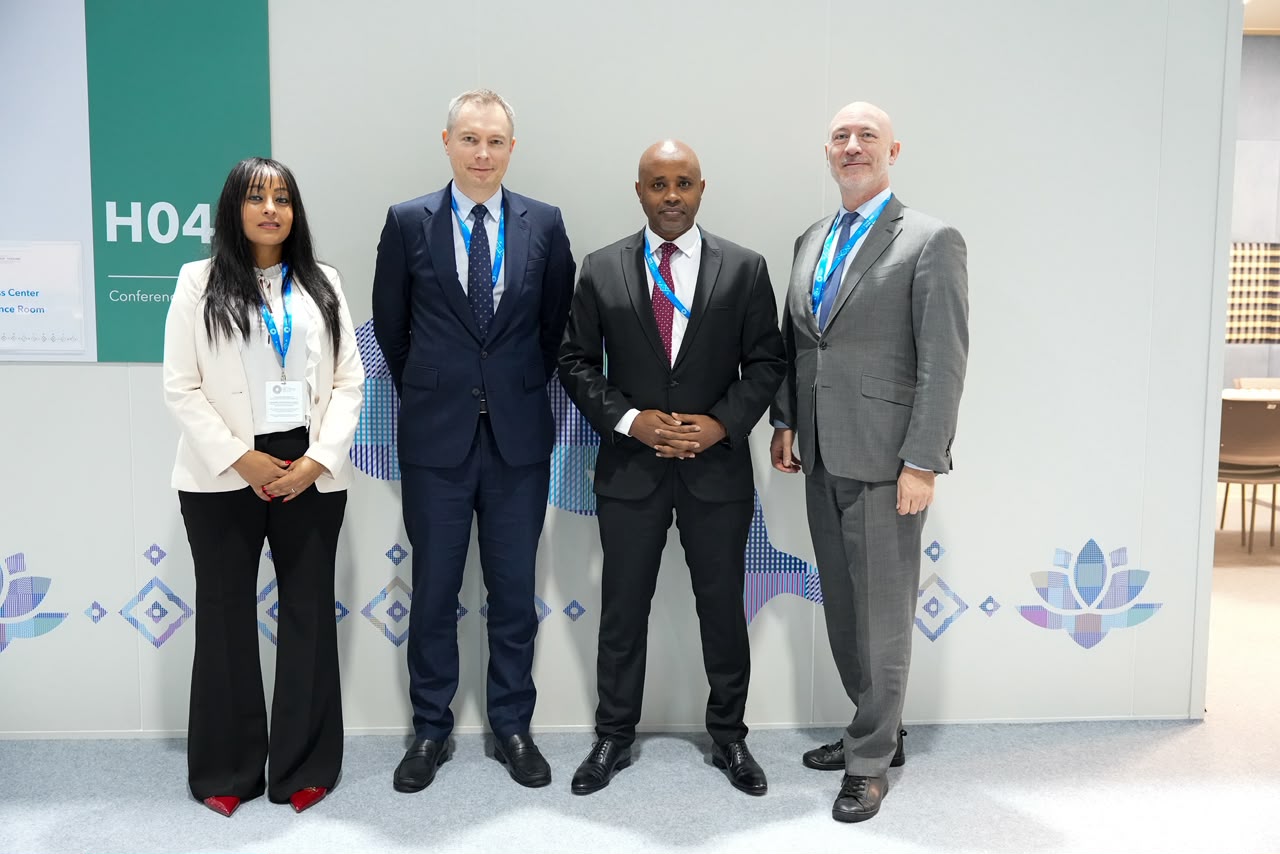
Ethiopia, France Deepen Economic Ties at 2026 IMF-World Bank Annual Meetings in Bangkok
BANGKOK — Ethiopia and France have signaled a renewed commitment to deepening bilateral economic cooperation, focusing on macroeconomic reform support, development financing, and debt sustainability. High-level talks took place on October 13, 2026, on the sidelines of the IMF-World Bank Group Annual Meetings in Bangkok, Thailand.
The meeting brought together Eyob Tekalign, Governor of the National Bank of Ethiopia (NBE), and Thomas Revial, Assistant Secretary at the French Treasury Directorate General. Discussions centered on translating the longstanding partnership between the two nations into tangible support for Ethiopia’s ambitious homegrown economic reform agenda.
Focus on Macroeconomic Reform Progress
A primary agenda item was the review of Ethiopia’s ongoing macroeconomic reforms, notably the liberalization of the foreign exchange regime and fiscal consolidation measures implemented under the Homegrown Economic Reform Program (HERP). Governor Tekalign briefed the French delegation on the initial outcomes of these policies, including improved foreign exchange availability and efforts to unify the exchange rate.
France has historically been a key partner in Ethiopia’s development trajectory. Revial acknowledged the “bold steps” taken by the Ethiopian authorities, reiterating Paris’s alignment with the reform direction supported by the International Monetary Fund (IMF) and the World Bank. The French Treasury views the current reform window as critical for unlocking private sector potential and stabilizing the macroeconomic environment.
Related Reading: How Ethiopia’s Foreign Exchange Reform Impacts Trade and Investment
Expanding Development Financing and Debt Sustainability
Beyond policy dialogue, the two sides explored concrete mechanisms to expand development financing. With Ethiopia navigating a complex debt restructuring process under the G20 Common Framework, securing bridge financing and concessional loans remains a priority.
Discussions covered:
- Debt Sustainability: Coordinating positions ahead of upcoming creditor committee meetings to ensure a timely and comprehensive restructuring agreement.
- Budget Support: Potential French Development Agency (AFD) budget support operations linked to reform milestones.
- Blended Finance: Leveraging public funds to de-risk private investment in strategic sectors like renewable energy, agriculture, and digital infrastructure.
France remains one of Ethiopia’s significant bilateral creditors and a major contributor to EU development funds allocated to the Horn of Africa nation. The meeting underscored Paris’s willingness to play a facilitative role in the debt resolution process.
External Resource: AFD Group Activities in Ethiopia
Investment Promotion and Institutional Capacity Building
The dialogue extended to investment promotion and institutional capacity building. Both parties recognized that sustainable growth requires more than fiscal adjustment; it demands structural transformation driven by the private sector.
Key areas identified for enhanced cooperation include:
- Financial Sector Deepening: Technical assistance for the NBE in banking supervision, payment systems modernization, and capital market development.
- Public Financial Management (PFM): Strengthening treasury functions and procurement systems to improve transparency and efficiency.
- Private Sector Dialogue: Facilitating business-to-business (B2B) forums to connect French SMEs and large corporates with Ethiopian counterparts in manufacturing, agro-processing, and technology.
Governor Tekalign emphasized that building institutional resilience is paramount. “Strong institutions are the bedrock of investor confidence,” he noted, highlighting the NBE’s focus on regulatory autonomy and adherence to international standards like the Basel III framework.
Strategic Significance of the Bangkok Meetings
The choice of the 2026 IMF-World Bank Annual Meetings as the venue for these talks is strategic. These gatherings serve as the premier global platform for finance ministers and central bank governors to negotiate the architecture of global economic governance.
For Ethiopia, the meetings provide direct access to decision-makers in the Paris Club, the G20, and multilateral institutions. For France, engagement on the sidelines allows for bilateral nuance that complements the multilateral consensus built in the plenary sessions.
The meeting reaffirmed the value of sustained high-level dialogue. As Ethiopia implements the second phase of its reform program (HERP 2.0), the partnership with France—spanning financial, technical, and diplomatic dimensions—is expected to remain a pillar of the country’s external economic strategy.
Key Takeaways
| Area | Outcome |
|---|---|
| Macroeconomic Policy | France endorses Ethiopia’s FX liberalization and fiscal reform path. |
| Debt Restructuring | Commitment to constructive engagement within the G20 Common Framework. |
| Financing | Exploration of new AFD concessional facilities and blended finance instruments. |
| Capacity Building | Focus on NBE supervision, PFM, and capital market regulation. |
| Investment | Agreement to facilitate private sector linkages and de-risking mechanisms. |
Looking Ahead
The Bangkok engagement sets the stage for a follow-up technical mission from the French Treasury and AFD to Addis Ababa in the coming quarters. The mission aims to finalize the pipeline of projects eligible for French funding and to align technical assistance programs with the NBE’s strategic roadmap.
As the global economic landscape shifts—marked by tighter financing conditions and geopolitical fragmentation—partnerships rooted in mutual accountability and long-term development vision become increasingly vital. The Ethiopia-France dialogue in Bangkok demonstrates a shared intent to navigate these headwinds collaboratively.
Frequently Asked Questions (FAQ)
What was the main purpose of the meeting between Eyob Tekalign and Thomas Revial? The main purpose was to strengthen economic cooperation, review progress on Ethiopia’s macroeconomic reforms, and discuss development financing, debt sustainability, and investment opportunities.
Where did the meeting take place? The meeting took place in Bangkok, Thailand, on the sidelines of the 2026 IMF-World Bank Group Annual Meetings.
What is France’s role in Ethiopia’s debt restructuring? France is a key bilateral creditor and a member of the Paris Club. It plays a significant role in the G20 Common Framework negotiations regarding Ethiopia’s debt treatment.
Which institutions are involved in supporting Ethiopia’s reforms? The primary institutions are the National Bank of Ethiopia (NBE), the French Treasury, the French Development Agency (AFD), the International Monetary Fund (IMF), and the World Bank Group.
What are the Homegrown Economic Reform Programs (HERP)? HERP is Ethiopia’s flagship policy framework aimed at macroeconomic stabilization, structural transformation, and private sector-led growth. The current phase focuses on FX liberalization, fiscal discipline, and sectoral productivity.
