




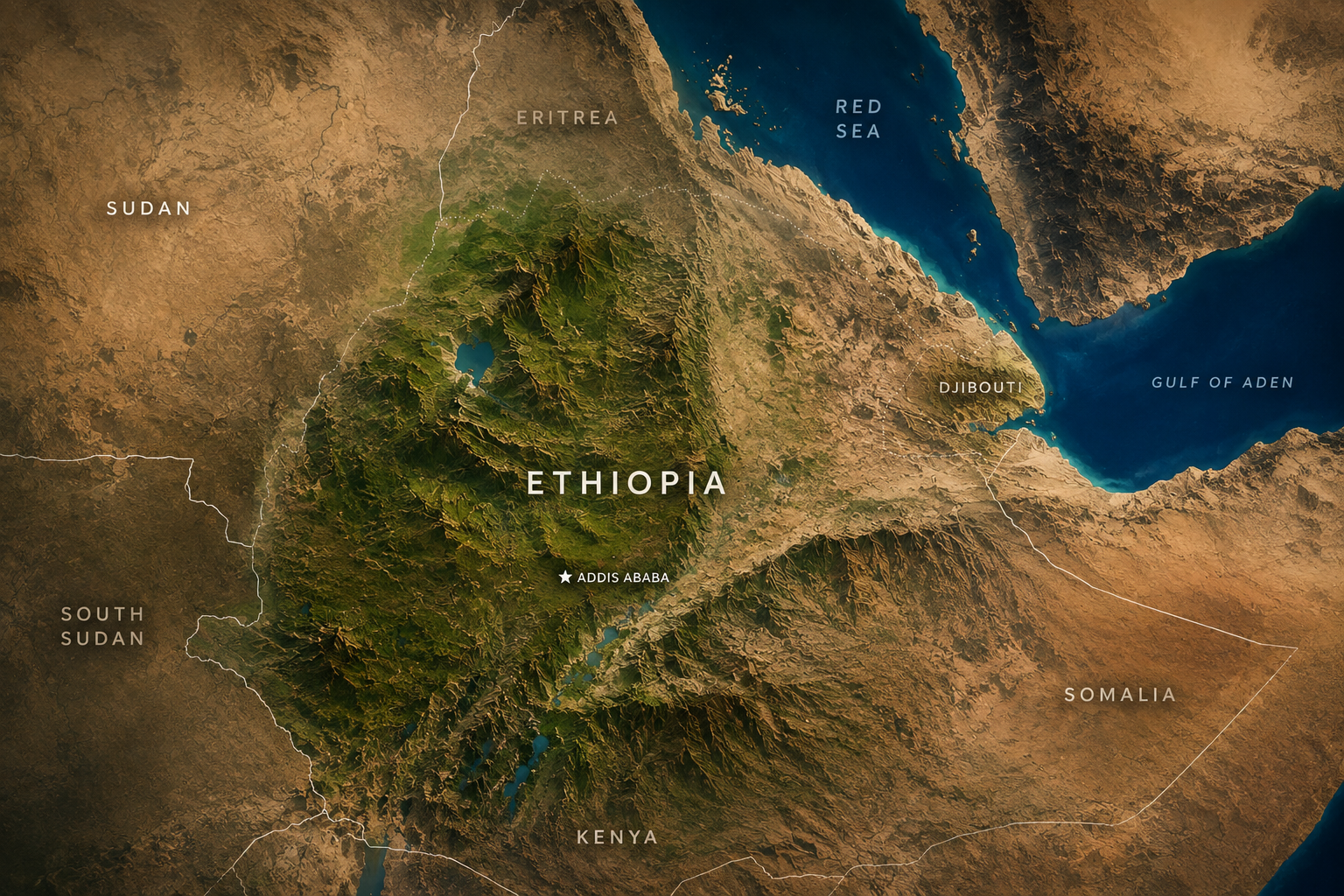
After the battle of Bereket and Shererina, the Ximdo Axis between TPLF-Eritrea hangs by a thread.
The desertion of Eritrea and the humiliation of TPLF’s Army 70
FOR THREE YEARS the Pretoria Agreement has papered over the cracks of Ethiopia’s civil war. The ceasefire signed in November 2022 brought an end to large-scale hostilities but left the underlying fractures untouched—chief among them the status of Western Tigray, the disarmament of Tigray’s rebels, and their reintegration back into society. Over the weekend, those cracks burst open. A disastrous incursion by Tigrayan forces, known as Army 70, into the contested borderlands near Humera has laid bare not only the tactical superiority of Ethiopia’s National Defense Forces but also the deepening rift between the Tigray People’s Liberation Front and its erstwhile backers in Asmara.
The battle unfolded with brutal efficiency. Army 70, a force of the TPLF operating from Sudan, sought to cross into Ethiopia near the village of Legudi, aiming to push through Shererina, seize Bereket and advance toward Mai Cadra before potentially taking Humera, the strategic border town where Ethiopia, Eritrea and Sudan converge .
The operation was a catastrophe. Ethiopian forces, combining ground troops, artillery and relentless drone strikes, outmanoeuvred the rebels at every turn. Reinforcement corridors were severed by round-the-clock aerial surveillance, supply lines were cut and the incursion was annihilated within days. The entire fighting encompassed an area known as Al Fashga Triangle, a territory contested by both Sudan and Ethiopia, a sort of no man’s land typically occupied by various forces, but mainly populated by seasonal Amhara farmers across the border in Ethiopia. These farmers were uprooted by Sudan’s army in November of 2020 at the outset of the “Tigray War”. This action ended a long-standing “soft border” compromise that allowed Ethiopian farmers to cultivate the land.
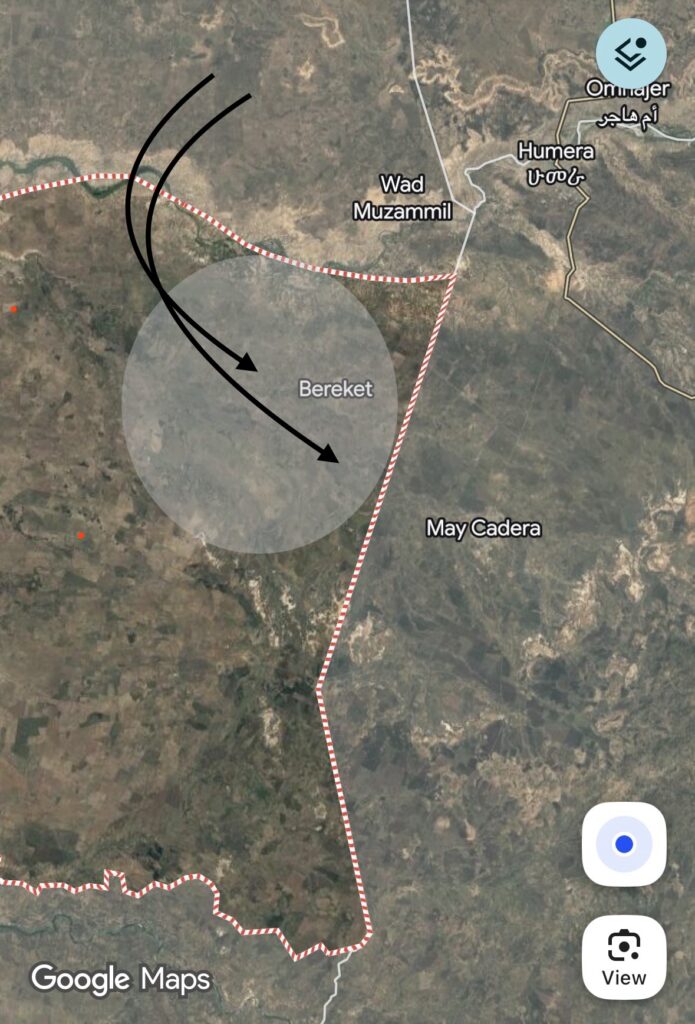
The military craft on display was remarkable. Ethiopian forces integrated intelligence with devastating precision, intercepting rebel communications to feed misleading orders, drawing the enemy into kill zones and redirecting their reinforcements into ambushes. The operation, executed at minimal cost to the federal side, will deservedly find its way into military curricula—a masterclass in how to turn provocation into annihilation.
A rift exposed
Yet the battlefield defeat is only half the story. The more significant development lies in what the clash reveals about the unraveling “Ximdo” arrangement—the war pact between the TPLF and Eritrea’s long time authoritarian ruler, Isias Afewerki. For months, Eritreans have watched Ethiopia’s growing assertiveness—particularly its demands for unhindered Red Sea access—with deepening unease . The TPLF, once Asmara’s mortal enemy, has become a useful tool of Asmara, to keep Addis Ababa distracted. But that utility has limits.
Those limits are now visible. Eritrean forces, which fought alongside Ethiopia’s federal army during the 2020–2022 war, have refused to intervene in any serious way . No air cover was provided. The much-vaunted drones and anti-drone jammers that Eritrea was reportedly supplying never materialized. Even more tellingly, dozens of armored vehicles and tanks that the TPLF sent to Eritrea for refurbishment—at a cost of up to $12 million—remain unprepared and unreturned . The TPLF’s generals are furious; Eritrea’s leadership is unmoved.
To paper over the growing rift, the two sides staged a public display of unity last week, with Eritrean military figures marching alongside Tigrayan rebels in the border town of Zal Anbesa. But the spectacle was a charade . The alliance has always been one of convenience, not conviction. And as the TPLF’s military decisions grow more reckless and unpredictable, Eritrea’s willingness to underwrite them is evaporating, especially not that Ethiopian authorities have shown the willingness and capability to project force into neighboring counties.
A wider storm
The implications extend beyond the battlefield. Western Tigray remains the most volatile unresolved issue of the Pretoria Agreement—a region under de facto Amhara administration. The TPLF has declared the peace deal “effectively dead”; the federal government insists it remains committed, but its actions on the ground tell a different story .
For Sudan, already engulfed in its own civil war, the clashes are a nightmare. Army 70 has operated from Sudanese territory with Khartoum’s tacit support, and any escalation threatens to draw Sudan deeper into a conflict it cannot afford. Ethiopia has sought to leverage its influence in the Inter Governmental Authority for Development (IGAD) to urge Sudan to cease harboring Army 70 and other rebel groups. For the Horn of Africa, already buckling under crises in Somalia and the Red Sea, the weekend’s fighting is a warning: a peace built on paper, not on resolution, will not hold.
The TPLF’s leadership, rattled and humiliated, has issued statements for three consecutive days. The shock inflicted by Ethiopia’s military has done more than destroy Army 70; it has exposed the hollowness of the alliance that sustained it. The Ximdo arrangement was always a marriage of convenience. Now, with the TPLF’s fortunes in free fall, divorce with Eritrea’s regime looks increasingly likely. And in the Horn of Africa, that is rarely a quiet affair.
