




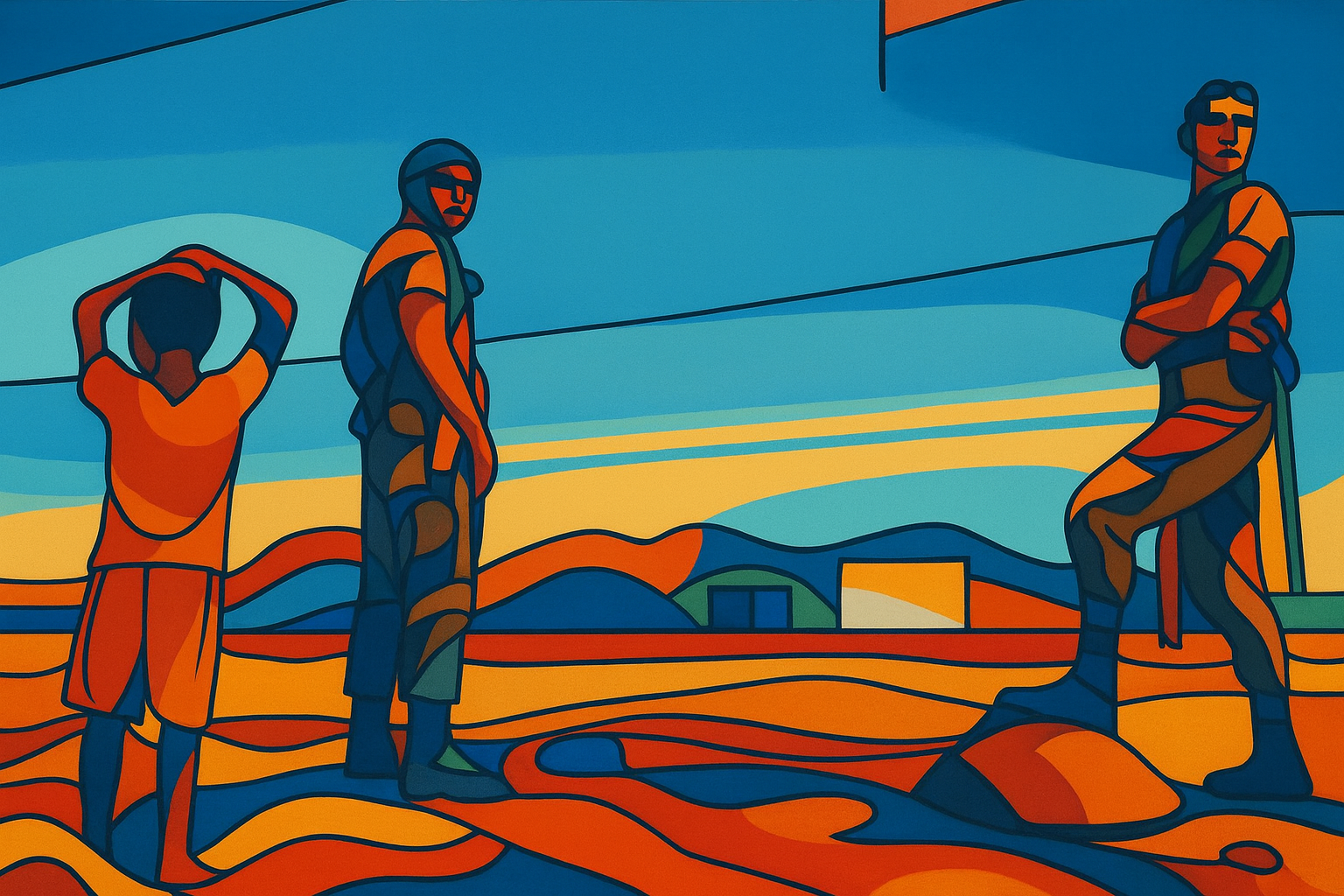
In the Horn of Africa, yesterday’s enemies have a habit of becoming today’s allies. Ever since elements of the Tigray People’s Liberation Front (TPLF) entered a tactical understanding—dubbed “Ximdo”—with the regime of Isaias Afwerki early in 2025, the likelihood of war has increased. The arrangement represents a remarkable volte-face. During the brutal 2020–22 war in northern Ethiopia, Eritrean forces fought shoulder to shoulder with Ethiopia’s federal army against Tigrayan rebels. Now, amid renewed acrimony between Addis Ababa and Asmara, significant TPLF factions appear willing to tolerate—if not quietly facilitate—the return of their former enemy.
Over the past month residents in parts of Tigray say Eritrean fighters have crossed into border districts in growing numbers. Towns near the frontier—Shiraro, Zalambessa and Rama among them—are reportedly tense. Witnesses speak of young men being forcibly rounded up and transported across the border in open trucks for military training inside Eritrea. In Mekelle, Tigray’s regional capital, banks have experienced periodic runs as anxious families withdraw cash. West of Abi Adi, locals describe extensive trench-digging and the dispersal of weapons and ammunition in church compounds and historical sites—locations presumed less likely to be hit by Ethiopian drones. Tigray’s rebel generals calculate an airstrike on such facilities would have damaging political blowback for Addis Ababa.
Eritrean infiltration carries weighty consequences. For Ethiopia’s federal government, any unauthorized foreign military presence constitutes a direct affront to sovereignty. Addis Ababa has accused Asmara of border incursions, sponsoring insurgent movements across the country—including the Oromo Liberation Army and Amhara Fano militias—in an effort to weaken the federal state. Eritrean officials deny destabilizing their southern neighbor. But recriminations have sharpened since Ethiopian authorities renewed claims over access to the Red Sea, particularly the port of Assab, and when Prime Minister Aby publicly accused Eritrean troops of committing war crimes in Tigray during his latest speech in parliament.
Earlier this month, unrest flared further south in the Amhara region, widening the arc of instability. Fano militants reportedly mounted an assault on the town of Debre Tabor, in what local sources describe as a coordinated operation allegedly supported by TPLF elements and Eritrean advisers. Rregional authorities claim that several Eritrean fighters were captured alongside Fano combatants during the clashes—an allegation that, if substantiated, would lend weight to accusations of cross-border involvement. The federal government has so far remained tight-lipped about the episode, declining to confirm either the extent of the fighting or the identities of those detained.
The irony is stark. Only two years ago, an alliance between the TPLF and Eritrea would have seemed fanciful. The TPLF once dominated Ethiopia’s ruling coalition and fought a bitter border war with Eritrea between 1998 and 2000. The subsequent rapprochement between Eritrea and Ethiopia under Abiy Ahmed sidelined the TPLF and helped precipitate the devastating northern war. That conflict, formally ended by the Pretoria agreement in 2022, left hundreds of thousands of dead.
For civilians, the return of Eritrean forces—whether overt or covert—is not merely a diplomatic affront but a deeply personal threat. During the 2020–22 war, Eritrean troops were widely accused by survivors and human-rights groups of atrocities including extrajudicial killings, widespread looting and systematic sexual violence. Women and girls bore a particularly heavy burden. Entire communities remain traumatised. The reappearance of Eritrean soldiers in Tigray therefore revives not just political tensions but visceral fear.
That fear is shaping behavior. In Mekelle and other urban centers, there have been constant runs on banks as families withdraw savings in anticipation of renewed instability. Those with the means are quietly relocating to Addis Ababa, seeking both physical safety and financial liquidity in the capital. Others scattered across towns and rural districts are consolidating within Tigray—moving in with relatives in larger cities, bunkering together in anticipation of uncertainty. The movement is not yet a mass exodus, but it is steady enough to signal deep unease.
Meanwhile, reports from central and northwestern Tigray suggest preparations for war are under way. Trenches are being dug. Weapons caches and ammunition are allegedly being stored in church compounds and historical sites, presumably to camouflage them from potential drone strikes by Ethiopia’s Airforce. Whether these measures are precautionary or preparatory is unclear. But they underscore how quickly a fragile peace can revert to militarized logic.
The broader geopolitical context compounds the volatility. Ethiopia’s renewed rhetoric about Red Sea access, particularly concerning Assab, has rattled Asmara. Ethiopian officials have also accused Eritrea of colluding with external actors and fomenting insurgency within Ethiopia’s borders. In turn, Eritrea’s leadership has signaled displeasure with Addis Ababa’s posture. In the opaque politics of the Horn, where formal declarations often mask informal maneuvers, proxy alignments are an established tactic.
The methods attributed to Asmara are not confined to arms and advisers. Local sources in border towns across Tigray allege that the Eritrean regime has also engaged in illicit currency operations, reportedly printing counterfeit Nakfa notes and exchanging them for Ethiopian birr in cross-border markets. The birr thus collected, according to these accounts, is then used to finance rebel fighters operating inside Ethiopia. If accurate, such practices would amount not merely to economic sabotage but to a deliberate attempt to weaponize currency flows in pursuit of political destabilization. Abren has previously documented testimonies from traders and residents describing the scheme.
A renewed confrontation in Tigray would not merely test Ethiopia’s sovereignty; it would threaten a civilian population still recovering from the previous war. The Pretoria settlement is at breaking point, and key questions—disarmament of TPLF, territorial administration, accountability for wartime abuses—are far from resolved. The reintroduction of Eritrean forces into the equation through coordination with TPLF hardliners risks unravelling fragile stability brought forth by the peace deal.
Public sentiment in Tigray can be described as delirious. Many feel disillusioned by the region’s divided politics, abandoned by former allies, and by the international community. In such an atmosphere, the maxim “the enemy of my enemy is my friend” rings loudly. Tactical logic may tempt elites into improbable alignments. But in the Horn of Africa, it is civilians who repeatedly pay the price of strategic improvisation.
Whether the “Ximdo” pact proves durable or merely opportunistic, it underscores a sobering reality: alliances in the region are transient, grievances enduring and peace agreements perilously thin. The renewed specter of Eritrean involvement is not only a geopolitical gambit. For Ethiopia and particularly for civilians in the Tigray region—especially women and girls who have already endured grave abuses—it is a reminder of how quickly history can circle back upon itself.

1 Comment
Pingback: Another War in Tigray Does Not Serve Ethiopian Interests - Abren