




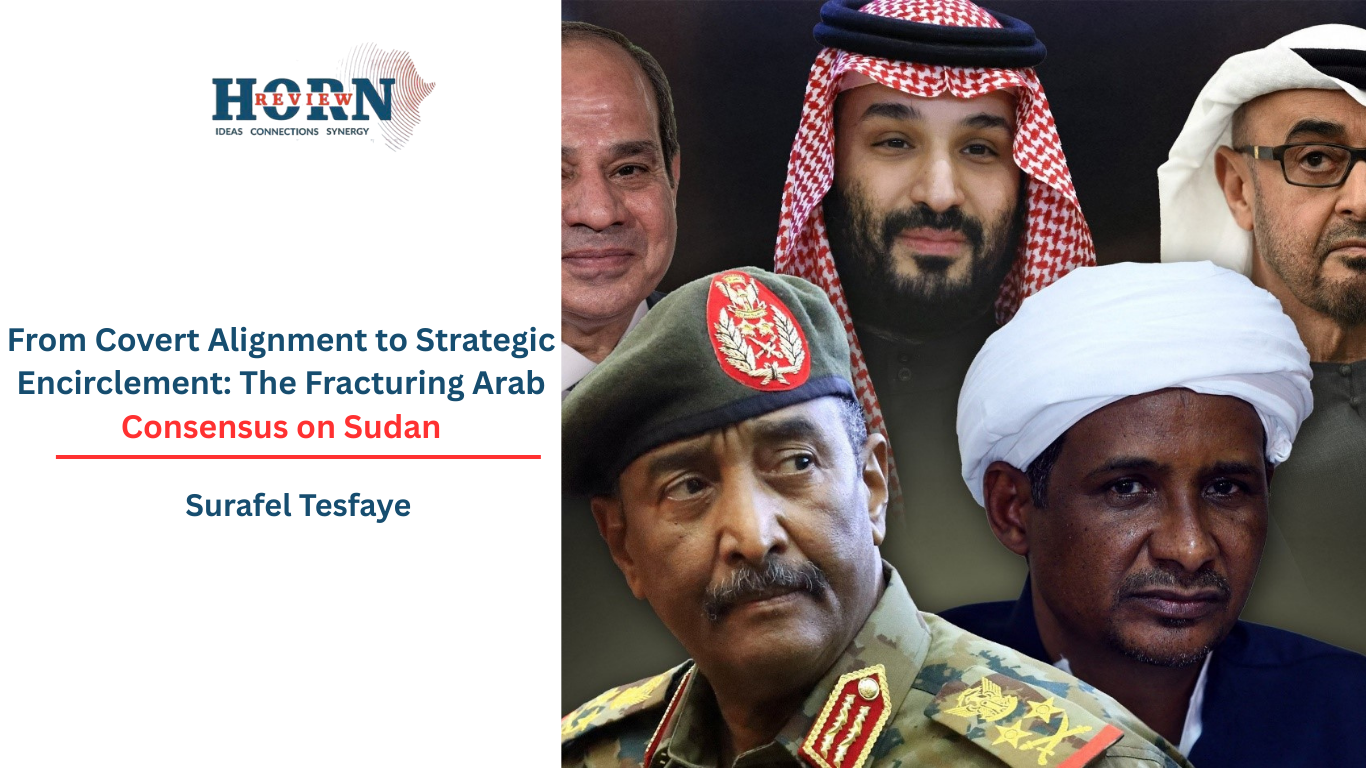
Egypt’s Evolving Role in the Sudan Conflict: From Covert Support to Active Intervention
As the Sudan conflict continues to unfold, Egypt is transitioning from a behind-the-scenes power broker to a direct participant. Since mid-2025, Cairo has ramped up its military operations, reportedly targeting weapon convoys associated with the Rapid Support Forces (RSF) along a critical supply corridor from southeastern Libya to Darfur. This shift in strategy marks a significant evolution in Egypt’s approach, moving from indirect support of the Sudanese Armed Forces (SAF) to active enforcement of its national security interests.
The Strategic Importance of Geography
The tri-border zone linking Egypt, Libya, and Sudan is strategically significant. This area serves as a vital supply route for the RSF, facilitating the flow of Emirati-supplied weapons, ammunition, and mercenaries through territory controlled by Khalifa Haftar’s Libyan National Army (LNA) into western Sudan. Earlier military strikes from Egypt were purportedly defensive, responding to convoys that penetrated into Egyptian territory. However, the recent operations signal a broader intent to disrupt the RSF’s logistics and deter Emirati support in this critical region.
Egypt’s Covert Operations Against RSF
Despite ongoing denials of direct military involvement, Egypt’s air operations targeting RSF supply lines reflect a critical shift in its strategic posture. For instance, on January 9, 2026, Egyptian aircraft were reported to have struck an RSF convoy near the border triangle, destroying armored vehicles. This pattern of strikes—from locations such as Jebel Moya in November 2025 to earlier operations—demonstrates a consistent escalation of involvement.
Officially, Cairo categorizes the RSF as a militia and calls for international scrutiny, but the nature of the allegations against it suggests a readiness to engage actively in the conflict. Reinforcing this change was a December 2025 announcement of a joint defense agreement with the SAF, symbolizing a formal commitment to Sudan’s stability as integral to Egyptian security.
Historical Context: The Shift in Perception
The relationship between Egypt and the RSF deteriorated sharply after the war erupted in April 2023, when Egyptian troops were detained at Merowe Airport during joint exercises. This incident solidified Cairo’s viewpoint of the RSF as a destabilizing force capable of undermining state militaries. As a result, Egypt has progressively shifted from a neutral mediator to a strategic supporter of the SAF, enhancing military cooperation and intelligence-sharing.
The Significance of Recent Strikes
The timing of the January 9 strike is particularly telling, coinciding with Sudan’s LNA deputy commander Saddam Haftar’s visit to Cairo to meet with Egyptian defense officials. This meeting appears to signal a recalibration of interests, as Egypt’s tolerance for ambiguity regarding RSF logistics in southeastern Libya is waning. Egypt’s actions now convey an explicit message: the time for passive observation has ended.
Regional Dynamics and Emerging Alliances
Egypt’s current approach has broader regional implications, particularly its relationship with Saudi Arabia. In January 2026, Egypt and Saudi Arabia publicly declared their positions on Sudan to be “identical,” showcasing an emerging regional alliance aimed at countering Emirati influence. Reports indicate that Saudi Arabia has restricted its airspace to Emirati aircraft suspected of resupplying the RSF, aligning with Egypt’s own aerial interventions.
Disrupting Emirati Operations
By January 2026, Egypt had effectively restricted its airspace to UAE military flights associated with RSF operations, a move that goes far beyond mere political posturing. This airspace denial serves as a coercive strategy, signaling that Cairo is prepared to impose significant costs on Emirati operations in the region.
Structural Tensions in Egypt-UAE Relations
The underlying tensions between Egypt and the UAE are now more pronounced. While economic interdependence has historically tempered outright conflict, the alignment of Egypt with the SAF and direct military actions reflect a fundamental shift. Egypt views Emirati support of the RSF as an increasing strategic liability, particularly as the RSF’s territorial gains pose considerable security threats along its borders.
The Implications for Water Security
The turmoil in Sudan also carries existential implications for Egypt, particularly regarding the Nile water negotiations and the Grand Ethiopian Renaissance Dam (GERD). A disintegrated Sudan threatens Cairo’s water security, as close ties between the RSF and Ethiopia could shift Sudan further from Egypt’s strategic orbit.
Conclusion: Balancing Act and Future Implications
Despite its escalated military involvement, Egypt continues to practice a form of strategic denial, publicly portraying itself as a mediator. This duality enables Cairo to pursue its interests while avoiding overt confrontation with the UAE. As Egypt tightens its grip on RSF supply lines, questions remain about its ability to maintain this strategic ambiguity without sparking a more extensive diplomatic fallout.
The ongoing conflict in Sudan is a critical juncture in reshaping regional dynamics, challenging established alliances, and asserting Egypt’s national security interests. The outcome of these developments may redefine not just the future of Sudan but also the broader geopolitical landscape in the region.
For additional insights on the Sudan conflict and Egypt’s role, visit Al Jazeera and The New Arab.
