




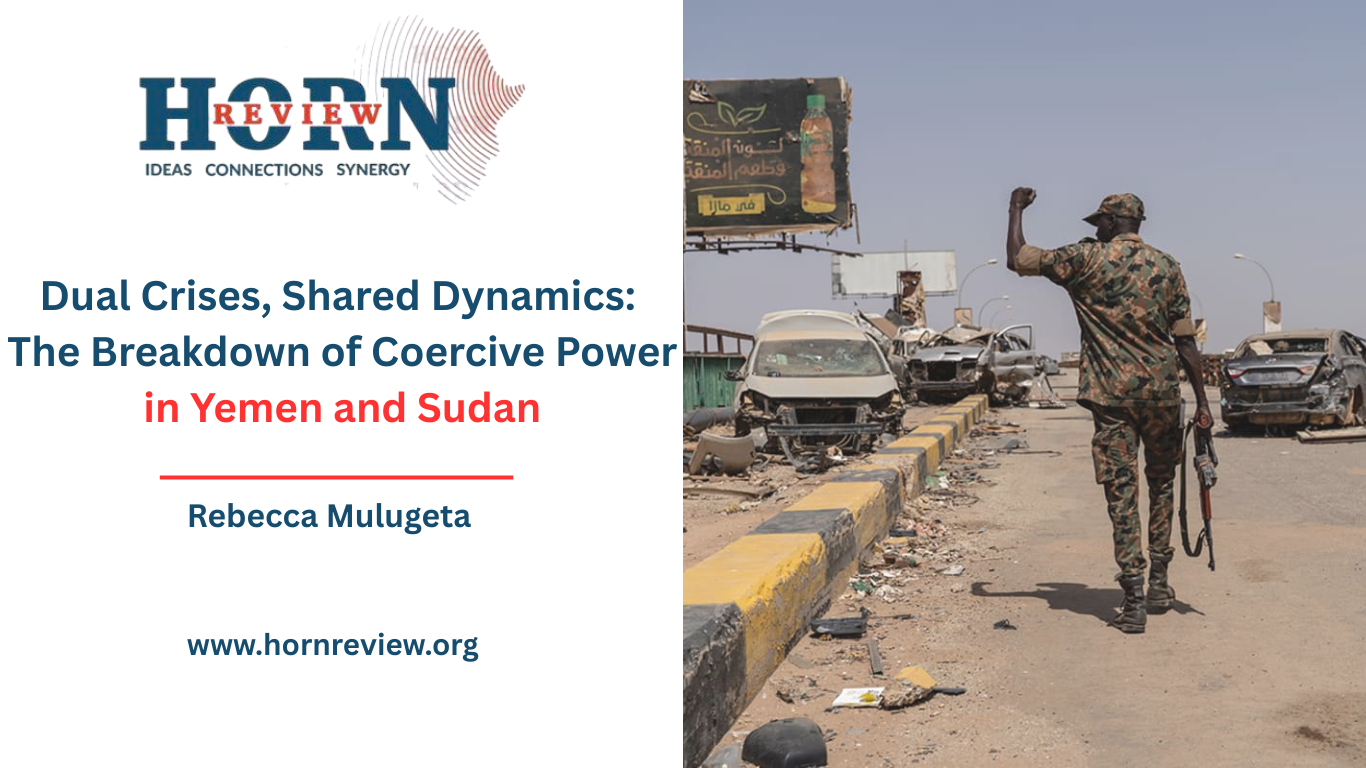
Understanding the Red Sea Dynamics: The Interconnected Conflicts in Yemen and Sudan
The conflicts in Yemen and Sudan represent a continuing narrative of political strife across the Red Sea, forming what can be termed a “Red Sea challenge trail.” Rather than viewing these conflicts as isolated events, it is crucial to interpret them as successive and interlinked processes shaping a unified security complex in the Red Sea region.
The Roots of Conflict in Yemen and Sudan
Both Yemen and Sudan share similar patterns in their transitional processes. In Yemen, the Gulf Cooperation Council transition post-2011 destabilized Ali Abdullah Saleh while failing to dismantle his extensive networks of coercion and patronage. Following this, the Houthis, previously a fringe group, gained significant power by integrating their insurgency with parts of Saleh’s military and governance structures, ultimately capturing the capital, Sanaa, in 2014.
Similarly, the Sudanese transition of 2019 that ousted Omar al-Bashir also revealed the deep-seated rivalries between the Sudanese Armed Forces (SAF) and the Rapid Support Forces (RSF). The agreements meant to foster civilian military cooperation only served to sustain a precarious balance, with each faction maintaining command structures and resources independent of one another.
The Collapse of Transitional Agreements
In both nations, transitional agreements led to a rearrangement of power rather than its eradication. The failures of these agreements are evident in Yemen, where the fragile equilibrium among Saleh loyalists, the Houthis, and President Hadi disintegrated during the 2014-2015 conflict. Likewise, the balance between the SAF, the RSF, and the civilian leadership in Sudan erupted into open conflict, demonstrating how transitions often set the stage for future confrontations.
The Role of Paramilitary Forces
A pivotal characteristic of both conflicts is the emergence of paramilitary forces, which have used their adaptability and connections to assert control. The Houthis’ swift takeover of Sanaa resonated with a fatigued public and a divided military while, in a similar fashion, the RSF’s rapid incursion into Khartoum in 2023 highlighted the fragility of state authority.
As paramilitary groups adapt, they expose conventional armed forces as fragmented rather than unified. This reality forces external actors to reassess their support structures amid a lack of coherent state authority.
External Influences and Ongoing Conflicts
The next phase in both conflicts involves external interventions designed to stabilize the regional balance of power. In Yemen, the Saudi-led intervention beginning in 2015 aimed to contain Houthi advances through military support and economic blockades. This transformed a potential rapid coup into a prolonged multi-front war. Meanwhile, in Sudan, the SAF, with backing from neighboring states and Gulf powers, seeks to maintain the façade of a sovereign state amidst ongoing strife.
Local Adaptation and International Ramifications
Both the Houthis and RSF have entrenched themselves in strategic territories, using unconventional revenue sources and social control to reinforce their positions. In Yemen, the Houthi leadership has evolved into a governance system managing resources through taxation and control over trade, while southern factions monetize their regional dominion.
Similarly, the RSF capitalizes on its stronghold in the gold trade for economic leverage, employing multi-layered revenue systems to sustain its operations. As a result, the fragmented political landscape becomes a stable source of income for these factions.
New Patterns of Governance in the Horn of Africa
The complexities of Yemen and Sudan reshape the governance landscape of the broader Horn of Africa. Yemen’s coastal geography has led to heightened military presence, influencing the security dynamics in the southern Red Sea, while Sudan’s instability jeopardizes Port Sudan and other vital coastal operations.
For regional actors like Ethiopia and Somalia, adapting to these changes means responding to shifting alliances and emerging threats, rather than aligning with a singular national project. The increasing militarization in the Red Sea region suggests that fragmented sovereignty could become a long-term governance model, where external and local elites manage territory and resources irrespective of national unity.
Future Scenarios in a Fragmented Red Sea
Framing Yemen and Sudan as parts of a joint “Red Sea disintegration pathway” implies that the future of this region will involve a piecemeal governance structure rather than traditional state sovereignty. Each faction in both countries, whether the Houthi-controlled north or the SAF-dominated northeast, could continue coexisting, provided they receive external backing and maintain revenue streams.
As regional conflicts proliferate, the Horn of Africa must navigate its own internal struggles influenced by the chaos of Yemen and Sudan. The overlapping dynamics of these two crises may set a precedent for other regional actors to pursue similar fragmented governance models, potentially leading to further instability.
In conclusion, the political and military landscapes of Yemen and Sudan are not isolated incidents but rather interconnected elements of a broader regional narrative. Understanding these dynamics, including the roles of external powers and local actors, is vital as we anticipate the evolving future of the Red Sea and Horn of Africa.
