




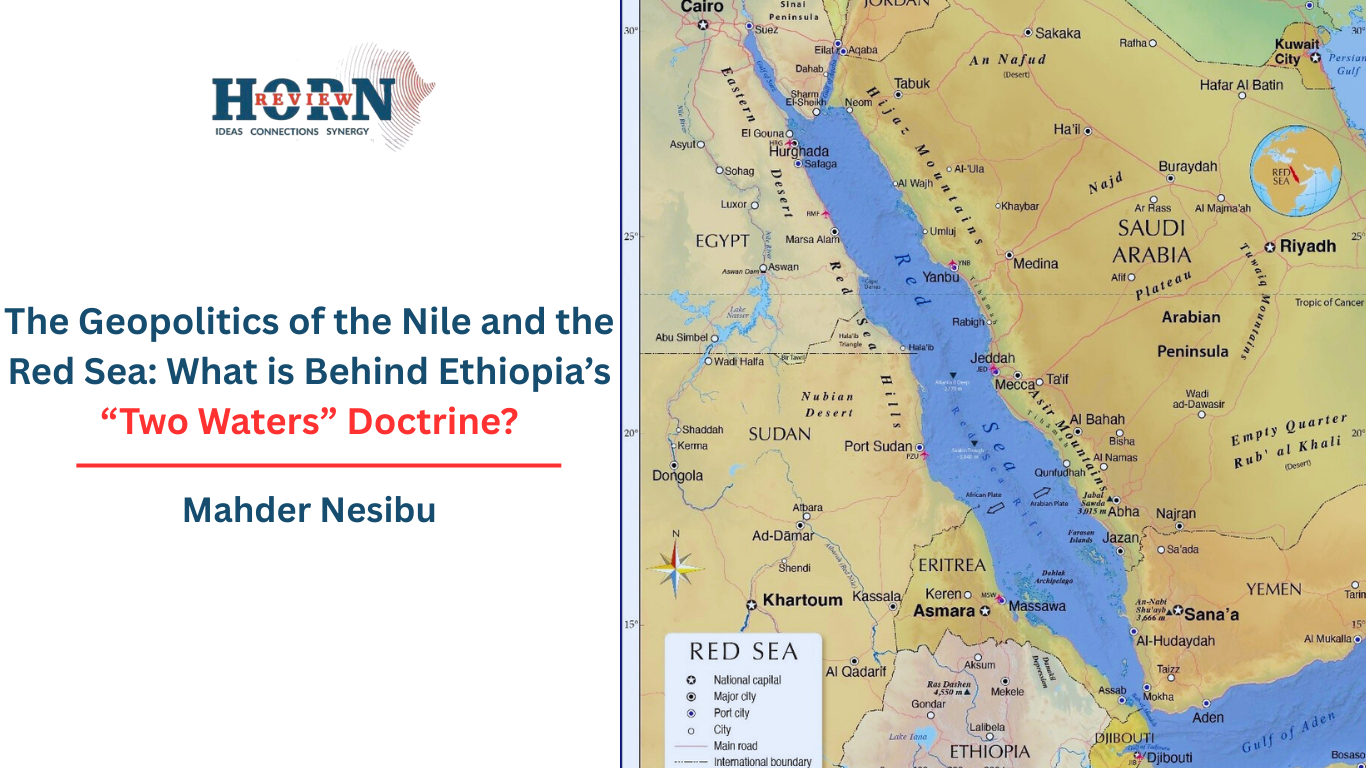
Ethiopia’s Geopolitical Strategy: Navigating Between the Nile and the Red Sea
Ethiopia finds itself at a pivotal crossroads, uniquely positioned between the Nile and the Red Sea. President Taye Atske Selassie emphasized the interconnectedness of these two waters during the Parliamentary opening session, highlighting their crucial role in Ethiopia’s future. As the international landscape shifts, Ethiopia views the effective management of these water bodies as essential for its national security and developmental goals.
The “Two Waters” Narrative: A New Geopolitical Paradigm
The prevailing narrative of Ethiopia’s “two waters” showcases a transformative shift in the country’s political discourse. Historically, Ethiopia’s leadership has prioritized hydro-politics, but the current administration seeks to adopt a broader geopolitical perspective. This approach integrates Ethiopia’s security, development, and hydro-economic interests in an increasingly interconnected regional environment.
Interlinking Hydro-Politics and National Security
Ethiopia’s leadership perceives the Nile and the Red Sea as vital in securing its position within a competitive regional balance of power. By strengthening its claims over both the Nile and the Red Sea, Ethiopia aims to reestablish its autonomy and challenge the historical constraints imposed by neighboring states, particularly Egypt.
Historical Context: Legacy of the Nile
The historical significance of the Grand Ethiopian Renaissance Dam (GERD) illustrates Ethiopia’s long-standing struggle for water rights and development. Through the GERD, Ethiopia not only aims to harness the Blue Nile for energy but also to assert its sovereignty over water resources that have historically favored downstream nations like Egypt.
Egypt’s Role: A Zero-Sum Game
The geopolitical dynamic surrounding the Nile presents a zero-sum game for Egypt, which views control of this vital water resource as essential for its national identity and regional dominance. Consequently, this perspective has led to tensions with Ethiopia, particularly as Ethiopia embarks on ambitious development projects like the GERD.
Egypt and Eritrea: A Historical Perspective
Ethiopia’s loss of access to the sea—specifically, its estrangement from Eritrea—can be traced back to Egypt’s century-long effort to exert influence in the region. Egypt’s actions have often been interpreted in the light of hydro-political strategies aimed at limiting Ethiopia’s ability to maximize its control over the Nile.
The Red Sea: A New Frontier for Ethiopia
Prime Minister Abiy Ahmed has articulated the necessity of reclaiming Ethiopia’s access to the Red Sea. He argues that Ethiopia’s strategic interests in the Red Sea are not merely economic but are also integral to national security. Abiy has characterized Ethiopia as “an island surrounded by water but deprived of it,” emphasizing the stark imbalance in regional access to maritime routes.
The Strategic Importance of Assab
Ethiopia’s focus on the port of Assab emerges from both contemporary needs and historical precedents. Once a critical maritime gateway, Assab’s role in logistical networks supports Ethiopia’s ambitions for regional integration and competitive commercial access.
Economic Development and Geopolitical Stability
As Ethiopia’s population grows, so does the demand for access to global markets. The Red Sea’s significance is underscored by Ethiopia’s ongoing dependence on congested and costly port facilities controlled by neighboring countries. The Ethiopian government’s pursuit of a maritime presence is not merely an economic endeavor; it is also a strategic decision aimed at reducing vulnerabilities tied to external dependencies.
A Changing International Landscape
President Taye’s observation of an “international system in flux” encapsulates Ethiopia’s adaptive foreign policy. The post-Cold War structures that previously defined international relations are increasingly perceived as inadequate. Ethiopia’s leadership is moving away from a commercial-only perspective toward a more nuanced understanding of geopolitics, seeking real leverage in a complex regional landscape.
Conclusion: The Path Forward for Ethiopia
Ethiopia’s ambitious quest for control over the Nile and access to the Red Sea is reshaping the region’s geopolitical landscape. By combining historic claims with modern strategic needs, Ethiopia aims to create a more balanced regional order that secures its national interests and promotes sustainable development. As the international scenario continues to evolve, Ethiopia’s responses will be crucial in navigating the complexities of its geopolitical journey.
This comprehensive look at Ethiopia’s geopolitical ambitions highlights the critical interplay between historical legacies and modern aspirations. The twin goals of optimizing water resources and securing maritime access are reshaping the country’s approach to both regional relationships and international partnerships.
