




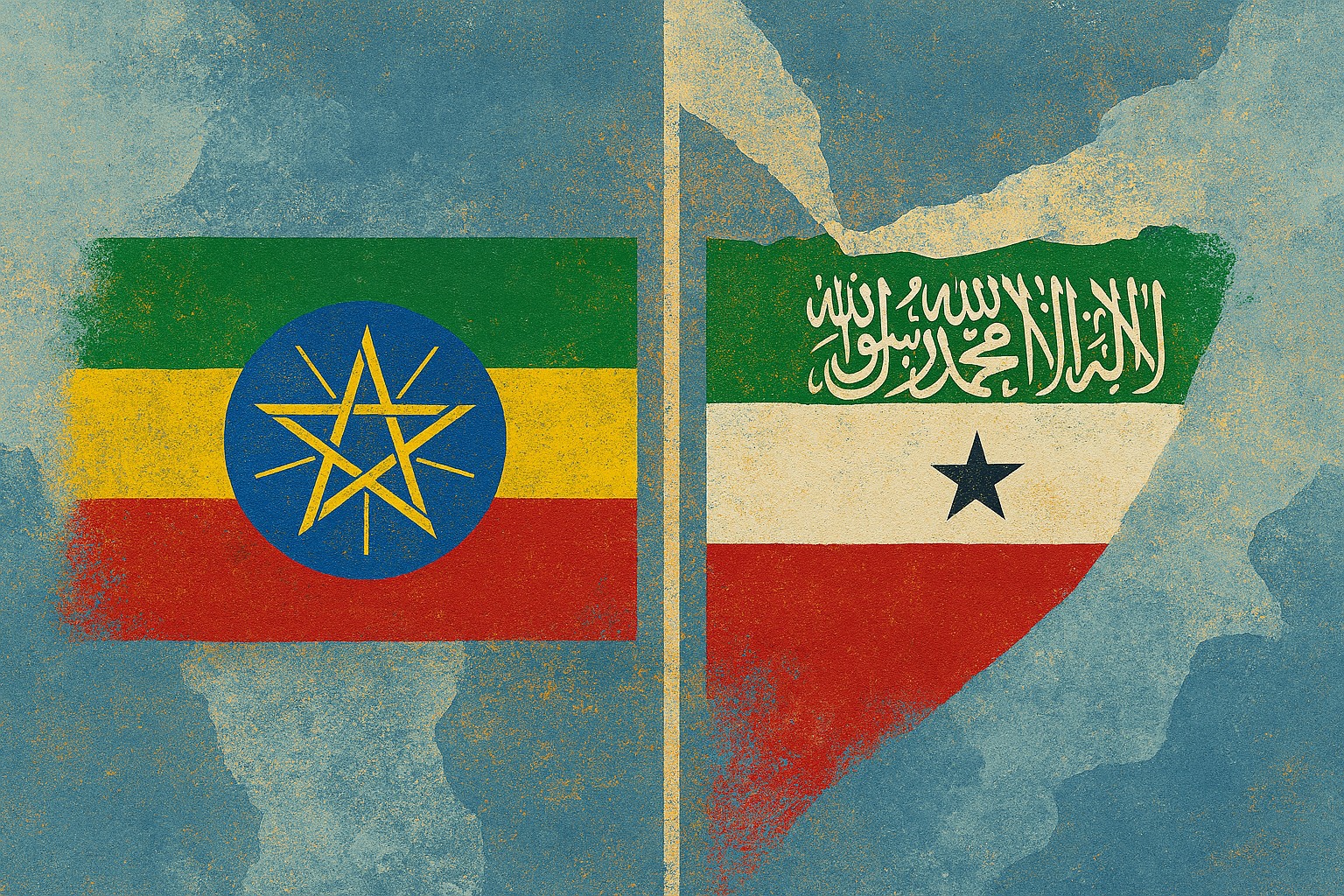
For all the recent noise in capitals across the world about Somaliland, the decisive audience remains closer to home. Its fate, more than ever, lies not in Jerusalem or Washington, but in Addis Ababa—where silence, in geopolitics, often speaks loudest.
When Israel moved to recognize Somaliland as an independent state, the reaction across the Horn of Africa was swift and furious. Mogadishu denounced the decision as an assault on Somalia’s sovereignty. Egypt and Turkey—both deeply invested in Red Sea and Horn politics—voiced alarm. Diplomats warned of destabilization. Yet none of this should have come as a surprise. The ground for this moment was prepared long ago, and most recently in January 2024, when Ethiopia signed a memorandum of understanding with Somaliland that shattered a long-standing regional taboo: treating Somaliland as something more than a legal fiction.
Israel’s recognition may have pushed the door open, but Ethiopia had already loosened the hinges.
For more than three decades, Somaliland has existed in a diplomatic limbo of its own making—peaceful, functional, and self-governing, yet formally invisible. Unlike Somalia to its south, it built institutions, held elections, and maintained a monopoly on violence within its borders. What it lacked was not statehood in practice, but sponsorship in the international system. Israel’s move has altered that equation, at least symbolically, by elevating Somaliland’s status from a regional curiosity to a geopolitical problem.
The backlash has been most acute in Mogadishu, where fears of precedent loom large. Somalia’s federal government understands that recognition of Somaliland does not merely threaten territorial integrity; it undermines the post-colonial principle—enshrined by the African Union—that borders inherited at independence are sacrosanct. Egypt’s concern is more strategic. Any reordering of authority along the Red Sea corridor risks weakening Cairo’s already precarious influence at a time when Ethiopia, Turkey and the Gulf states are competing for leverage. Turkey, which has invested heavily in Somalia’s security sector and port infrastructure, likewise sees Somaliland’s elevation as an unwelcome complication.
Yet the most intriguing response has been Ethiopia’s silence.
Addis Ababa has neither celebrated nor condemned Israel’s decision. This restraint is not neutrality; it is calculation. Ethiopia has been Somaliland’s quiet patron for nearly half a century. After Somalia’s military invasion of Ethiopia’s Ogaden region in the late 1970s, the Derg regime under Mengistu Hailemariam sponsored Somaliland secessionists, particularly those rooted in what is now Somaliland. Ethiopian territory served as a rear base; Ethiopian arms and protection ensured survival. That relationship did not end with the Cold War. It matured.
Today, Somaliland’s political elite is deeply intertwined with Ethiopia. Many senior figures have lived, studied or worked there. Ethiopian passports circulate quietly among Somaliland’s upper echelons. Ethiopian universities operate branch campuses in Somaliland. The Ethiopian consulate in Hargeisa is conspicuously large, more an embassy in all but name. Jigjiga, capital of Ethiopia’s Somali region, has become a social and commercial extension of Hargeisa—a second home for traders, students and politicians alike.
Moreover, Ethiopia’s military has been involved in proper Somalia for nearly two decades now, fighting extremists forces of Al-Shabab and ISIS affiliates. For this it has received material, diplomatic as well as intelligence support from the U.S and Israel. It has cultivated crucial clan ties within Somalia’s body-politics, particularly in Jubaland, where Ethiopian National Defense Forces have gained significant public acceptance. This is another key point of leverage for Ethiopia’s longterm regional power play in the Horn of Africa.
These ties explain why Israeli recognition, dramatic as it is, does not fundamentally alter Somaliland’s strategic reality. Its survival, prosperity and external access remain overwhelmingly dependent on its direct neighborhood, especially Ethiopia. Addis Ababa holds leverage not only over Hargeisa, but over Mogadishu as well. It can lean toward Somaliland or pivot back toward Somalia, extracting concessions from both. This gives Ethiopia influence over Djibouti too, whose ports are indispensable to Ethiopia’s economy and whose monopoly Addis Ababa has long sought to dilute.
That ambition—sovereign access to the sea—now looms over every regional calculation. Ethiopia’s population of more than 120m is landlocked, restless and increasingly assertive. The MoU with Somaliland, granting Ethiopia potential access to the port of Berbera, was not merely about trade; it was about strategic autonomy. Israel’s recognition adds diplomatic weight to that ambition, even if Addis Ababa prefers to let others absorb the immediate fallout.
Whether this episode marks the beginning of borders being redrawn in the Horn of Africa and southern Arabia remains uncertain. The African Union is unlikely to abandon its foundational principles lightly. Most states will hesitate before endorsing a precedent that could rebound on them. But norms erode not in a single rupture, but through cumulative exceptions. Somaliland’s case—peaceful, stable, and persistent—has always tested the system. Israel’s recognition intensifies that test.
What is clear is that Somaliland has finally arrived on the global stage. What is less clear is who will write the next act. For all the noise in foreign capitals, the decisive audience remains closer to home. Somaliland’s fate, more than ever, lies not in Jerusalem or Washington, but in Addis Ababa—where silence, in geopolitics, often speaks loudest.
