




Ethiopian Educators Enhance Agricultural Skills in China
Introduction to the Training Program
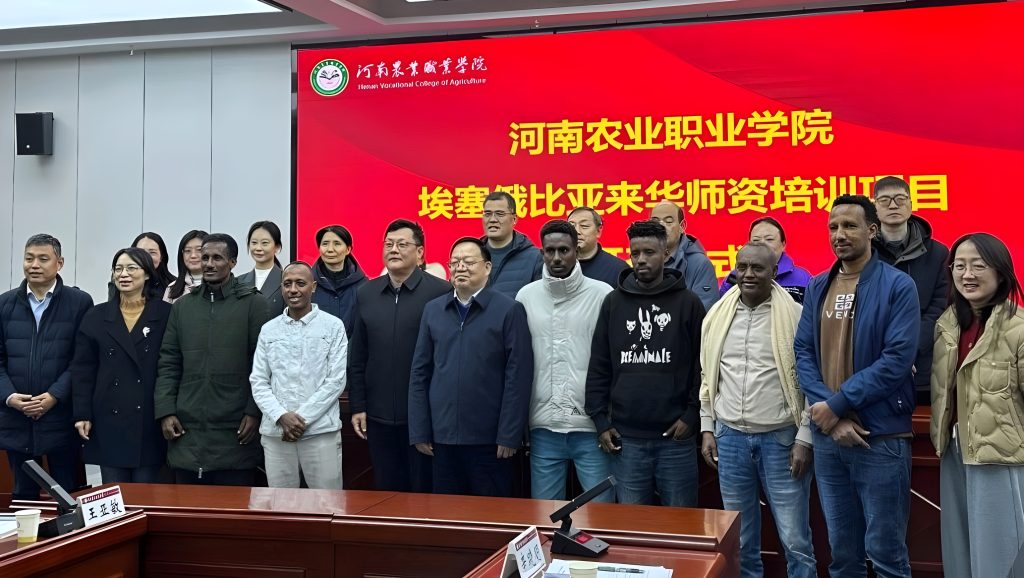
On December 3rd, six educators from Ethiopia’s Shire Poly Agricultural Technical Vocational and Training College landed in Zhengzhou, China, to partake in an intensive three-week training program focused on modern agriculture and agricultural product processing. This initiative is part of the broader China-Africa vocational education cooperation aimed at strengthening agricultural practices across the African continent.
Objectives of the Training Program
The primary goal of this program is to equip Ethiopian educators with advanced technical knowledge and teaching methodology that will enrich the agricultural training offerings at Shire College. By fostering professional development, this initiative supports the college’s vocational education model, enhancing its capability to produce skilled agricultural professionals in Ethiopia.
Collaboration between Institutions
The program commenced with an opening ceremony at the Henan Vocational College of Agriculture. Liu Rongning, the president of the college, highlighted the institution’s dedication to creating a specialized curriculum tailored for Ethiopian participants. Attendees were urged to actively engage throughout the program and bring back valuable insights and techniques to improve agricultural education in their home country. The Henan Vocational College, established in 1952, spans approximately 140 hectares and is renowned for training future agricultural professionals.
The Importance of Agricultural Training
Aledin Abdu Adem, representing the Ethiopian delegation, emphasized Ethiopia’s vast agricultural resources, which are currently undermined by limited technological advancements. He noted that this training program presents a unique opportunity for participants to gain essential skills and teaching experience which they can share with peers and students in Ethiopia.
Structure of the Training Program
The program is divided into three distinct weeks, each focusing on different aspects of agricultural education:
-
Week One: Participants will undergo orientation and explore various Chinese cultural activities, which help foster a deeper understanding of local agricultural practices.
-
Week Two: The focus shifts to agricultural production, processing of agricultural products, and culinary techniques. This week is designed to provide hands-on experience that participants can implement back in Ethiopia.
-
Week Three: The final week covers horticultural production and animal husbandry, areas critical to enhancing Ethiopia’s agricultural industry.
Conclusion: Bridging Knowledge and Practice
This collaborative training initiative not only fosters the professional competence of educators from Shire College but also aims to elevate the standard of agricultural education throughout Ethiopia. By integrating modern techniques and approaches learned in China, the Ethiopian participants are expected to make a significant impact on future agricultural practices in their home country.
For more information on agricultural training initiatives in Africa, you can visit FAO – Food and Agriculture Organization or explore the World Bank’s agricultural development programs.
This article serves as an informative piece about the vital role of international collaboration in enhancing agricultural education. The skills gained from this program are anticipated to be a catalyst for improved agricultural productivity in Ethiopia, showcasing the importance of such educational exchanges in today’s global landscape.
