




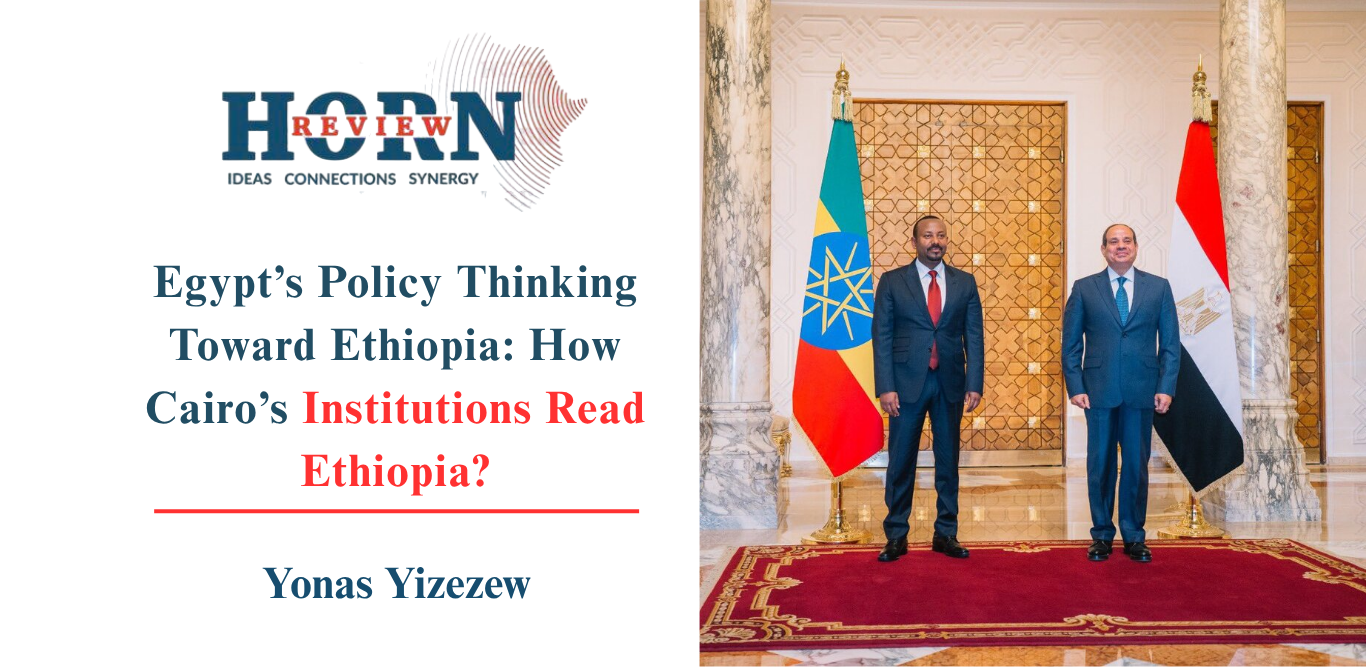
Meta Title: Egypt’s Multi-Layered Containment Strategy Toward Ethiopia: Nile, Red Sea & Regional Alliances
Meta Description: Analysis of Egypt’s evolving strategy toward Ethiopia: blending public rhetoric, intelligence operations, and military partnerships in Somalia, Eritrea, and Sudan to contain Ethiopian regional influence across the Nile and Red Sea.
Focus Keyword: Egypt Ethiopia containment strategy
Slug: egypt-ethiopia-containment-strategy-nile-red-sea
Egypt’s Multi-Layered Containment Strategy Toward Ethiopia: Beyond the Nile Dispute
Egypt’s policy toward Ethiopia has undergone a profound transformation. What began as a bilateral negotiation over the Grand Ethiopian Renaissance Dam (GERD) has evolved into a sophisticated, multi-theater containment architecture. This strategy integrates public mobilization, specialized intelligence operations, and deepening military partnerships across the Horn of Africa and the Red Sea.
By fusing the Nile water dispute with Red Sea security dynamics, Cairo seeks to preserve a structural asymmetry that prevents Addis Ababa from converting its demographic weight and geographic position into unchecked regional predominance.
From Bilateral Dispute to Regional Containment Architecture
For over a decade, Egyptian diplomacy focused intensely on the GERD—seeking a legally binding agreement on filling and operation through the UN Security Council, the African Union, and the Arab League. However, the completion of the dam’s filling and its inauguration in September 2025 marked a decisive inflection point.
Cairo recognized that the dam could not be reversed through hydropolitics alone. Consequently, the strategic objective shifted from “stopping the dam” to constraining the dam’s builder. The core logic is spatial: maritime access via the Red Sea would transform Ethiopia from a landlocked state into a regional power capable of projecting naval power, exporting energy, and anchoring deep external alliances. Denying—or significantly complicating—that access preserves Egypt’s strategic depth.
This merger of the Nile and Red Sea files creates a containment architecture rather than a single-issue bilateral contest. Operational partnerships in Somalia, Eritrea, and Sudan now function as pressure points along Ethiopia’s perimeter, managed by a hybrid of diplomatic, intelligence, and military instruments.
The Dual Track: Demagogic Rhetoric vs. Pragmatic Intelligence
Egypt’s approach operates on two complementary tracks, often described in international relations theory as a blend of demagogic foreign policy and pragmatic statecraft.
Public Mobilization: The Existential Narrative
Public rhetoric frames the Ethiopian challenge in existential, emotional terms—sovereignty, survival, and historical rights. This simplified threat narrative serves a critical domestic function: it mobilizes national consensus, legitimizes high defense spending, and insulates the leadership from accusations of concession on the water file.
The Intelligence Portfolio: The General Intelligence Service (GIS)
Beneath the rhetoric lies a highly specialized, continuous analytical apparatus. The repeated, direct involvement of the Egyptian General Intelligence Service (GIS) across the Horn—Ethiopia, Eritrea, Somalia, and Sudan—indicates the region is managed as a distinct intelligence portfolio.
- Operational Continuity: The GIS chief has personally led high-level delegations to Asmara and engaged directly on the Sudanese civil war and Somali security architecture.
- Analytical Depth: This structure maintains continuous country files tracking Ethiopian elite alignments, ethnic-federal tensions, opposition movements, diaspora networks, and armed-group dynamics.
- Institutional Mandate: Unlike the Foreign Ministry’s public diplomacy, the GIS mandate allows for operational constraints on Ethiopian options—arming partners, monitoring borders, and shaping local political loyalties.
This bifurcation allows Cairo to sustain aggressive diplomatic engagement while the security establishment quietly degrades Ethiopia’s strategic maneuverability.
Inside the Security Mindset: The ECSS Workshop Perspective
A rare public window into this institutional thinking appeared during the Egyptian Centre for Strategic Studies (ECSS) workshop on September 14, 2026, titled “Ethiopia’s Regional Project: Domestic and External Calculations.”
Participants—including former Assistant Foreign Ministers for African Affairs and veterans of the Addis Ababa diplomatic corps—analyzed Ethiopia not merely as a dam operator, but as a state whose trajectory is defined by:
- Ethno-federal fragility and elite realignments.
- Opposition mobilization and diaspora influence.
- Regional instability as both a threat and an opportunity.
The Core Analytical Variable: Ethiopian Resilience. Egyptian security planners assess two divergent futures:
- A Cohesive Ethiopia: A state managing internal tensions becomes a durable negotiating partner and a more effective regional competitor capable of leveraging hydropower exports and demographic weight.
- A Fragmented Ethiopia: Internal conflict constrains Addis Ababa’s ability to project power into the Red Sea or enforce dam operations unilaterally.
Cairo’s institutional conclusion: Conditions that constrain Ethiopia’s political cohesion and regional agency are strategically useful. This calculation drives the simultaneous pursuit of diplomatic talks and military encirclement.
The Somali Lever: Military Cooperation as Containment
The clearest instrument of this regionalization is the Egypt–Somalia strategic partnership, formalized in August 2024 following Ethiopia’s controversial Memorandum of Understanding (MoU) with Somaliland for maritime access.
| Instrument | Stated Objective | Strategic Effect on Ethiopia |
|---|---|---|
| Military Cooperation Protocol & Defense Agreement | Somali sovereignty, territorial integrity, counter-terrorism (Al-Shabaab). | Establishes Egyptian military footprint on Ethiopia’s eastern flank. |
| Arms Deliveries & SNA Training | Capacity building for Somali National Army. | Increases security variables Addis Ababa must manage; complicates Ethiopian logistics. |
| Troop Contribution to AUSSOM | Multilateral stabilization (replacing ATMIS). | Institutionalizes Egyptian security role in Horn; links Somali sovereignty to Red Sea security. |
Recent Developments (Late 2024–2026):
- FM Badr Abdelatty led high-level talks on Egyptian participation in the African Union Support and Stabilization Mission in Somalia (AUSSOM).
- Military delegations focused on establishing training facilities and heavy equipment transfer.
For Ethiopia, this represents a material narrowing of maneuvering room. Egypt is investing in a sustained presence that raises the cost of Ethiopian adventurism in the Horn.
The Sudanese Theater: Where Nile and Border Security Converge
Sudan is the geographic hinge where the water dispute and conventional security overlap most dangerously. The GERD sits near the volatile Sudanese-Ethiopian border zone (Al-Fashaga), amplifying the linkage between water infrastructure and kinetic conflict.
- Alignment with SAF: Cairo maintains close coordination with the Sudanese Armed Forces (SAF) based in Port Sudan. This secures a partner for Nile diplomacy and a potential pressure vector on Ethiopia’s western flank.
- Calculated Ambiguity: Whether the SAF wins, loses, or the state fragments, Egypt seeks to retain influence. A coherent, SAF-aligned Sudan complicates Ethiopian calculations near the Blue Nile; uncontrolled fragmentation risks spillover but denies Ethiopia a stable neighbor to negotiate with.
- Border Dynamics: The disputed Al-Fashaga region remains a flashpoint where Egyptian intelligence likely monitors Ethiopian National Defense Force (ENDF) and militia movements closely.
The Eritrean Axis: The “Littoral States” Doctrine
Cairo’s deepening axis with Asmara operationalizes the “Littoral States” principle—the argument that Red Sea security governance belongs exclusively to states bordering the sea.
- High-Level Coordination: Repeated summits and intelligence chiefs’ visits emphasize this doctrine, implicitly institutionalizing the exclusion of non-littoral actors (primarily Ethiopia) from Red Sea security architecture.
- Strategic Synergy: Both Cairo and Asmara view Ethiopian maritime ambitions and potential external naval basing (by UAE, Turkey, or others) as threats to their respective national security doctrines.
- Intelligence Sharing: The Eritrean partnership provides Cairo with unique human intelligence (HUMINT) and signal intelligence (SIGINT) access regarding Ethiopian northern command structures and cross-border militia flows.
Presidential Calculus: Selective Elevation, Continuous Architecture
The Egyptian presidency does not manage the Ethiopia file at permanent high intensity. Instead, selective elevation occurs when Ethiopian actions intersect core national security red lines:
- GERD Milestones: Filling phases, turbine inaugurations (e.g., Sept 2025).
- Maritime Breakthroughs: The Somaliland MoU.
- Regional Shifts: Sudan war trajectory, Somali political trajectory, Egypt-Eritrea summits.
- Great Power Intervention: Moves by Turkey, UAE, USA, Israel, or Gulf states altering the regional balance.
During lower-intensity periods, the file runs through bureaucratic channels—technical ministries, the GIS desk, and calibrated public statements. This allows the security establishment to maintain continuous operational tempo without exhausting presidential political capital.
The Three Stages of GERD Thinking: A Strategic Evolution
| Stage | Period | Core Strategy | Outcome |
|---|---|---|---|
| 1. Prevention & Constraint | ~2011–2020 | Internationalize dispute (UNSC, AU, Arab League); seek binding legal regime. | Failed. Filling commenced unilaterally. |
| 2. Embedding & Mitigation | ~2021–2023 | AU-led trilateral talks; manage filling/operation rules; maintain multilateral pressure. | Stalled. No binding agreement; filling completed. |
| 3. Regionalization & Containment | 2024–Present | Fuse Nile/Red Sea files; build partnerships (Somalia, Eritrea, Sudan); enforce “Littoral States” governance. | Ongoing. Architecture built; efficacy depends on partner durability. |
Strategic Objective: Managed Competition, Not Total Isolation
Egyptian elite thinking acknowledges a hard reality: Total isolation of Ethiopia is impossible. Ethiopia’s size (120M+ population), economic gravity, African Union headquarters status, and deep ties to Gulf/Asian powers make it a permanent regional anchor.
The plausible aim is cost imposition and option denial:
- Prevent conversion of geographic/demographic advantages into unchecked predominance.
- Force Addis Ababa to negotiate water sharing from a position of constrained regional bandwidth.
- Maintain Egyptian status as the indispensable Red Sea power broker.
The Hybrid Policy Model: Risks and Sustainability
Egypt’s current posture is neither purely demagogic nor purely technocratic. It is a hybrid architecture:
- Political Foundation: Emotionally resonant rhetoric sustains domestic legitimacy.
- Operational Superstructure: Pragmatic, multi-vector pressure (intelligence, military aid, diplomatic coalitions) shapes Ethiopia’s external environment.
Critical Dependencies for Success:
- Ethiopian Internal Cohesion: If Addis Ababa resolves its ethnic-federal tensions, its capacity to absorb Egyptian pressure increases exponentially.
- Partner Durability: Somalia’s federal stability, Eritrea’s strategic alignment, and Sudan’s post-war trajectory are not guaranteed.
- External Power Reactions: Turkey’s defense ties with Somalia/Ethiopia, UAE’s port investments, and US/China great power competition introduce volatile variables.
Conclusion: A Continuous, Interdependent Framework
The analytical framework already institutionalized in Cairo treats these variables as interdependent. Developments in the Somali theater are read through the lens of GERD negotiations; Sudanese border skirmishes inform Red Sea naval posture; Eritrean intelligence feeds into public rhetoric calibration.
Whether this architecture produces durable constraints or blowback instabilities (refugee flows, proxy escalation, great power entrapment) will define the next decade of Horn of Africa geopolitics. For now, Egypt has successfully moved the goalposts: the debate is no longer about cubic meters of water, but about the balance of power in the Red Sea.
Frequently Asked Questions (FAQ)
What is Egypt’s current strategy toward Ethiopia?
Egypt has shifted from a bilateral focus on the GERD to a regional containment strategy. This involves fusing the Nile dispute with Red Sea security, building military partnerships with Somalia and Eritrea, aligning with the SAF in Sudan, and using intelligence operations to constrain Ethiopia’s regional maneuverability.
How does the Egypt-Somalia defense agreement affect Ethiopia?
The August 2024 Egypt-Somalia defense pact—including arms transfers, training, and AUSSOM troop deployments—establishes an Egyptian military presence on Ethiopia’s eastern flank. It directly counters the Ethiopia-Somaliland MoU for port access, raising the strategic cost of Ethiopian maritime ambitions.
What role does the General Intelligence Service (GIS) play in the Horn of Africa?
The GIS operates a specialized Horn of Africa portfolio, maintaining continuous analytical files on Ethiopian elite politics, ethnic dynamics, and armed groups. The GIS Chief conducts direct high-level diplomacy (e.g., visits to Asmara, Port Sudan), translating intelligence into operational partnerships that bypass standard diplomatic channels.
Why has Egypt adopted the “Littoral States” doctrine with Eritrea?
The “Littoral States” principle asserts that Red Sea security governance belongs exclusively to coastal nations. This legally and institutionally excludes landlocked Ethiopia (and external powers) from a formal say in regional maritime security, codifying Egypt and Eritrea’s gatekeeper status.
Is Egypt trying to destabilize Ethiopia?
Egyptian strategic assessments view Ethiopian internal fragmentation as “strategically useful” because it limits Addis Ababa’s capacity to project power. However, the stated objective is not regime change but cost imposition—forcing Ethiopia to negotiate on water and maritime access from a position of constrained options.
Related Reading & Sources
- Egypt-Somalia Military Cooperation Agreement (Law Library of Congress)
- Egyptian Intelligence Chief Visits Eritrea (State Information Service)
- ECSS Workshop: Ethiopia’s Regional Project (Ahram Online)
- FM Abdelatty Discusses AUSSOM with Somali Counterpart (SIS)
- Concept: Demagoguery in Foreign Policy (ResearchGate)
